Did Change Come? A Retrospective of the SSC’s Past Years
The Supreme Student Council (SSC) election this May is fast approaching and last year’s brought an unexpected political shift, breaking the trend of the last seven years. The time is ripe to take a step back and evaluate how the council did this year. Did the shift bring any substantial change to the operations and perception of the council? Did change come? Let’s look at the key issues that this year’s council had to face.
1. Massive Tuition Fee Increase
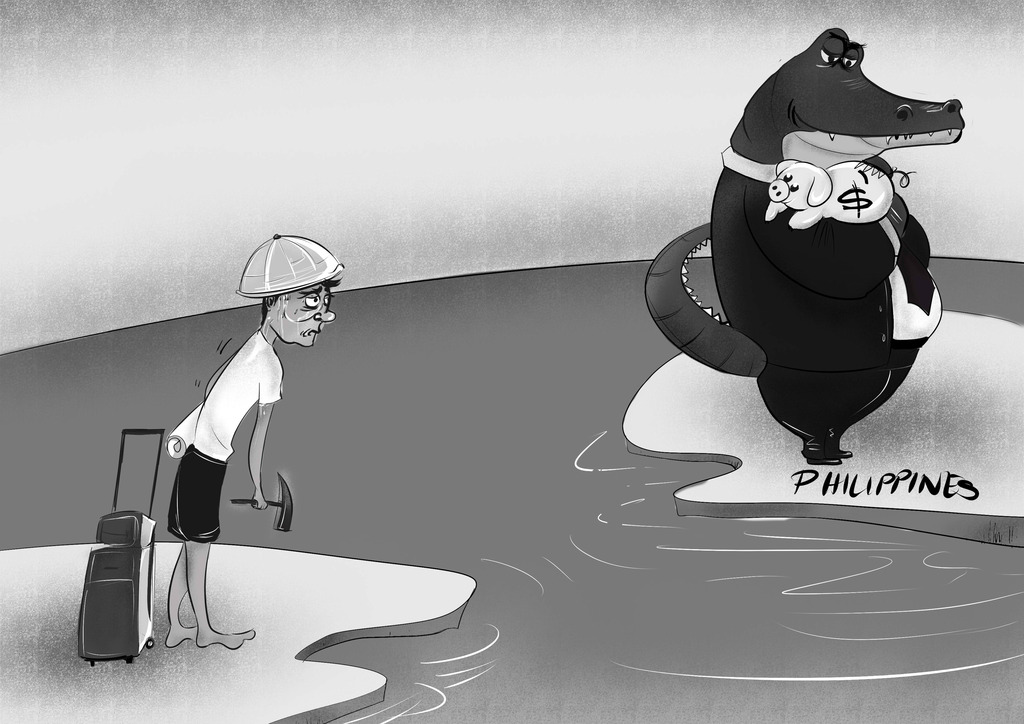
This year saw one of, if not the most drastic tuition fee increases in USC history. The first-year students reported either a jump or an incremental increase in their tuition. Programs like BS Business Administration — Marketing Management increased from around PHP 30,000 straight to PHP 40,000 while programs like BFA Advertising Arts increased from PHP 30,000 in increments of PHP 10,000 until it finally reached PHP 60,000 in the span of a few days.
A major exacerbating factor to an already terrible situation is the timing of the increase. While dubbed as a “New Tuition Fee,” the increase was only implemented four weeks into the school year. This crosses the two-week refund period for withdrawal, so students who realized they cannot afford to study in USC were trapped and forced to pay the full amount and completely disabled from transferring to a more reasonably-priced institution. This also made students unable to acquire scholarships, which require signed assessments — something the university could not provide until the increase. All of this only garnishes the obvious conclusion that an increase well into the school year was simply wrong.
With STAND taking the majority and helm of the SSC, as the party that takes pride in its strong anti-tuition fee increase stance, one would expect the council to take decisive and impactful action on the matter. This was the case when the administration attempted to raise the standard PHP 2,000 semestral down payment to PHP 3,000. The council took swift action, and was able to get it back down to its original cost.
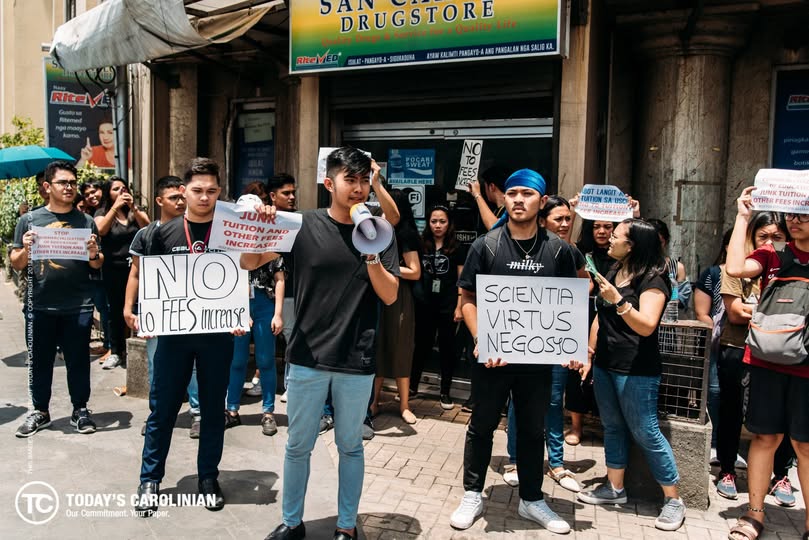
As for the major tuition fee increase, however, things did not go as smoothly. Some moves were made throughout the academic year like meeting with the administration, which only ended with the priests claiming that it was out of their hands. The council’s most concrete action on the increase so far is its March 2019 threat to take the matter up to the Commission on Higher Education with an accompanying signature campaign.
While it is admittedly difficult to evaluate the council’s performance in this regard given that no set of officers in recent years has had to deal with an increase of this magnitude, it still raises a few questions. With thousands of students already suffering the PHP 30,000 increase, could this maneuver be too late? Is this as much as we can expect from a party whose main campaign battle cry is against tuition and other fees increases (TOFI)? Do we, perhaps, hold them to a different standard because of said battle cry?
2. Missing SSC Funds
SSC campaign periods every year are freckled with insults and low blows that grow in outrageousness parallel to the promises that end up neglected. The allegations in last year’s campaign, however, took a severely disturbing turn as members of the ex-majority party Tingog and the minority parties exchanged accusations of missing or mismanaged council funds. Two figures to recall: PHP 32,000 and PHP 90,000.
On February 27, 2018, the SSC published a statement demanding the reimbursement of PHP 37,000 from now-incumbent President Joahanna Veloso. The statement, viewed by many as politically motivated given its timing, shamed Veloso for her failure to reimburse the amount, later reduced to PHP 32,000, which was originally shelled out for the 2016 GADJA. Shortly after, the SSC’s Commission on Audit (COA) released a report showing that the Tingog-bannered 2017 Carolinian Summit, Warriors’ Week, Warriors’ Run, and Week of Welcome showed differences totaling about PHP 199,000. The anomalous projects named had as their proponents former councilors Sharland Malazarte, Joelia Lee Yu, Jodimarie Tio, Dorothie Lazala, and current councilor James Cabalhug.
How were these resolved? With resistance, of course. Tingog began by insisting that the documents they presented should have been considered valid despite Philippine auditing standards and common sense saying otherwise, lost their majority streak, and then later presented receipts deemed proper by COA — all of which former COA Chair Nhanina Asupan observed had differences, albeit smaller.
On the other hand, according to Committee on Finance Chair Kimberly Lim, Veloso eventually produced PHP 12,000, which so far lacks documentation but is supposedly reflected in the council’s bank account. Veloso has promised the council to settle the full amount before the end of March 2019 — a promise that echoes the one she made in September 2018. Veloso’s ability to pay is largely dependent on a third-party account, presumably who the money was dispensed to, and as such is only accountable for the amount and not liable.
The council appears to have learned its lesson when it comes to handling public funds and general public accountability this year. They began publishing liquidation reports on the SSC’s Facebook page within weeks of any event or project that come along with detailed attendance reports, allowing students to appraise an officer’s dedication to their elected position. The council also turned down a proposed event — a Tingog legacy platform — that would have potentially cost them over PHP 600,000 if it failed, and so on.
However wonderful, this is not a complete transformation. This year’s COA under Chair Nyx Ty has failed to produce an audit report on the expenses of the first semester, and Ty remains unreachable to the current officers of the council. This appears to be an ongoing tradition in the commission, with the COA of A.Y. 2017–2018 under former President Deodatus Burgos so far unable to complete its report due to lacking financial statements from the officers of that term. Lim has attempted to reach out to last year’s officers.
3. Student Manual — or lack thereof
Those who did not go through the K-12 program will recall receiving a copy of the 2013 USC Student Manual as soon as they enrolled in the university. This is not at all the case with the current first-year students. None of them were provided with the new version of the manual, not all of them were informed that they are expected to follow the 2013 manual — a version they have no access to. This leaves them in a frighteningly vulnerable position — allowing for the guards, faculty and higher administration to exploit their engineered ignorance of the school’s policies.
The SSC was included in the creation of a new manual draft that was uploaded on ISMIS. This version of the manual has since been taken down for the administration’s further revisions, which President Veloso points out the SSC has been excluded from. It need not be said that excluding the students and their elected representatives in the formation of the policies that will govern us is an ethical disaster waiting to happen — if not happening already. Students continue to wait for updates regarding the new student manual.
Previous years saw the administration “working closely” with the SSC as they revised the student manual. Their current attitude toward the Council has tangibly shifted what with their exclusion of the student representatives from the drafting process. If this tells us anything, it is that oftentimes it is the administration’s refusal to cooperate with the students that stunts the council’s ability to perform. So, while the council may have done their honest best in standing firm in their banner “For the Carolinians, we remain,” the administration ultimately served to obstruct the council’s function.
Other than being present throughout most of the new manual’s drafting, the SSC’s latest action on the matter was posting an update on the administration’s progress with the manual including the prospective date of its distribution.
4. Forgotten Platforms
Prior to the election on March 1, 2018, reused platforms and a few fresh ones were presented to the Carolinians during the campaign period. After a share of tears, salutations, and promises that would once again remain unfulfilled, these did not materialize when they took their seats in the council. The school year is about to come to a close, yet there has been no word or updates on a number of projects that were promised to us last year.
For one, the Mental Health Boot Camp, the umpteenth iteration of the Student Power Party’s (SPP) mental health advocacy, never came to be. SPP also appears to have dropped its calling for a “colorless” and “decentralized but more supreme” SSC.
Another platform known as the Tingog-bannered Magna Carta for Students’ Rights, a name we are all familiar with because of its incessant mention in the past years, has disappeared completely in light of recent progress with the student manual and lives up to its reputation of being a seasonal advocacy. The last known version of the student manual did not contain a Bill of Rights for students and members of the council have remarked that the Magna Carta is no longer being discussed.
In STAND’s case, there’s the GSCOPE, which is supposed to function as a complaints system where students can send in their concerns with and feedback on the university in the hope that they will be resolved. It was implemented last year and promised again in the last election, but was suddenly and inexplicably discontinued this year. There are no known official channels for student complaints in the university. While the council appears to have implemented the GSCOPE as a response to the tuition fee increase, it has to be noted that this is different from the proposed student complaint system during the last election.
Failing to live up to these expectations is a major reason why students have never thought highly of the council, especially as these platforms are the main hooks for student support and votes. This problematic habit of the SSC may likely be why voter turnout has been pathetic for the longest time. Would it not be better for parties and candidates to concentrate their efforts and campaigns on a few solid and feasible platforms during the campaign? Should we not expect more from the people we pay 12 pesos to every semester? Can we blame the students for their debilitating disappointment?
This academic year saw more dialogues with the administration, likely because of the fact that the SSC has made a concerted effort to be more visible on both social media and offline. Another reason for this could be that the administration has attempted to make big moves under our noses that are simply unacceptable. Nonetheless, this kind of presence and proactivity is mildly refreshing on the part of the council and maybe even impressive considering their significantly fewer resources this year.
Did any substantial change come as a result of the political shift in the SSC? Perhaps, but it was not enough to significantly alter the public’s perception of the council — or critically improve student life.
———————————————
This article is part of our features in the April 2019 magazine, with articles written in March 2019. The said magazine will be distributed to the Carolinian body and made available online before the month ends.
This article was also written before the CHED dialogue with this year’s SSC. A few matters may not be applicable in the first point.