House of God
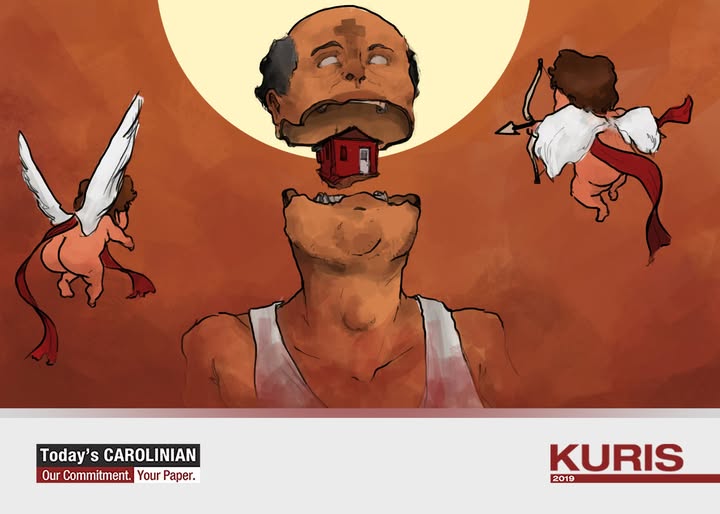
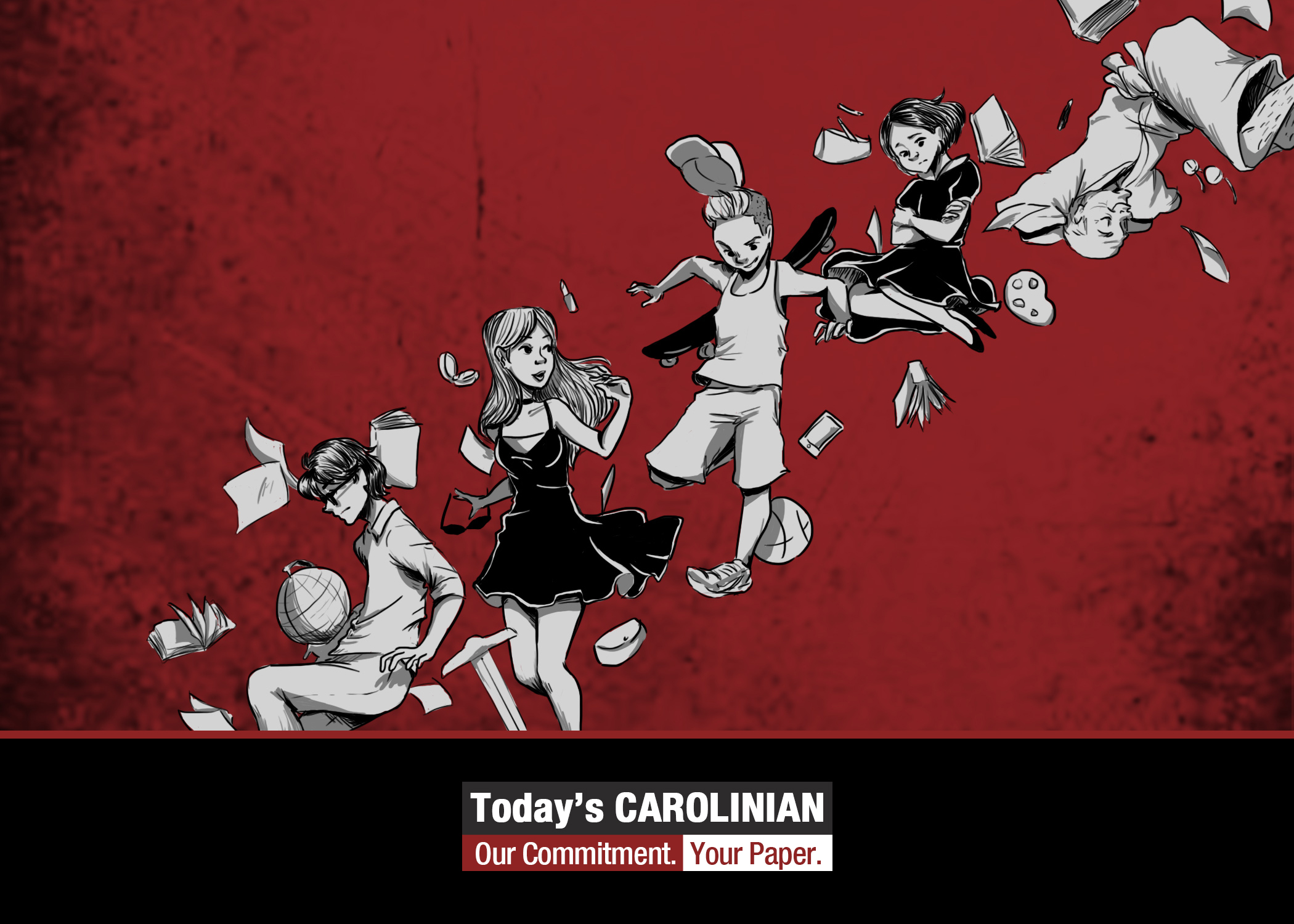
Illustration by Eduard Jude Jamolin
“I am the Lord thy God, thou shalt not have any other gods before Me.”
It was one silent night in May of 2015. In the back of the altar, two boys hid as their father had searched for them. He had knocked off the pulpit and dragged a few pews, but they kept silent. One of them had soaked their shorts with piss and the other, his shirt with tears.
“Trevor, Charles? Naa na si papa, asa na mo? [Papa’s here now, where are you?]” the father spoke in the accent of alcohol. He proceeded to unsteadily march up and down the aisle. Charles peeked from the tiny decorative crevice of the altar. His father was holding the bottle of rum in one hand and a piece of firewood on the other. It was a night of reckoning. It was the night they learned to never speak of their mother in front of him.
“Thou shalt not take the name of the Lord in vain.”
“Pa, na-honor raba ko’s klase [Pa, I was of the topnotchers in class],” Trevor excitedly told his father.
“Aw, unya? [Oh, then what?]” He smugly replied.
“Gilista tika sa mokuyog nako og paso sa stage [I listed you as the one who would accompany me on stage].”
“Ha? Saba diha uy. Ayaw ko’g apila anang kabuang nimo ha [What? Shut up. I don’t want to be part of your nonsense],” the father stood up and walked out of the house. “Ikaw la’y paso og imo ngadto, bright bitaw ka [Go and walk the stage by yourself, you’re smart enough anyway].”
“Remember to keep holy the Sabbath Day.”
Nobody in the barangay ever missed the father’s birthday. Karaoke sessions started as early as six in the morning and so did the drinking. Nobody missed his birthday, not even the two teenage boys who had final examinations that day. It was a feast. Everyone had their eyes and hands set on to something — the roasted whole pig, the crispy lumpia, the obviously terrified girls who wore short shorts who had stranger’s hands resting on places they shouldn’t be. It was a feast.
“Honor thy father and mother.”
“Pa, moadto ko ilang lola. Naa ka’y ipadala [Pa, I’m going grandma’s house. Is there anything you want me to take on the way there]?” Charles politely asked his father, drunk and seated in front of their decade-old television who had its antenna twisted in inhuman ways.
The father looked to his son, smiled and said, “Kani oh, ipadala ni [Here, take this to them],” and flashed his middle finger. “Pangutan-a pud kung kanus-a mamatay si lolo nimo. Gapangita nako’s bahin nako [Ask her when your grandpa would die. I’m excited about my share].”
Charles leaves, hoping he never has to come back to that level of Hell.
“Thou shalt not kill.”
Trevor was seventeen when had first seen a man’s innards. And it was not for anatomy class. This man’s guts had spilled over the sidewalk right in front of their gate, his blood painted everything red — the gray cemented sidewalk, the grills on their gate, Nanay Silay’s sari-sari store cover, his father’s face, hands, white shirt and the knife he was holding. Trevor felt his own intestines push themselves up to his mouth, but held back the vomit. It was four in the morning; he did not want his father to know that he was awake. His father’s drinking friends had sobered up all of a sudden and started slowly walking away. Trevor looked at his father. He saw it, grimace turning into a grin and then into chuckling, and finally, laughter. Trevor wished he had never woken up, because he could never sleep after what he just saw.
The front doors opened. He could hear footsteps. He could hear “Laklak” sung through whistles.
“Thou shalt not commit adultery.”
“Bor, ‘nak. Ayaw sige’g saba ha? Naa ko’y bisita [Trevor, son. Keep quiet, okay? I have a visitor].”
Surprisingly, the father was sober that night. Trevor had been studying for his entrance examinations for one of the best schools in the province; he had not been making noise in the past five hours. But he had learned enough not to talk back to his father. He nodded and quickly gazed in his father’s direction. He had with him a fair young woman, probably twenty years old or younger, and he could clearly see that she was drunk. He tried not to pay much mind to it as he was used to this.
Trevor heard the woman cry out numerous times that she did not want to do it, but he could not help her. He never could. He wished Charles was home.
“Thou shalt not steal.”
“Unsaon man ta na, bai? Pildi nasad ka [What do we do now, bro? You lost again],” one of the players called out to the father.
“Wala pa lagi na. Ayaw’g kumpyansa bai [Not yet. Don’t be too confident, bro],” the father replied. He kicked one leg of the makeshift table they had made from plywood. The other players stood up and loomed over to the father. He flashed his knife and smiled.
From the jalousie-covered window in their house, Charles had seen it all. He had wished his mother was here, he had wished she was the one who stayed instead of their father. He had wished she took her with them and not trusted their father.
“Thou shalt not bear false witness against thy neighbor.”
It was family day at Charles and Trevor’s school. All their friends and classmates had brought their parents with them. They wished they had one, a parent.
“Charles, Trevor! Where are your parents?” asked one of their classmates. His dad was wearing a smart outfit, while his mom wore a red dress.
“Ah, busy with work,” Trevor responded.
“Oh, that’s sad. What did you say was his job again?”
“Barangay Chairman.”
“Wow, that’s amazing! Mosunod pud ka niya puhon, dong Trevor [Will you follow his footsteps, dear Trevor]?” asked the mother.
“Siguro, tita [Maybe].” Trevor smiled.
He and Charles both knew that their father had ended his term two years ago. He was not busy because of work; he just did not want to go with them on their nonsense of a family day.
“Thou shalt not covet thy neighbor’s wife.”
Tita Rita had been visiting their house every night for the past two weeks now. Charles just barely sees her enter the gate as he leaves for his job at the convenience store, but Trevor knows the real story. He just does not have the guts to tell Charles. He is afraid of what he might tell the father. Charles and their father had been arguing non-stop every time they met at home. Charles had been going on and on about leaving the house and staying at their grandma’s but Trevor wouldn’t let him. He wouldn’t let Charles leave him alone with the devil. Trevor wanted to leave so badly, but he could not. This devil fed him and supported his studies. This devil took them in when their mother didn’t. He owed this devil.
As Tita Rita’s moans oozed out of her mouth with the shaking of the bamboo bed in the father’s room, Trevor could not help but weep — not in sorrow, but out of frustration.
“Thou shalt not covet thy neighbor’s goods.”
Trevor and Charles wanted nothing but a happy family. They look out on the streets outside the Sto. Niño church and they saw families. They wanted nothing but a parent: a father or a mother didn’t matter. They wanted someone who would take care for them just as the God of the Bible supposedly did to his children. Now fatherless, they are left to their own devices. Although Charles has kept his job at the convenience store, Trevor had to stop studying and has found himself selling newspapers to passing strangers.
A stack of newspapers containing articles for that day had arrived. Trevor looks at the headline.
“Man Found Dead in Own Home; Two Sons Missing.”