Silence
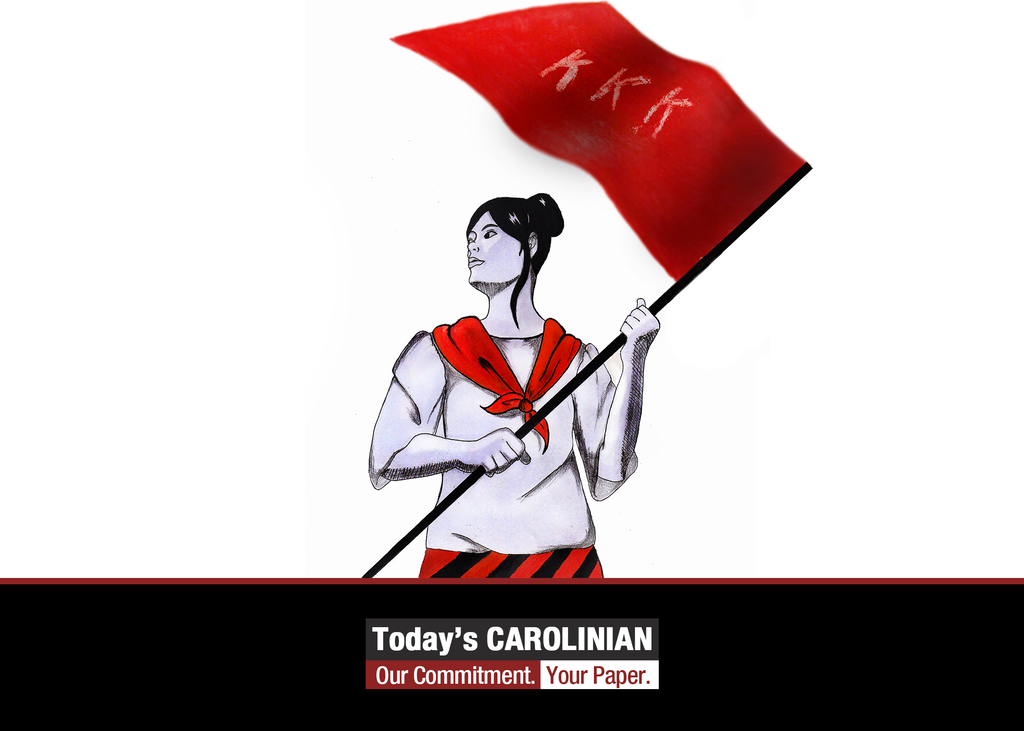
Photo by Keith Raymier Ayuman
Last Feb. 13, Rappler CEO Maria Ressa, recognized as one of the Persons of the Year in 2018 by Time Magazine for her efforts in journalism, was arrested by officers from the National Bureau of Investigation (NBI) in the evening, thus preventing Ressa from posting bail within the day.
The arrest was due to a story published by Ressa and researcher Reynaldo Santos Jr. that supposedly violates the Cybercrime Prevention Act. Worth noting in the arrest was an NBI officer’s intimidation of Rappler reporter Aika Rey for her to stop filming the occasion, despite no law prohibiting such act as long as the filming does not interfere with the arrest. The video has since circulated in Twitter. Ressa was on her way to speak in UP Fair when she was arrested. On the next day, she posted PHP 100,000 as bail.
The Cybercrime Prevention Act, signed into law by former Pres. Benigno Aquino III perhaps by ignorance or incompetence, has several flaws in it; one of which is that it allows filing a case that can retroactively punish an action before the law was enacted, which can be argued to be a case of an ex post facto law. An ex post facto law, however, is prohibited by Section 22 of Article III of the 1987 Constitution. In Ressa’s situation, the story in question was published a few months before the law was enacted. In circumstances where a conflict arises between a signed act and the constitution, the latter should be upheld, as it is the highest law of the land.
Discussing the technicalities of law, however, digresses from a more pressing matter: the attack on press freedom and by extension, the freedom of expression — two principles in themselves that are often misunderstood, a misunderstanding that this government capitalizes upon. It should be clarified that the freedom of expression does not protect any kind of speech per se; rather, it protects the channels where speech is communicated.
Silencing a media outlet, which is a channel for speech, is then a violation of the freedom of expression. Since the start of the current administration, media outlets that are critical of it have been openly disparaged and attacked. The likes of ABS-CBN, those whose allegiance lies only in self-preservation and profit, have given in. Ressa and Rappler have not. For this, a string of attacks on tax evasion and libel have been launched by various arms of the administration, in addition to excluding Rappler from covering government functions and partnerships. This is a direct case of the government cutting one channel for speech.
It should be highlighted that media outlets have all the right to be critical of any institution, including the government. It is an obnoxious misconception that they should be neutral. Neutrality should hold no sway against the truth, and the primary ground for the media’s existence in the first place should firmly be rooted on the exposure of truth, regardless of whose side it may favor. Whose truth it is might be up for argument, but that is exactly why we as the recipients of their messages should be critical ourselves. Silencing the media limits the bigger picture. It cuts off an avenue for a different train of thought, and history has already set enough precedents for us to know the consequences of having a singular, unchallenged, claim to truth. Criticism therefore is necessary for continued growth and the lack thereof may well result to an institution’s stagnation, for how else can it see its own faults if it blinds the eye that looks?
Painfully funny that the government exerts such tremendous effort to silence its critics as if it does not want to improve its sorry state. Painfully funnier that this same government encourages personal attacks and hate-filled propaganda from the likes of Mocha Uson and her fellow so-called bloggers. Even painfully funnier when we realize that those bound by ethics are being attacked, and those who claim that no ethics bind them run scot-free. All this is funny — because whether in this university or not, we would rather enjoy obscene humor that brings us two steps back than facing harsh realities.
As to why we Carolinians should be informed of the matter, our education to be professionals entails that we protect the freedom of expression, press freedom — any form of freedom. It doesn’t take much to conclude that failure to do so can only result in our detriment. We are citizens of a democracy; thus, we have as much liability as those in power when it comes to nation-building, so when we choose to stay silent in issues as pivotal as this, we choose to ignore the responsibility and privilege that comes with being Filipino. When we choose to be silent, we choose compliance, we choose mediocrity, and more often than not, we choose to rob ourselves of a choice.
“The meek shall inherit the earth.”
Yes, but only after they are buried in it.