The Rape

Photo by Keith Ayuman
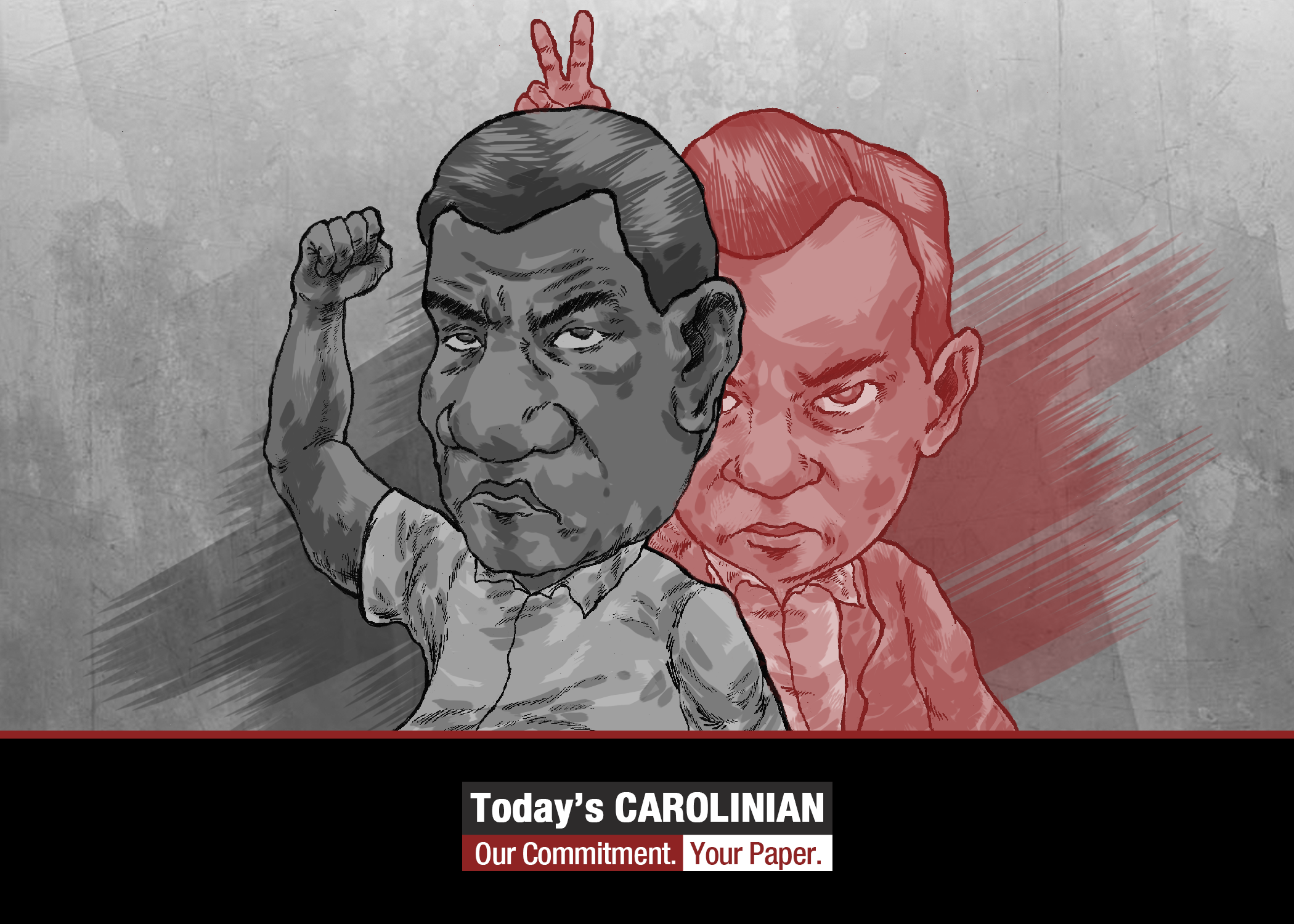
“Sen. Tito Sotto is still in the Philippine Senate serving as the proud champion of the Holy Roman Catholic Church in his staunch opposition to the Reproductive Health Act and to all forms of contraception.
Pepsi Paloma would have celebrated her 47th birthday this year.”
So ended The rape of Pepsi Paloma, an article by journalist Rodel Rodis published in the website of INQUIRER.net in 2014. The said article was among three that Senate President Vicente “Tito” Sotto III requested to be removed from the website. The other two are Was Pepsi Paloma murdered? by Rodel Rodis in 2014 and Tito Sotto denies whitewashing Pepsi Paloma rape case by Totel V. de Jesus in 2016.
The articles by Rodis assert that Sotto intimidated Paloma to drop a case of underage rape against comedians Jose Maria “Joey” de Leon, Ricardo “Richie D’Horsie” Reyes and Marvic Valentin “Vic” Sotto, the last of the three being the senate president’s brother. Paloma, then 14 years of age, was allegedly drugged and gang-raped by the three in 1982.
Tito Sotto reasoned that such articles were biased against him despite his efforts to clarify his position about Paloma’s rape case. His request was written to the president and chairman of Inquirer Interactive, Inc., Paolo R. Prieto, through a letter dated May 29, 2018 with no less than the seal of the Republic of the Philippines and Sotto asserting his position as senate president. In a similar event, Tito Sotto also called for the banning of the airplay of “Alapaap” by the Eraserheads in his first term as senator in the 90s, again for containing lyrics that link him to Paloma’s case.
Ironically, Tito Sotto clarified that this is not a violation against the freedom of the press in the letter to the Inquirer. However, no amount of clarification would rebrand this move from what it truly is: a violation against the freedom of the press.
With the coat of arms of the Republic of the Philippines and still flaunting his position in the senate instead of writing as an ordinary citizen, Tito Sotto has made an official document from the government. As such, this move, whether he calls it a request or not, is a form of censorship because he is asking for some degree of control on what a news agency is publishing.
Tito Sotto may claim that he this is an attack on his reputation as a public official, a form of defamation. However, Article 19, a British human rights organization focusing on the freedom of speech and of the press, warns us that such a move is not new. Public officials may cry defamation to be able to limit discourse and reports on scandals involving them. This is one of the oldest tricks in the book of censorship.
Further, we may even examine if the reporting on the senate president’s alleged involvement in Paloma’s case is truly grounds for defamation. In accordance to “Defining Defamation: Principles on Freedom of Expression and Protection of Reputation”, a report released by Article 19 in 2017 that outlines what defamation is, Rodis’s articles are a case of Principle 13: Expressions of opinion and Principle 15: Innocent publication and words of others. In his articles, Rodis merely repeated the accounts of individuals surrounding Paloma’s case while putting in his two cents here and there.
According to Principle 13, “no one should be liable under defamation law for the expression of an opinion.” From Principle 15, “no one should be liable under defamation law or a statement of which he or she was not the author, editor or publisher and where he or she did not know, and had no reason to believe, that what he or she did technically contributed to the dissemination of a defamatory or otherwise unlawful statement.”
De Jesus’s write up was a news article regarding Tito Sotto’s denial of his involvement in the case. Considering news articles merely present happenings without the musings of the author, this is automatically protected by Principle 15 in defining defamation.
Simply put, Rodis and de Jesus cannot be implicated for writing their informed opinions and accounts, emphasis on “informed”, based on the statements of persons of interest in Paloma’s case. Likewise, INQUIRER.net cannot be coerced to delete their articles.
In an article released on June 18, INQUIRER.net editor-in-chief Abel Ulanday said there has been no decision yet on the matter despite Tito Sotto’s claims that the publishing company already agreed. What is worrisome is that if the senate president succeeds in having the articles removed using his position in the government, a dangerous precedent against the freedom of the press — and with it, the freedom of speech — will be set in place.
If Tito Sotto truly wants to be seen as innocent in Paloma’s case, then he should release a counterstatement outlining his defense instead of constantly denying without presenting sound reason or evidence.
If Tito Sotto truly wants to be seen in a better light, an uninformed attempt at raping the freedom of the press using the position of senate president does not do the magic to mend such impossibility.
Below are links to the articles Tito Sotto wants to be removed:
1. de Jesus, T. V. (2016, March 3). Tito Sotto denies whitewashing Pepsi Paloma rape case. Retrieved from INQUIRER.net: http://entertainment.inquirer.net/191427/tito-sotto-denies-whitewashing-pepsi-paloma-rape-case
2. Rodis, R. (2014, March 5). The rape of Pepsi Paloma. Retrieved from INQUIRER.net: http://globalnation.inquirer.net/99861/the-rape-of-pepsi-paloma
3. Rodis, R. (2014, March 15). Was Pepsi Paloma murdered? Retrieved from INQUIRER.net: http://globalnation.inquirer.net/100369/was-pepsi-paloma-murdered