USC Admin Addresses Fee Increase
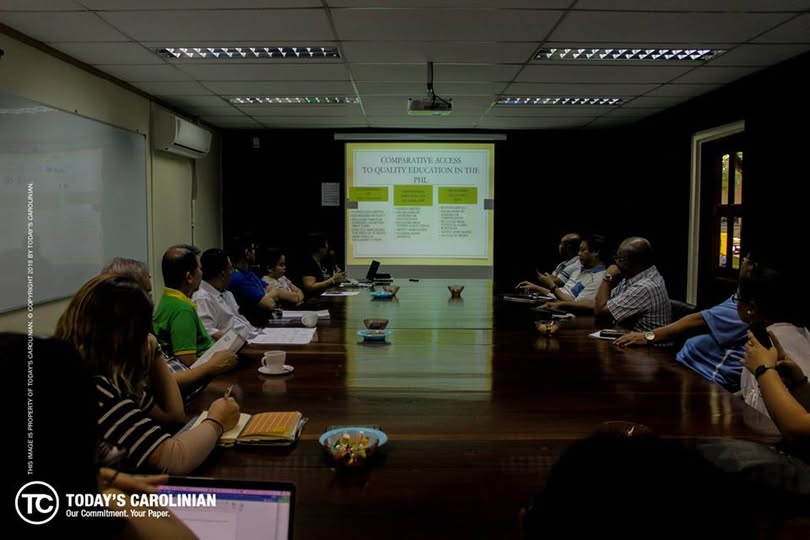
Photo by Keith Ayuman
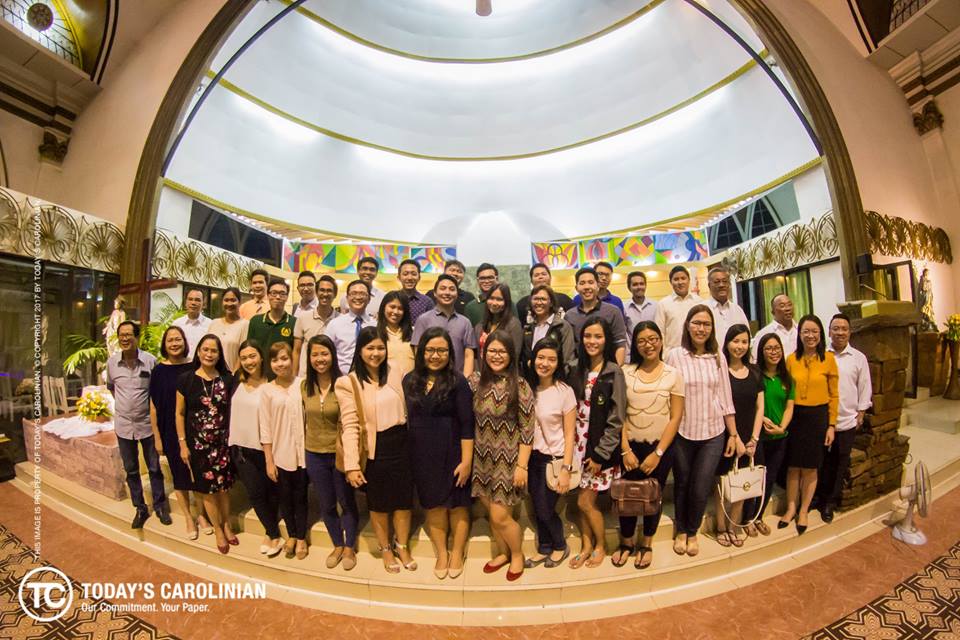
The administration held a meeting last Sept. 26, 2018 at the Vice President for Academic Affairs Office to present to the representatives from the Supreme Student Council and Today’s Carolinian the justification of the change in the freshmen’s tuition fees.
Fr. Aleksander Gaut, SVD facilitated the consultation along with the other Cabinet members of the University of San Carlos. The imperative constituents from the Support Offices and Office of Finance were present as well.
They clarified that this is not a tuition fee increase, but a new tuition fee since everything is now based on a new prospectus and policies, standards and guidelines (PSGs). Due to the deficit, the increase may still be prolonged until 2022 wherein gaps in the year levels would expectedly have been removed.
Winda Virtudazo, a member of the Office of Finance, first went through the reason behind the increase and the breakdown of the computations. She presented data and statistics of the decline in enrollees due to the reformed educational system.
On Feb. 2017, a Program Pricing Committee was established to attend to the big shift. They were conjoined specifically for the new freshmen’s programs. This had to happen because according to Fr. Gaut, these were new programs and requirements that the university had to attend to. This included the new PSGs and prospectus from the CHED Memorandum Order (CMO) 2017, as mandated by the government.
Fr. Gaut explained that the department chairs were in charge of getting the finance data per program. These were then forwarded to the Office of Academic Affairs then transmitted to the committee for proper computations.
Last March 2018, the initial assumption and computation garnered an extremely high pricing. Based on feedback and recommendations from the deans and chairs, the committee revised the prices downward by June 2018. This was then endorsed to the cabinet and Board of Trustees.
One basis for the computation of the “per unit fee of laboratory and lecture” was the CMO 2017, which stated that the ideal class size of programs should have an average of 30-40 students for lecture courses. This allowed the committee to come up with the 35-student class size average for their computations.
In the sample computation, Virtudazo rooted it in the average of the faculty salary per unit, another vital factor in the reformed pricing. She considered the different percentages like benefits, non-teaching personnel’s salary and institutional expenditures. This then summed up to the average price of 1,007 PHP per unit. The pricing for the student support services were also presented.
Joahanna Veloso, SSC President, queried on the unbalanced increase in the tuition and faculty salary. According to Fr. Miranda, it is a reality that not all departments can comply to requirements. Factors are the shortage of faculty per department and varying class sizes.
The discussion also addressed the classes that do not meet or go over the average class size. The administrators explained that if they do not open these classes, the students would be jeopardized.
Fr. Miranda also mentioned the maintenance of laboratories and the expensive courses. Along with the other distribution of different expenses, the laboratories are big constituents as well. To prevent the outdatedness of equipment and software, the university would have to hash out money in order to update these.
Kimberly Lim, an SSC representative, asked of the supposed improvement of facilities for the freshmen. Fr. Gaut answered, “that is your right to demand – the changes of tuition fee is equivalent to the changes of facilities. We (academic division) are doing our best to upkeep the status of the facilities in the university.”
Meg Villaflores, a freshman representative, also enquired, “why were we not informed of the tuition when we enrolled?” Fr. Villanueva said that it was not yet possible to release it at the time because of the incomplete list of courses and charges that were to be forwarded to CHED.
Fr. Miranda added, “there is no acceptable explanation for that, except that we are flat-footed to the initiatives of the government. We were also not able to finalize the figures because the government itself was not yet done… All we can say is we are sorry. It is like a disaster that hit everybody. We are sorry that we did not advise you earlier and that it is already there.”
Fr. Gaut mentioned that they had told SSC beforehand that the new programs would have a different pricing. Figures were not available at the time due to lack of supporting data.
Kimberly Lim queried on the suspension of scholarships for the Dean’s Listers. According to Fr. Miranda, they had to divert the scholarships to the regular students for now due to lack of resources. The new students’ privileges are frozen because of the changes of different sectors.
Joahanna Veloso added that last semester, even the old students who were Dean’s Listers were not granted of the scholarship. According to the administrators, they will be working on the scholars’ reimbursement.
In conclusion, there will be no drastic changes in the new programs’ tuition fees. The covered new pricing will remain as is.
Fr. Miranda concluded the meeting saying, “this is the reality of contemporary college education.”