Kapuso Campus Tour Stops at USC for Cebu Leg
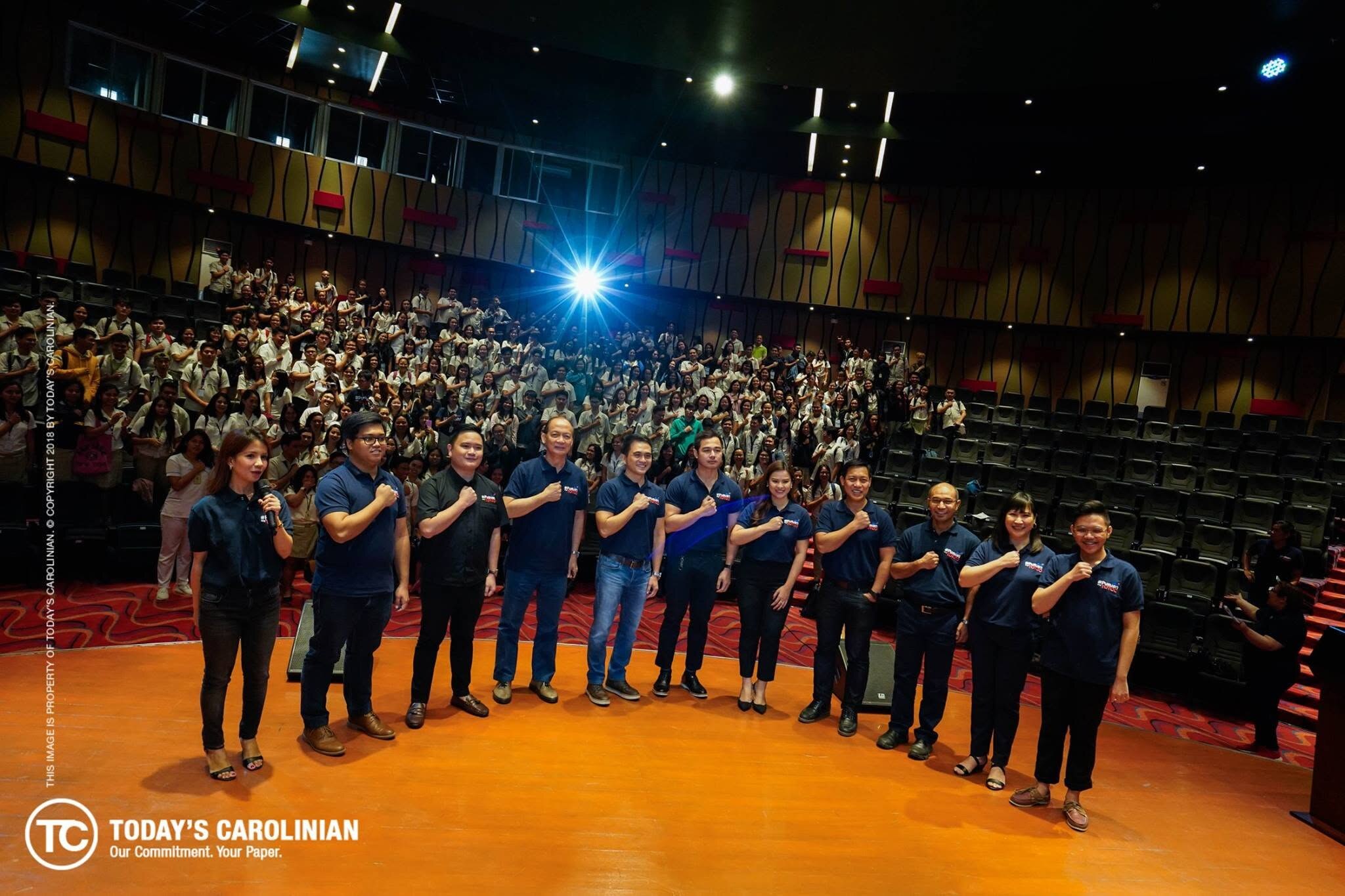
Photo by Jason Matthew Lim
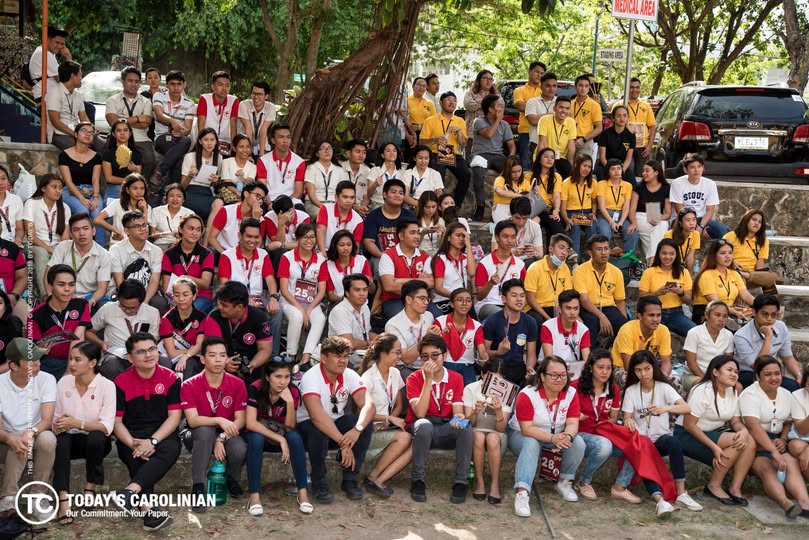
The Carolinian community spent a morning engaging in the Kapuso Campus Tour: The Global Media Arts (GMA) Regional TV Masterclass Series at the Michael Richartz Tourism Center last Feb. 1, 2019.
With the goal of securing honest democracy in the Philippines, the session featured talks from various GMA professionals and successful businessmen about free voting, mobile journalism and social responsibility, to name a few.
University president, Fr. Dionisio Miranda, SVD, SThD, opened the event by welcoming all participants, calling it a “political exercise”, highlighting the importance of “promoting political diversity” and “examining why the population votes the way they do.”
Golden Cañedo, winner of GMA’s The Clash, then performed an intermission number before the first speaker began his talk.
Oliver Victor Amoroso then took the stage to introduce the Kapuso Campus Tour, calling it the “proud initiative of GMA Regional TV”. As the head of GMA Regional TV, it was his and his team’s goal to guide people in choosing leaders who would be able to help the Philippines and make well-informed choices. It was this goal that inspired the election advocacy, “Pusuan ang Totoo”.
Social media producer, Yvan Limson, was next to speak. He acknowledged the role students played in making Pusuan ang Totoo a reality. He also stressed how possible it is for anyone to contribute to journalism. An example of this is through YouScoop, a platform created by GMA that allows citizens to play a part in reporting the news. To be a YouScooper means having the ability to tell if something has “news value”. Before he concludedd his talk, Limson reminded the audience to know their limitations during the pursuit for news and that “no story is worth dying for.”
The third speaker of the event was Hector Dimacali, vice president of the American Field Service (AFS) Intercultural Programs Philippines and owner of Mary Grace Cafe, who shared his experiences as a foreign exchange student. According to him, partaking in programs such as AFS help young people widen their outlooks on the world but also allow them the chance to develop awareness of the ways of cultures other than their own.
The next talk was titled, “Documentary Filmmaking” and was presented by Jun Veneracion. He focused his talk on sharing how documentaries usually come from compelling stories and cases. The way to create a strong documentary is to carry out research and to inspect similar cases from previous years.
Benjamin Alvez then took the stage to discuss grades and learning. He stated that although grades are a crucial aspect of being a student, they are only “measurements of what you have earned in class”. Learning on the other hand is “what you learn in life” which is why it is important for students to develop a desire for learning rather than a desire for good grades. He also went on to encourage the audience to apply for the GMA Network Excellence Award, an award he is an ambassador for.
Once a instructor at the University of San Carlos, Cecille Quibod-Castro, now a news anchor for GMA 7 Cebu’s newscast broadcast show, then gave her talk titled, “Local News Matters”. She shared how local news is just as important as nationwide news, citing the trash situation in Mandaue City, Cebu as an example of how reporting local news lead to local issues being brought to the attention of leaders.
Raffy Tima then concluded the series of talks with one focusing on “360 Journalism” and how media and technology has impacted journalism in the 21st century. Through the introduction of technology such as smartphones, drones and special tripods, stories can be presented in new angles that are not only more cost efficient but safer as well. It is because of the various means for angles to be presented, “every is inspired to have a vision for a better world.”
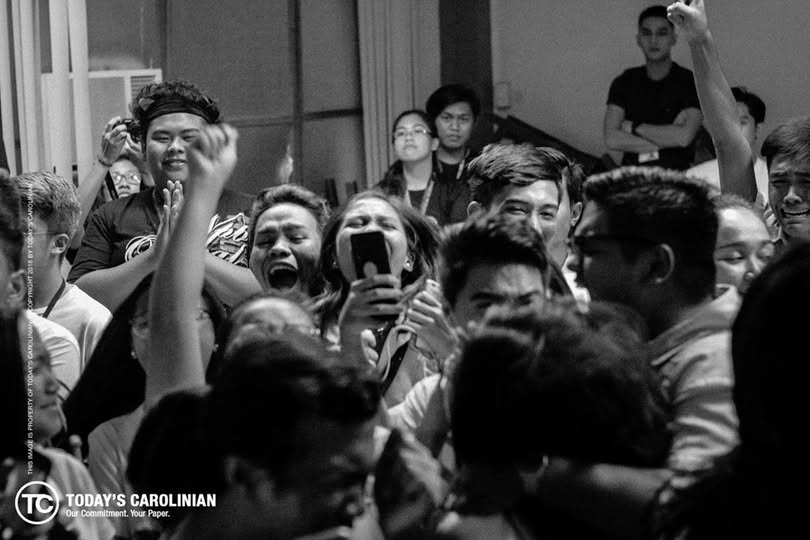
The Cebu leg of the Kapuso Campus Tour concluded with an open forum with students raising questions to the speakers regarding voting, the dwindling belief in media and the nature of people to feel without thinking in terms of analyzing issues.