USC College Faculty Finally Forms Union
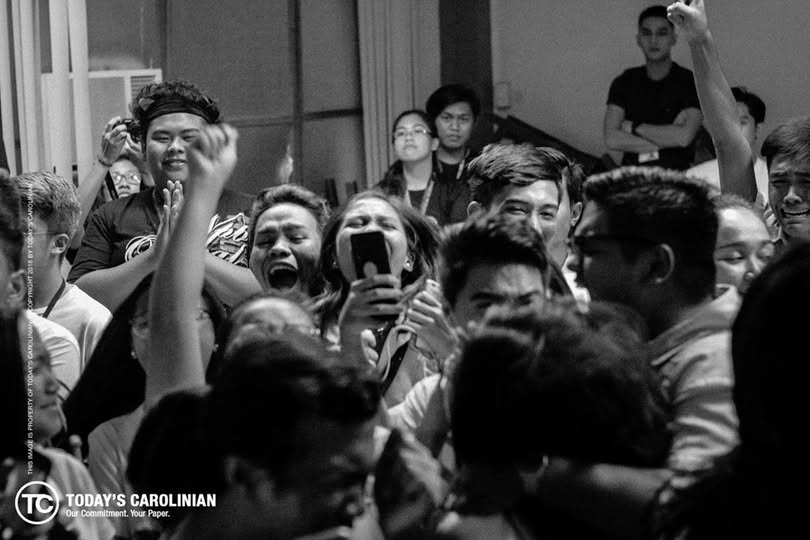
After multiple attempts over seven grueling years, the University of San Carlos college faculty successfully established its Independent Union (USC-CFIU) with a 101-48 vote in favor last December 6, 2018.
Duly registered in the Department of Labor and Employment (DOLE), the union will serve to collectivize and provide legitimacy to the faculty as they move to address the concerns that burden them, which have significantly grown in number. In an interview, founding president, Levy Lanaria, stressed that its “overall goal is really to have a united and empowered faculty able to negotiate with the management on an equal footing”.
Two attempts were made in 2012 and 2013 for a certification election. While both failed, this did not discourage the founding members, Lanaria included, from their pursuit to unionize. He claims that the margin in votes was narrow enough to keep them motivated towards their goal of unionizing. When the year 2018 came, they sensed that a third certification election was ripe — a hunch that proved correct.
A string of events and new circumstances swept the faculty, creating the critical shift in their sentiment towards unionizing that made this last attempt a shining success. Teachers have been scrambling for teaching loads in order to enjoy a decent pay at the end of every semester; their salaries have not increased for over five years either. Even faculty members with advanced degrees and seniority in the university were not spared from this predicament.
Many feel that certain moves by the administration were made without proper consultation despite their tremendous consequences. Particularly, the implementation of the new Department of General Education and Mission (DGEM), which went through without prior consultation nor mandate from the Commission on Higher Education (CHED), surprised even department chairs and deans and now poses a threat to both security of tenure and the undergraduate programs subsidized by service courses.
“There was no in-depth consultation. If ever there was an assembly with the administration present, it was meant to inform but not to solicit our views and opinions. It was already cooked and it was just being offered to us,” Lanaria recalled. “We, the teachers, realized that we do not have a voice in this institution, so we have to unionize.”
As in every organization, the union, too, was not free from obstacles and challenges. Internally, teaching loads and other academic tasks were one of the roadblocks in organizing the union. Consequently, only a few teachers actively participated in lobbying to collectivize before the elections through helping, crafting statements and drafts, designing a program, and routing among others.
What then is next for the union? After celebrating their hard-earned victory, they will be holding their first general assembly this January to discuss, plan and conduct a formal consultation on the union’s constitution and bylaws.
The union currently awaits the formal proclamation from DOLE.