

140 Characters or Less: The Socio-Cultural Dynamic of Twitter
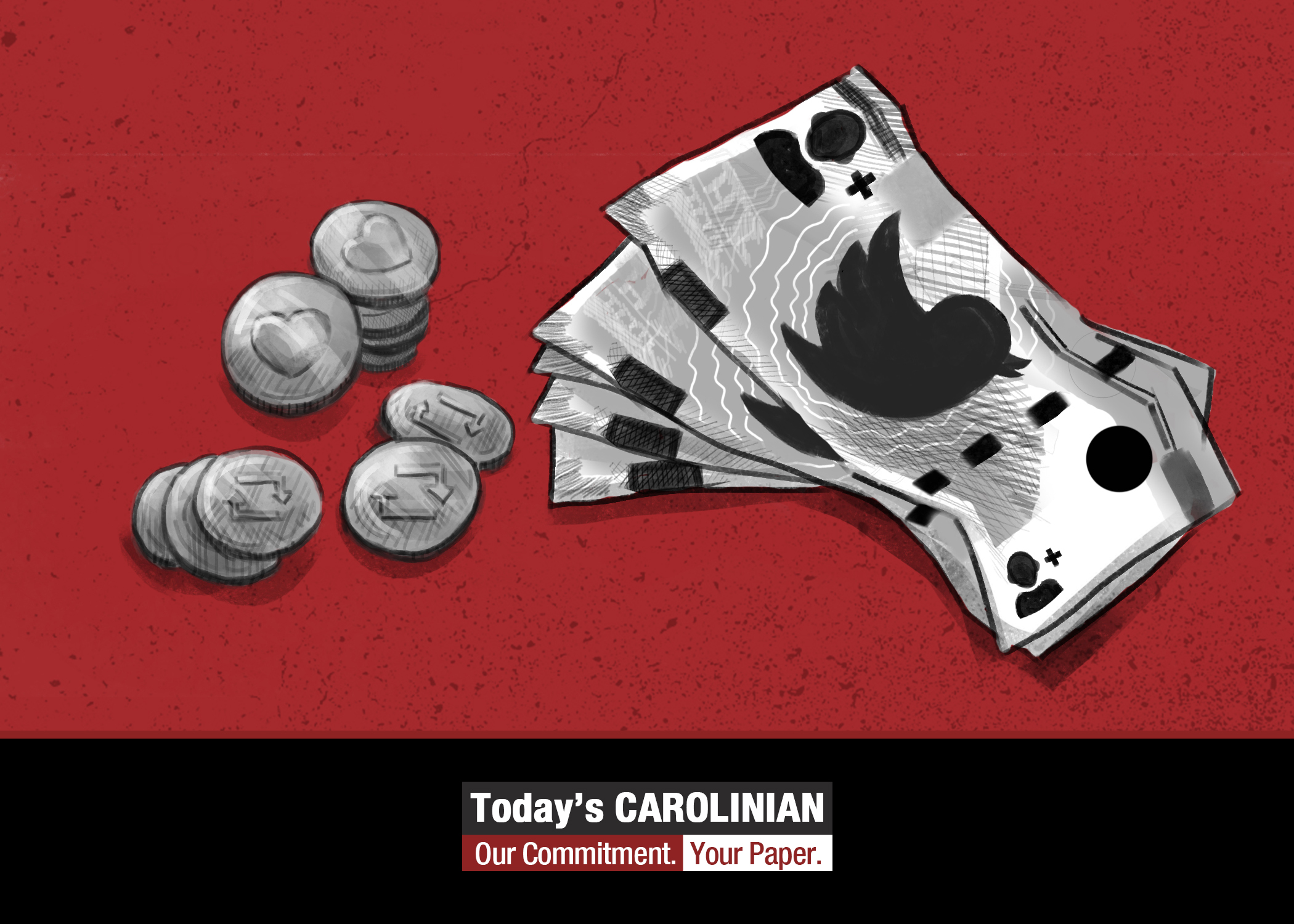
Illustration by Justine Patrice Bacareza
It’s hard to deny that Twitter stands as one of today’s strongest social media platforms. It has adapted well with the times, presenting itself as an avenue of expression especially for the ever-so-controversial generation — the millennials. What makes Twitter a go-to site is that it has everything from news to current events, all packed into witty 140-character blurbs. Twitter has become a source of relaying and receiving real-time information which enables users to keep track of recent happenings from all over the globe.
The Twitterverse is extremely broad and diverse that it tackles basically any topic and adheres to all kinds of demographics. Despite being a site associated with millennials, Twitter encourages other generations to bridge the gap through this form of social media.
However, the generational gap is not the only form of division that is exposed through Twitter. Given the divisiveness present in today’s society, Twitter users make it a point to address certain socio-cultural-political issues such as racism, feminism and inequality to name a few. Moreover, this creates a trend in the Twitterverse. Simply stated, a tweet that is relevant and relatable can go viral in just a matter of minutes.
What makes these topics even more relatable is of course, the use of memes.
Memes are basically the brainchild of this generation. Through the use of memes, people can find topics more understandable and relatable. The ingenuity behind using memes to capture attention while retaining relevance encourages Twitter users to interact and engage in discourse — something that we, as a generation, must continue to do.
Setting the limitation to just 140 characters allows people to be well-informed without losing their attention or interest regarding a certain topic. Compared to other information-sharing methods such as articles or newspapers, Twitter summates a thought into a brief, easy-to-read 140-character statement. However, the ease and convenience of this particular aspect of the site might result in people veering away from articles and other forms of traditional information-sharing methods. By catering to those who do not have the time to read through these articles, does Twitter allow us to become dependent on briefly-explained information rather than taking time to understand the entire story?
Suffice to say, Twitter has been doing a great job in the information-sharing field. Tackling topics such as racism is one of the most popular themes on Twitter. Racism is a topic that hasn’t been discussed well enough, and through the existence of Black Twitter, it can be properly depicted and explained for the greater Twitter sphere to read. Black Twitter, as described by the writer Feminista Jones, is “a collective of active, primarily African-American Twitter users who have created a virtual community … [and are] proving adept at bringing about a wide range of sociopolitical change.” The participation of Black Twitter in the social mainstream is vital, especially in a society that refuses to acknowledge that racism still exists. Furthermore, this emphasizes how influential Twitter is as a social network.
Even to our Filipino culture, Twitter has been present in almost all forms of major events in the Philippines. Twitter users pick up on trends in the country’s socio-cultural-political sphere through the use of clever one-liners, threads and memes. The statistic of Pinoy Twitter users continues to grow, which proves that Filipinos do rely on this social network as a means of getting information. By using this as an advantage to adhere to certain issues that aren’t popularly discussed, Filipino users can make topics appear current and relatable through the use of Twitter.
Twitter stands as one of today’s strongest social networks and by taking advantage of this, stimulating change in today’s society can be achieved by anyone. 140 characters must not be seen as a limitation, but rather as an opportunity to project thoughts well enough to create a ripple effect of relativeness and understanding.









I am truly pleased to read this blog posts which carries lots of valuable data, thanks for providing such information.