And a Desert Swallows a Boy
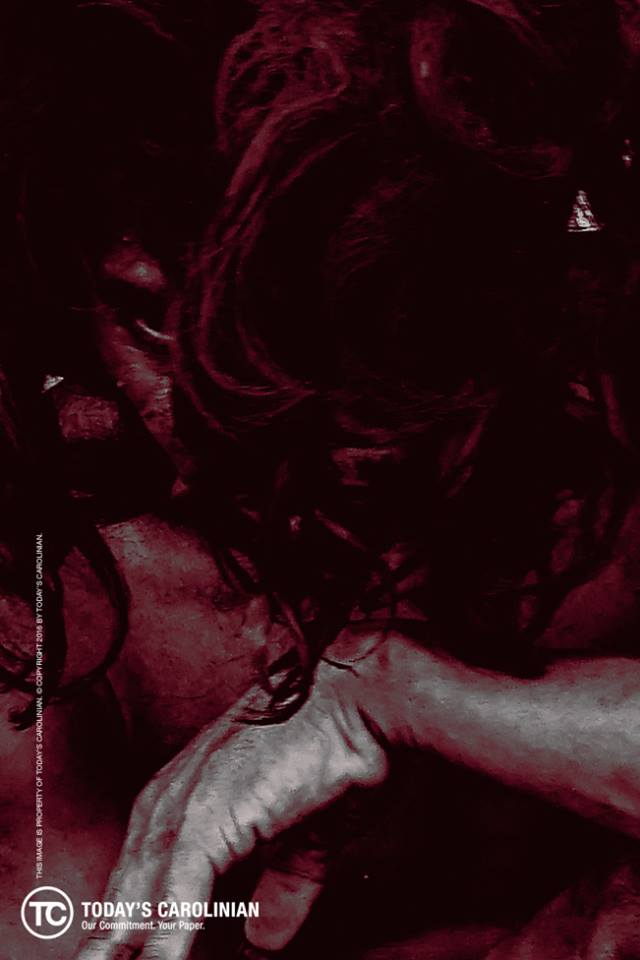
Photo by Angelo Nico Daroy
It’s not hard to be a child on Christmas day, I tell him. It shouldn’t have to be.
He looked at me, gaze as empty as the desert dunes surrounding us — voice even emptier. His nine-year old body was wrapped in white bandages, turned burgundy by his blood and the shifting sand. I told him Christmas was only two days away, that boys like him, and girls too, could ask for anything from Santa as long as they’ve been good. Carefully, he mouthed his country’s word for “mother”.
I turned around and walked to my tent, past the rows of wounded natives and a pile of those that didn’t make it through the night. I sat on my bed and held myself, the dry floor seeing the first signs of rain from my eyes.
We couldn’t even find his mother’s body. The bombs made sure of that.
He was crying on his stretcher the next day, but not the kind you would expect from a child. Long, silent streaks of tears traced the crumples on his face. It was the only form of grief allowed in their area. Sobs invited bullets.
When I came near, he asked where his mother was. I told him she was in heaven. He called me a liar.
The day before Christmas, I managed to strike a conversation with him. We were talking about Santa, how he was the big old man in red aboard a flying sled, giving gifts to good children on Christmas day.
“Am I good? Will I get my mother back tomorrow?”
I told him no, that Santa could only give out things, not people.
“What good is he then?”
“Not very much, but he makes a lot of people happy. And don’t you think it’s cool? That he has a flying sled, and he can travel all around the world in a single night?”
“Can he kill people, run them over or pick them up and drop them? Someone dropped the bomb. Someone should die. It’s not fair,” he said this in a sharp, resentful voice no child should ever learn how to use. Innocence can only be lost once, but for children of war, once is all too few.
I told him Santa didn’t work that way. He didn’t kill.
“But he’s white.”
I didn’t sleep silently that night.
Too often, we see terror or those that carry it only through someone else’s face, as some forgotten wreckage that demands to be seen again. But perhaps that is the problem. Perhaps terror is in our likeness, in our faces too. Perhaps that is why we continue to call it peace.
Being a volunteer from a foreign land, you’d have thought me strong and compassionate, and perhaps for a time I believed that too. But it takes centuries for a desert to heal, and I knew only how to water one with my eyes.
It was Christmas, but the bombs fell anyway.