Blessing and Curse: The Case for Student Activism
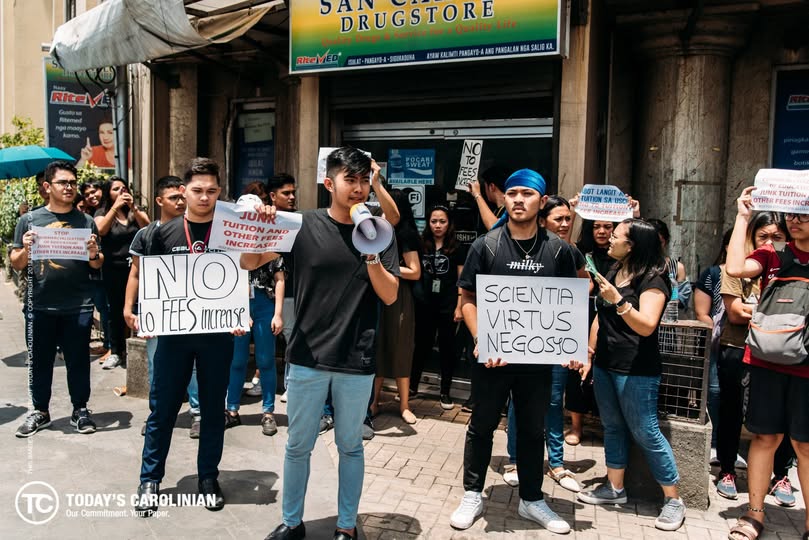
Big signs, megaphones, grim-looking people screaming their lungs out, pumping their fists in defiance to authority for the sake of a cause? Maybe something more sinister. Shady groups of people at war with the government and playing on the suffering of the disenfranchised to bolster their ranks?
At its simplest definition, Activism merely means direct action in support or opposition towards a controversial issue. Why then is it tagged with such a negative image? Why then is the concept itself the target of loathsome dismissal (by many) and fanatic reverence (by few)? After all, were not the ideals of gender and racial equality spurred forth by people who voiced their opinion? Were not the rights and freedoms we enjoy today a result of the sacrifices of the many? What then would this country be had those student activists of the 1800’s passion be found wanting? What would this country be without Del Pilar, Jacinto, without Rizal himself? Forth a few decades even, what then without the many who gave their all to save us from the Marcos Dictatorship? Most of all, what does it all mean to a Carolinian of this new and age?

Bygone decades saw many Filipinos take to the streets in protest against an issue or another. Two people-power revolutions, and dozens of others over disputes, injustices and controversies. Rallies by student activists remained common, but with decreasing frequency.
The student activists of this decade remain persistent and resolute. They decry what they claim to be the prevalent apathy of our new generation, a burgeoning passivity among the student body. Perhaps it is the method then, for better or for worse, that Student Activism has been mostly defined by their demonstrations, the rallies for causes that the activists encourage us to
join. As a tool for change, the act itself has seemed to mellow in effectiveness to enact the change it wants to conceive. This can likely be taken as the sign of the times, as the rallies generally create a sort of stigma, as well as to enforce the insecurity of the established authority. What ensues then is a reaction, might be that things end up even worse than they started.
Social stigma towards student activism itself is unde
niable and quite possibly paradoxical. Going back to its most neutral definition, it is an act of opposition to an issue and most likely the authority in question. And at its core is an act of defiance – an idea that confuses our Neo-colonial sensibilities. Historically, Filipinos are weak and fearful towards the concept of change, a symptom of the heavy handed authoritarian repression of our Spanish colonizers. Indeed, numerous control mechanisms were set in place by the foreign conqueror. These control mechanisms are reinforced more so by the fact that we never won our freedom from foreign control, we were bought and sold from one invincible authority to another until freedom was handed to us. It is not surprising to see evidence of it today in many different levels of our “modern” society.
Having said that, it is not hard to see why then that the ideal of student activism is stigmatized. To be aware and critical of issues is to deviate from the norm of student and civilian apathy. To challenge authority is an act of arrogance and rudeness, is it really a small wonder then that abuses of power in many of our institutions are now a fact of life?
On the opposite side of the spectrum, those with low opinions of the ideal cite the demonstrations having a violent nature. That they achieve little in the long run and seem to be called at the drop of a hat with much urgency but little in the way of forward thinking. Some would even say that we are better off accepting these hardships as a fact of life. That we are better off just putting up with it, that student activism itself is just a colossal waste of time.
The argument between the two extremes will perpetuate ad infinitum if we do not realize and accept that times have truly changed, and that we must adapt in order to make the most of these uncertain times that we live in. Maybe now is not the time for rash action, from radicals and conservatives alike. Maybe now is the time for theory, a time for us to look at everything and find new ways to address our issues, better ways to ere out differences of thought and ideal. It is a democracy after all, however ramshackle and faulty it is.
Returning to the question of student activism, maybe now is the time to shape a new ideal, with new methods. We are all in different ways building towards the future of this country; we cannot keep to the old ways and grudges forever. The world is getting smaller, years and eras grow even shorter, the times are changing at a seemingly breakneck speed. Above all else, we must adapt to the times, and strive for tomorrow. The question of student activism is both a blessing and curse, especially for us Carolinians who want to make the best of our stay here, who hope still for a better future and a better way. Blessing or curse, it is ours to bear, for better or for worse it is for us to trudge forward in these ever changing times.