Coming Home
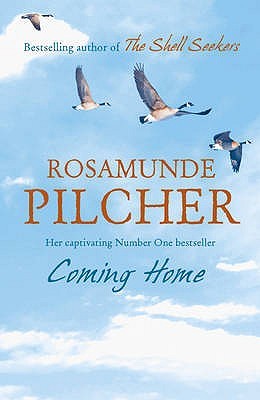
Have you ever wondered what it felt like to have lived during the time of Second World War, to have lived inside a rich elegant Cornwall mansion before the devastating war happened or perhaps how it felt like to have lived in the aftermath of the sickening and disheartening war?
“Coming Home” is a book written by Rosamunde Pilcher in 1995. The book contains beguiling descriptions of the coasts of Cornwall, the highlands of Scotland, and the society of London. Pilcher’s perfectly breathtaking illustrations and accurate views bring her readers to a unique adventure. Tranquil places and several events have inspired the writing of her book.
In 977 pages, “Coming Home” chronicles the life of Judith Dunbar – from her teenage years up to her life as a matured woman filled with conquering bravery after having gripped the learning of love and sadness during the turbulent years of war. The long – but not excruciatingly painful read is worth every page as the story slowly unfolds the life of the character. The first few pages will drown readers with Dunbar’s early life but as the story progresses, the readers get the feel of coping up, of sharing hope for one’s self and others and of sharing each painstakingly, breathtaking scenes of coming home again.
In the year 1935, Judith, our 14-year-old protagonist, is abandoned in a British boarding school when her mother, Molly Dunbar, decides to join her father in Singapore together with her baby sister, Jess. Judith stays with her Aunt Louise Forrester at Windyridge for the mean time. There, she meets Loveday Carey-Lewis at Saint Ursula, who eventually becomes her good friend. Throughout her stay at Saint Ursula, Judith laments at the thought of being far away from her family, while keeping up her academic life.
Her friendship with Loveday draws her in a world of eccentric privileges, British aristocracy, and wealth. She visits Nancherrow with Loveday and her mother, Diana Carey-Lewis, a woman who is part of the elite and loves to go to London. Judith grows close with the Carey-Lewises after a devastating catastrophe happened to her Aunt Louise. She meets some of the Nancherrow people, including Jeremy Wells, the doctor she met few years back with her mother while on a train to Porthkerris, their home.
During the next few glorious years, Judith considers Nancherrow her home and the Carey-Lewis like her own family. She falls in love with Edgar and Diana’s son, Edward Carey-Lewis. They embark in a relationship that ends up in vain. Meanwhile, Loveday meets Gus Callender, a Cambridge-based engineer who is a great artist as well.
After ending her relationship with Edward, Judith faces the hard truth about people dying because of war. She finds herself enlisting in Wrens as a volunteer. The story goes to deep detail in descriptions of war-time troubles and Adolf Hitler leading invasions in different lands. The book portrays the hard battle of the people and the excruciating pain they undertake for their country. Judith now comes to face the heartbreaking news of her relatives, and people close to her heart, that are lost forever. What’s worse is the torture she has to feel while waiting news for her family in Singapore after its fall to the Japanese.
As the war comes to a resolution, Judith deals with an unfinished romance with Jeremy Wells, who comes home to Nancherrow after serving the army. So many things had happened during the darkest period of war, but not even a single tinge of warmth in Nancherrow has been touched. It remains to be the safest place for them in the world.
The characters come to unite in one setting after the end of the war – at the beautiful and lavish mansion inside Cornwall, the Nancherrow. There, everyone lives to start anew and to build up the spirits that were torn during the turbulent days.
This book is a good companion for those sunny afternoon teas. Thestoryline is absorbing and is neither dull nor boring. Each page will drive you to the twisting plot of the story as you try to delve in deeper into the lives of the characters. The story is compelling and will leave you wanting more. Pilcher recreates the emotional turmoil of the characters with every word.
Aside from the entertaining read, the book gives you educational insights as well. It teaches of the lives of the people during World War II and how they coped up with scarcity of resources. Of how people try and protect themselves from landmines. It depicts of the people’s early lifestyle in the twentieth century and what they did for a living. With the detailed manifestations from the writer, it is easy to picture out the situation underway. Through each character’s story, the book pursues you to delve in something deeper, something extraordinary, and something meaningful.