USC Museum Unravels Sto. Niño
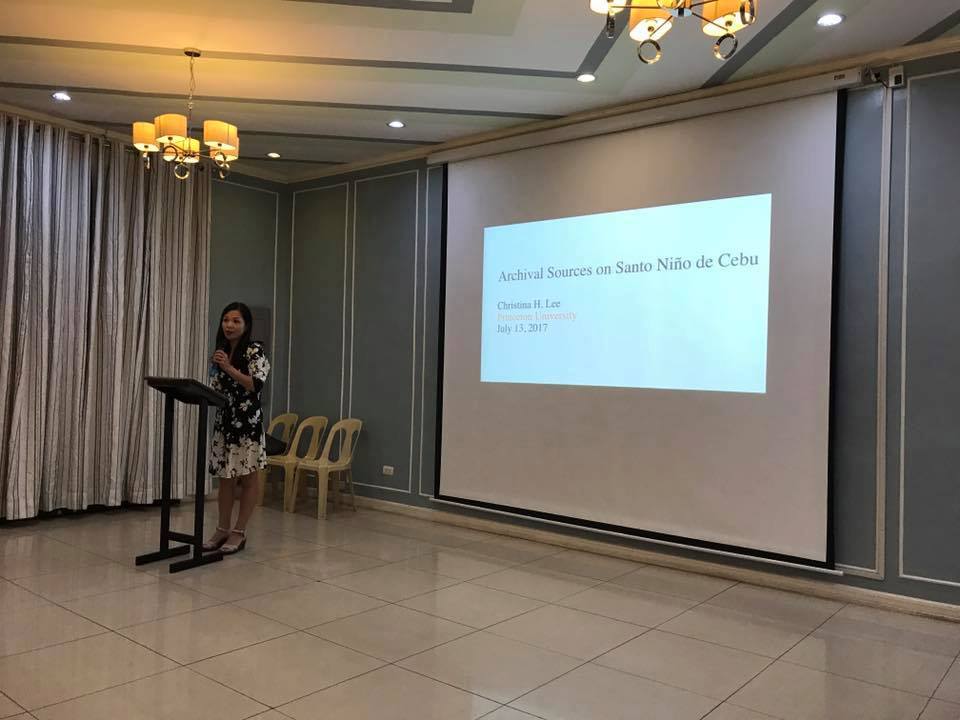
Photo by Jobers Reynes Bersales
The University of San Carlos (USC) Museum, together with the National Archives of the Philippines (NAP), held a lecture on July 13, 2017, at the DHM Function Hall located at the Downtown Campus. Guest lecturer Dr. Christina Lee, research scholar at Princeton University, discussed about the origin and theories behind the image of Sto. Niño de Cebu.
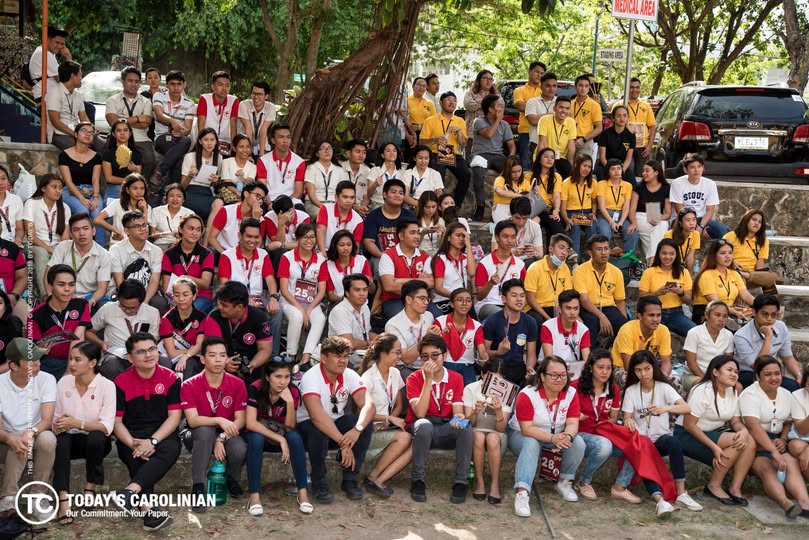
In attendance were different museum curators of Cebu, head librarians from various areas in Luzon and the Visayas, university president Fr. Dionisio Miranda, faculty and students from the Department of Anthropology and Sociology, and Augustinian priests from the Basilica Minore del Sto. Niño.
This event was held to celebrate the museum’s 50th anniversary. USC Museum Assistant Curator Ms. Regine Yoma said the event was done to deepen the knowledge of our culture, heritage, and origin.
The USC Museum Head Curator and the foremost editor-in-chief of Today’s Carolinian, Dr. Jose Eleazar Bersales, gave welcoming remarks to the audience. He emphasized that this lecture was important, for the topic was deeply rooted in our identity.
“This lecture is close to our hearts, as Catholics and devotees to the Holy Child,” he stated.
The Executive Director of the National Archives of the Philippines, Mr. Victorino Manalo, introduced Dr. Lee as she started on with the lecture.
She began by stating the influence of our colonizers and how it made Christianity as the main religion dominating the country, evident on the fiestas that hundreds of people celebrate.
“The Spaniards wanted to colonize the locals, and so they used faith as a tool for colonization. Catholicism shaped the way for the Philippines to be a western colony, ruled by the Spaniards.”
Due to this movement, the legend of the image of Sto. Niño began. She narrated the legend as what was foretold by our grandparents and predecessors.
“The story was that Magellan brought the image from Spain and gave it as a gift to Rajah Humabon and his wife, when they reached Cebu. When Legazpi conquered Cebu, the image was found under a wooden floor, unscathed and intact. They, then, created a procession for the Holy Child. At least, that’s what the legend goes,” Lee stated.
She implied that archives done by westerners in 1565 implied that Miguel Lopez de Legazpi finding the image again is a predestined implication that the Philippines will be a Catholic country.
“Due to de Legazpi finding the image, some letters written by westerners, such as Spain, implied that the Philippines is predestined to be a Catholic country. Legazpi used this knowledge and made faith, itself, as the main tool in colonizing Cebu and the Philippines.”
She discussed of the contradicting assumptions that the text offers, that Magellan’s story contradicts with claims from commoners of 1565. A testimony of Esteban Rodriguez in 1565 says so. It stated of a fisherman finding driftwood, and it slowly formed into the image.
Lee further speculated this by saying, “Magellan brought with him the Holy Child, the lady of Guadalupe, and a crucifix. This was given to the king of Cebu and his wife. But Rodriguez’s testimony proves that the image was already in Cebu, even before the Spaniards came. So where did the image really come from?”
Several disputes were discussed for the letters made by Westerners contradicts the Eastern testimonies and accounts, implying that the Westerners used faith to fully brainwash the locals from their ancestry. Such account was that of a Viceroy of Spain, telling the King to use another way of colonizing the wild locals.
“In one of the viceroy’s letters, he described the Cebuanos as wild and savage people. He asks of using force and harsh punishments to the locals. That’s when Legazpi found the image and device to use it to conquer in a subtler way — divide and conquer” Lee further discussed.
Nearing her conclusion, she stated that within all these speculations, the fact that the image created the identity of the people is astounding. The practices of Cebuanos have remained intact throughout the centuries.
“This just came from a group of Spaniards, trying to conquer using faith. And yet through this image, the Cebuanos have been known as religious for having millions of devotees to the Sto. Niño,” she concluded.
Afterwards, there was an open forum to clarify all queries about the talk, ranging from the signs of dancing of the pasinulog to the practices of devotees bathing the image in water for rain.
After lunch, the audience left for the southern Cebu town of Boljoon for their next stop, which is a tour on local museums and churches.