USC’s Future by the Elements
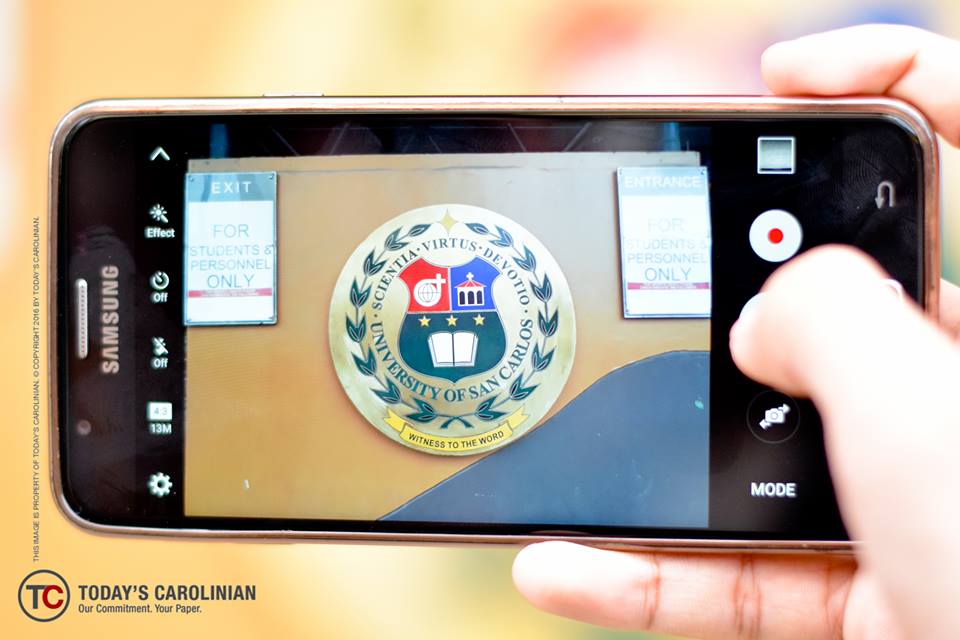
Photo by Jessa Marie Pedrola
Before it was the institution that we know of today, the University of San Carlos had to trudge a rocky path. In the heat of World War II, the school was reduced to ruins. Despite this, she rose from the ashes and steadily grew to become one of Asia’s premier universities. This is just one of the many examples of how time can influence a society. In just a span of a decade, the very core of our human existence can be reshaped with the marriage of time and change. Breakthroughs happen over eons, and these not only influence how we live in the present, but it also sets the playing field of our future. With these possibilities come speculations on how we would thrive in the years to come.
Where would USC be ten years from now? What would life be like for future Carolinians?
First, we must understand the elements that instigate changes in the outcomes of events, actions and ideas. Just like how the four elements of nature forged a world where living beings are able to thrive and prosper, we too can view the changes that happen within the university through these elements.
The first of the four elements of nature is air. It is a force that interlinks many facets of our lives. Not only is it vital for breathing, but its kinetic form, the wind, also serves as a source of energy, a compass for navigation and a blanket of coolness for the hot weather. Likened to the wind, the changing educational system in the Philippines dictates what direction we would gravitate towards and ultimately predicts how the university will perform in the coming years.
Influence plays a big role in shaping the educational system of our country. According to the Manila Standard, American colonialism used the power of education to pacify the Filipino people during their colonial rule. Whether we view this as positive or negative does not change the fact that what started out as an instrument of colonization for the Americans has now become one of the forefront pillars of our society.
Changes in the system can be like a gentle breeze, steadily growing in the hopes that it would bring about positive outcomes for the people. For instance, the K-12 program was adopted by our country in order to be more competitive on a global scale. As it is implemented in our university as well, it is expected that Carolinians in the future will be more reasonable and stable in choosing their courses, having undergone senior high school.
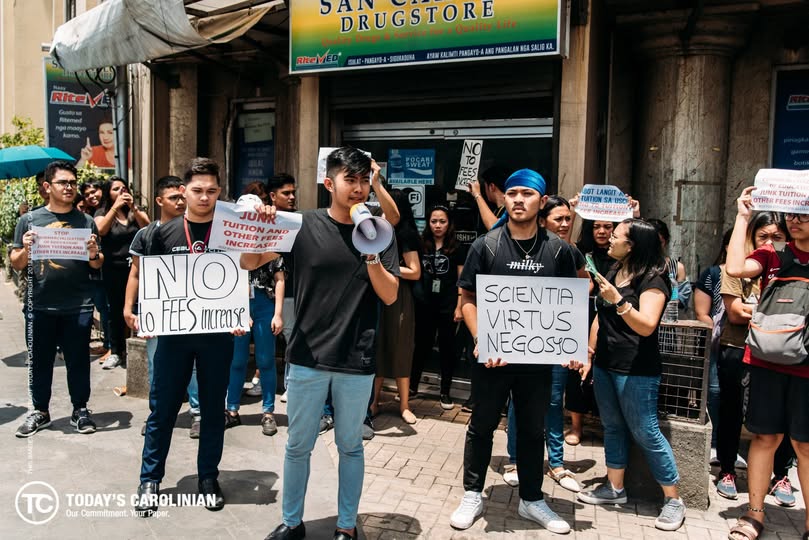
On the other hand, revamping our educational system can also have a tornado-like effect. The stigma of commercialized education in our country is a bitter reality. Quality education is often viewed as a privilege only the rich could enjoy. The continuous rise in our tuition fees does not help in this matter. Typically, The Commission on Higher Education (CHED) grants a 10 percent tuition fee hike to universities in the Philippines annually. If this trend continues in the next ten years, our school’s tuition fee would be tripled from what we are paying at present. Thus, it’s a possibility that future Carolinians will be going to school while the only thing filling their parents’ pockets is air.
Of the four elements, fire and water come as a formidable duo. They coexist in this world in order to sustain life, yet they can easily take it away as well. In a literal sense, the impact of fire and water is observed through the weather. As the university undergoes a calendar shift, students are expected to adapt to the harsh conditions brought about by the rainy season and summer season. Future Carolinians would have to brave extreme rainfall during the first semester and endure the blazing heat of the sun by the second semester. If not addressed, climate change would not only make school life difficult, it would also be a significant threat to our survival.
Figuratively, fire would symbolize our identity as Carolinians. The school wouldn’t even thrive without the students themselves. We live by our core values of Scientia, Virtus and Devotio, and that identity will live on as long as there is passion in students, both present and future, to uphold their alma mater.
Water would symbolize our willingness to irrigate growth along with the flow of the changing world. In the coming years, one of the biggest changes that would impact the world is technology. Future Carolinians would be part of the so called digital generation. Thus, it is expected that their approach towards learning would heavily depend on technology.
Change could also be droplets of ideas that could impact the way we live, learn and view the world. For instance, discrimination has plagued society for years but due to the recent actions and willingness of people to impart respect, society has been more accepting of the minority. This could also be possible in our university. A few tweaks in the system, in student governance, and in school policies would bring a great difference in the Carolinian lifestyle.
The last of the four elements is earth. It is an element that makes up the foundation of our world. If it’s stable, the ground could be a place we can build upon yet when earthquakes start to erupt, it could crumble the things we worked hard for. The University of San Carlos wouldn’t exist if it didn’t have a strong foundation. The classrooms, the library, the stadium and all the buildings in the university contribute to quality education and these facilities should be continually improved for them to be of use to the next generation of students.
Ultimately, these predictions are merely ideas that could serve as a guide in shaping the future. What’s more important are the things that we do at present because the fate of the university would rely on how we, the present Carolinians, shape our own futures.
Where would you be 10 years from now?