Airtight

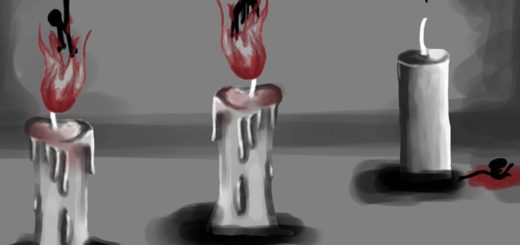
Illustration by RK Tiu
The world ended not with a bang, but with a whimper.
Most people did not know what was happening before it was too late. There were no warnings, no signs to indicate the eventual catastrophe. It wasn’t how humanity envisioned its civilization to end. The world was brought to a complete standstill when the air started to disappear.
It was almost as if someone had poked a hole in the great big bubble of breath of the world. The oxygen in the atmosphere dissipated, choking the world in its absence. People went on with their daily lives, unaware as they were slowly strangled to death, till they collapsed where they were — in their homes, on the streets, in their workplaces.
In the most part, it was a very quick and silent affair without the catastrophic explosions or the screaming masses of people fleeing ruined cities. There was no time to evacuate. There was nowhere to evacuate to. Every living thing on earth simply passed away where they stood or sat. No one could have imagined a quieter or more peaceful apocalypse.
An eerie peace settled around the world. The sounds of earth were hushed for the deafening silence of the vacuum. The absence of air mummified billions of corpses across the globe and preserved them longer than they should have been. The once vibrant cities of mankind turned into twisted mausoleums of dried-up human husks that littered the streets and buildings.
Every sea became the dead sea. Algae, the lungs of the world, could no longer produce oxygen to sustain life on the planet. Marine life died just as quickly as terrestrial life, an uncountable number of sea creatures choked underwater and floated to the surface as cadavers. The seven seas had been turned into the seven biggest graveyards in the world. Not even the waves rolled anymore as a sinister tranquility descended upon the ocean.
Those who found refuge in airplanes and submarines with their own air supplies lasted little longer than most, till eventually they ran out of fuel. Planes crashed and subs drowned, adding to the climbing count of human casualties. Those that survived the apocalypse against the odds were those who had planned ahead, who had prepared for the impossible. Paranoid people who squirreled away to their fallout shelters or bunkers at the first sign of trouble. Shelters with food, water, and most importantly: air. The reward for their vigilance was a lifetime of struggle, solitude and reflection on a lifeless, airless rock.