Behind the Marawi Crisis
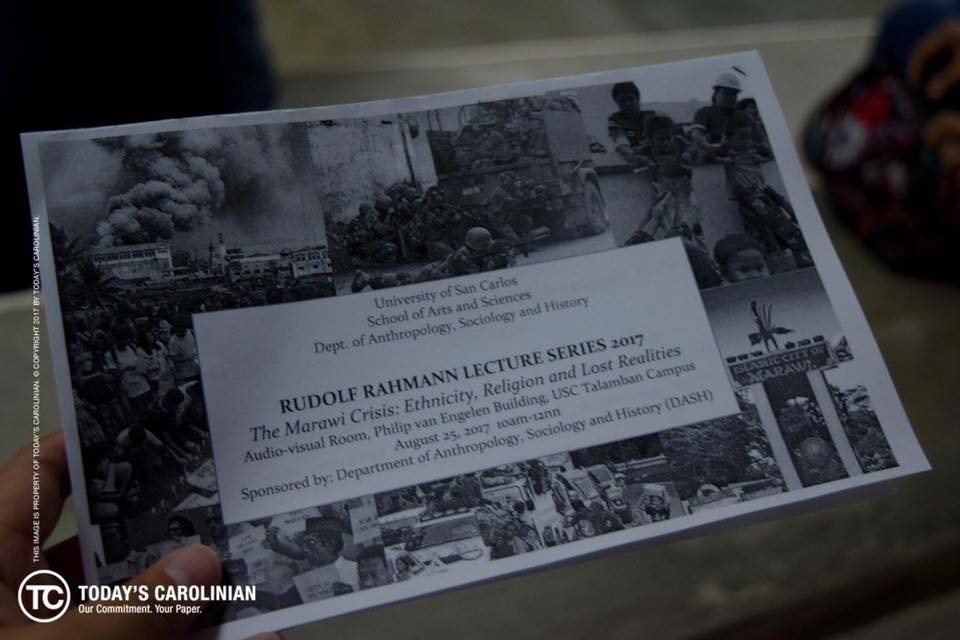 Photo by Jessa Marie Pedrola
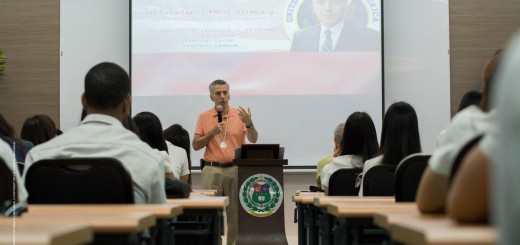
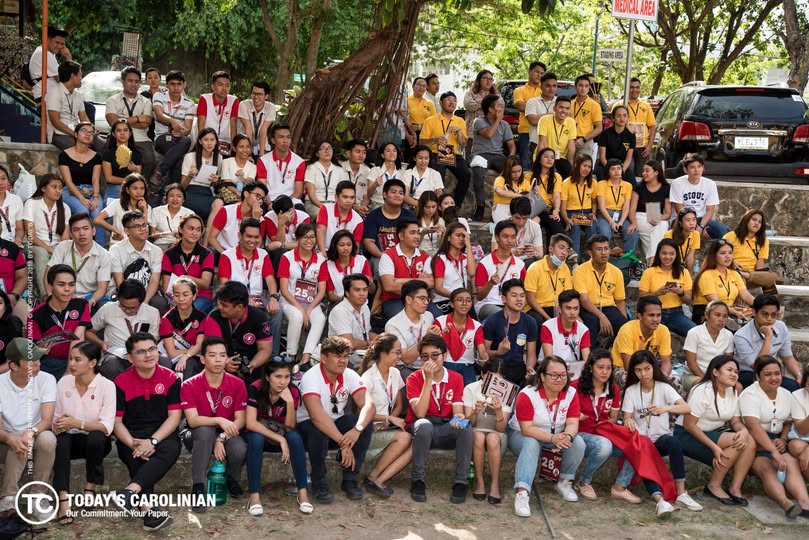
Ethnicity, religion and lost realities were discussed and explored, focusing on the current situation in Mindanao, at the Rudolf Rahmann Lecture Series 2017 on Aug. 25, 2017 at the Audio-visual Room, Philip van Engelen Building, USC Talamban Campus.
Organized and sponsored by the Department of Anthropology, Sociology and History (DASH), the lecture served as not only a refresh on Philippine history in general but as an opportunity for Moro and Lumad representatives to give their testimonies.
The event opened with a doxology by DASH faculty member, Regina Yoma, followed by a welcome to attendees and guest speakers by DASH Chair, Delilah R. Labajo. First speaker, Nestor Pacana, began his talk by briefly explaining the various ethnicities found in Mindanao and the part Muslim religion plays in the region’s conflict. He then went on to compare Catholic practices to Muslim ones, highlighting that those differences act as contributors. To ensure the audience has a clearer understanding of where the Moro and Lumad ethnicities are coming from, Pacana displayed various photographs that depicted their culture and lifestyle. He finished by summarizing what each of the previous Presidents of the Philippines have given the Moros in their respective terms.
Second speaker, Mahdi Darius Nazemroaya, shared similar experiences. Having previously worked in conflict countries like Lebanon in the past, he claimed to have first-hand knowledge on cases like Marawi’s. Despite not having been there himself, he stated that: “Marawi has familiar characteristics I can assess.” On the topic of “Lost Realities,” Nazemroaya shared that contrary to popular opinion, Muslims are the most affected by terrorism. This is due to fact that terrorism is subjective and the idea of what terrorism varies from person to person. Therefore, the reality of whether an act of defending their religion is an act of terrorism or not becomes unclear. He concluded by restating the importance of being aware of your history as, “People who forget their history are doomed to repeat it.”
Afterwards, Lumad and Moro representatives were invited to share their respective testimonies and experiences during the Marawi crisis, as well as in its aftermath. They expressed their main purpose of wanting to gain support from people nationwide so that their opinions could be heard.
Master of ceremonies, Jocelyn B. Gerra delivered the closing remarks to end the lecture, encouraging the audience and guest speakers to refreshments.