Carolinians Encounter Minorities in Lakbayan sa Nasudnong Minorya
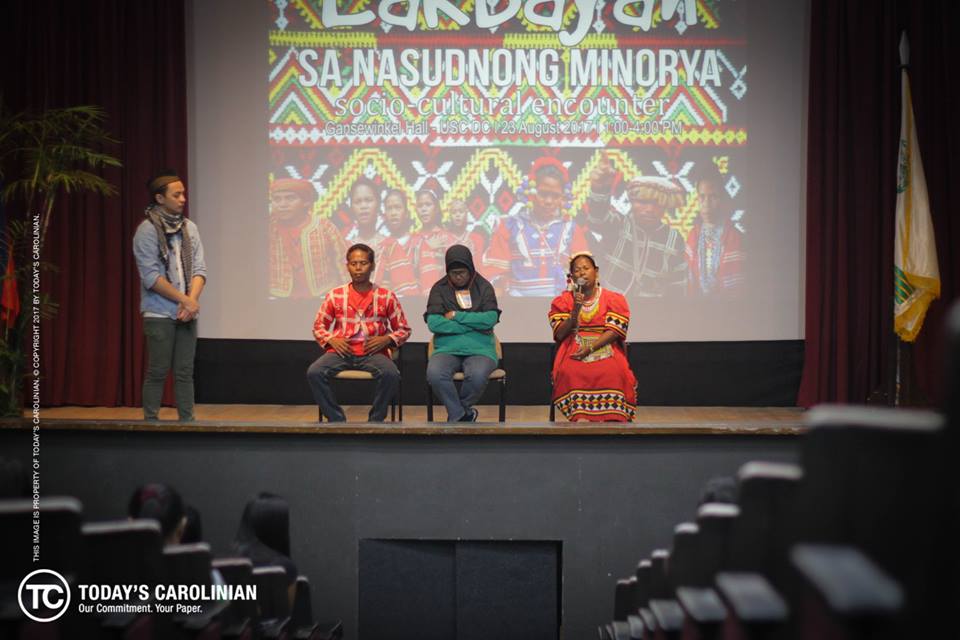
Photo by Ronald Jufrey Milan
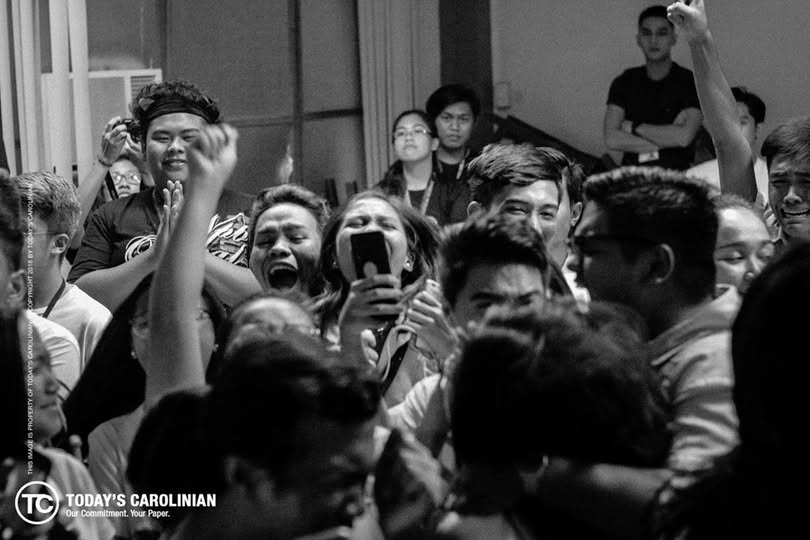
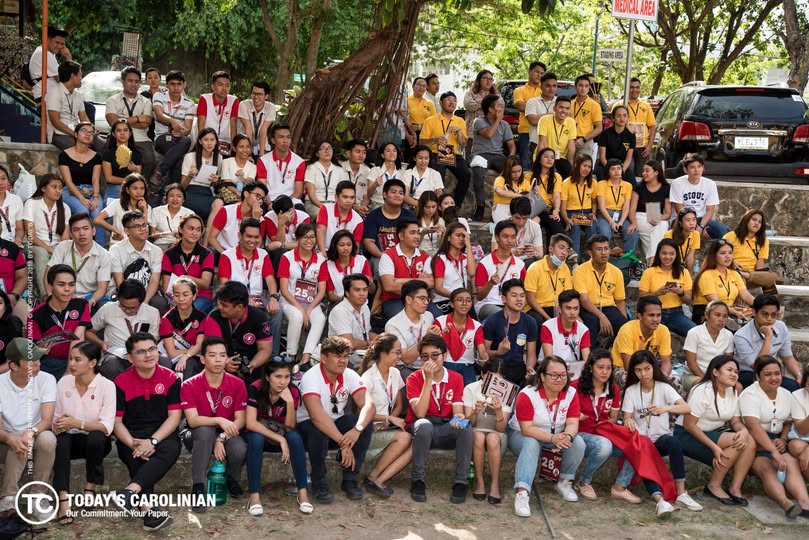
The Center for Governance, of the university’s Department of Political Science held the Lakbayan sa mga Nasudnong Minorya 2017 at the Gansiwenkel Hall of the Downtown Campus last Aug. 23, 2017. It was a three-hour socio-cultural encounter with minorities from Northern and Southern Mindanao. Some of the minorities invited were the Lumads, Moros, and Maranaos. The event offered the audience a realistic perspective to better understand the effects of the implementation of martial law in Mindanao.
The Chair of the Department of Political Science, Grace C. Magalzo-Bualat began the event with her rationale in relation to this year’s USC Days theme: “Exodus in Education: Deconstruction, Reconstruction, Relaunching.” She stated that there is an exodus because of the journey towards transformative changes in the educational system. The USC Days theme is therefore geared towards embracing the educational reform.
Magalzo-Bualat then pronounced that the minorities are also in their own exodus. Their exodus, however, is incomprehensible unless they offer a glimpse of the hardships that they have endured. Such hardships are the prevailing issues on land-grabbing, discrimination and oppression. The socio-cultural encounter is a perfect avenue to promote a productive and meaningful discourse that will inspire concrete changes. In the end, all efforts must lead towards upholding the supremacy of the rule of law.
Messages from the Nasudnong Minorya then followed. The first speaker was Datu Kaylom, a lumad from Mindanao. He stated that the culture of the lumads was not respected. Plantations by wealthy businessmen seek to root them out of their lands. There is lack of effort in improving the education of their children. Lastly, there is grave abuse of their fundamental human rights. He ended his speech with declarations from his fellow lumad.
“We will not surrender our lands because it encompasses our livelihood, freedom, and future. We would rather be killed by bullets than die through starvation,” Kaylom said.
The second speaker was Marjo B. Haso. She was the chair for the Organization of Moro Fisherfolk and Farmers. She began her talk by stating that the Declaration of Martial Law has severely affected the livelihoods of minorities. According to her, discrimination and land-grabbing against the minorities is still very much rampant. She ended her talk when she implored to the audience, saying “We should be one in fighting for our rights […] martial law must be lifted and there must be a stop on the all-out war and militarization.”
The last speaker was Bai Jocelyn Adahan, a native from Bukidnon, Quezon. She recalled a time when her lands were rich and fertile but were later robbed when big corporations soon took interest. She shared that she will never forget the events of March 20, 2014 when the blue guards destroyed numerous houses in the hopes that the natives would abandon their lands. She concluded her speech with the sentiments of her people by saying, “We are here now to stand for our rights […] We do not seek death. We seek our freedom and the right to our lands.”
A cultural presentation by the minorities then followed. It was a drama that depicted the growing oppression over their lands.
John Paul Arias then gave a presentation for the minorities. His first piece was a spoken-word poetry entitled “Yuta.” His second piece was a rap about the lack of sentiments towards the culture and way of life of the minorities. The socio-cultural event ended with an open forum and conversation among participants.