Look Back: The Commitment and the Paper
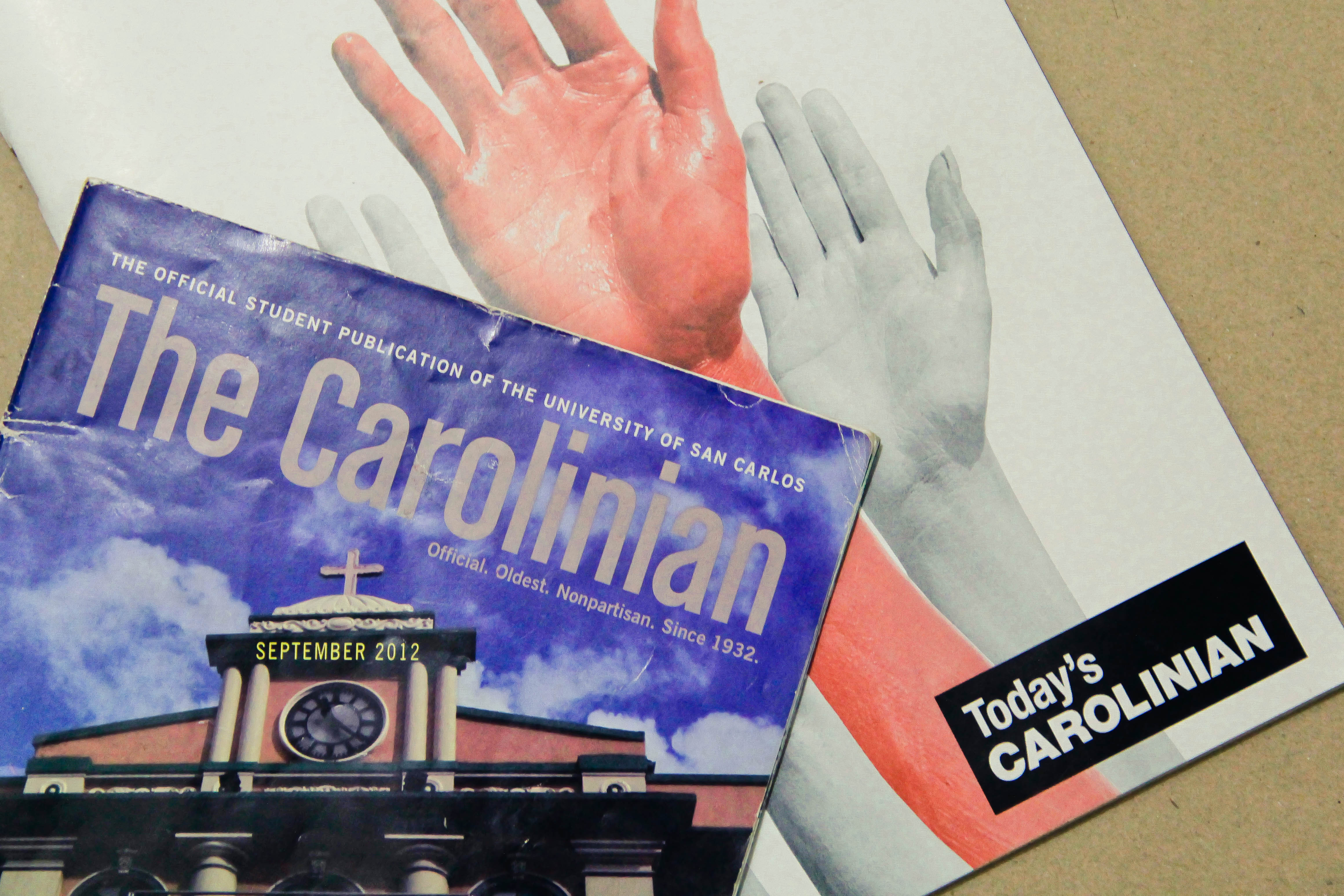
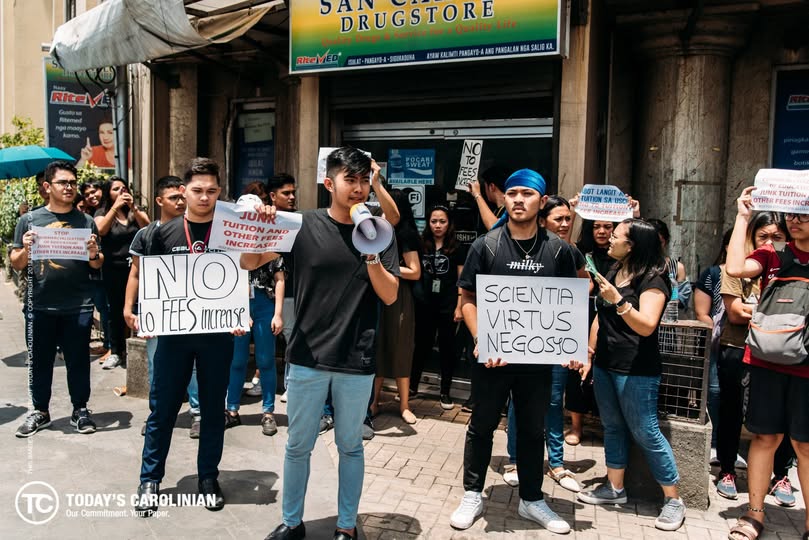
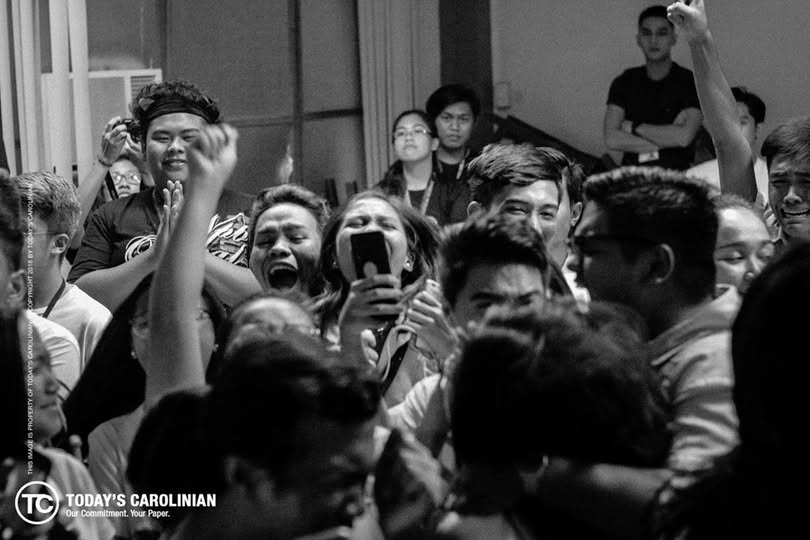
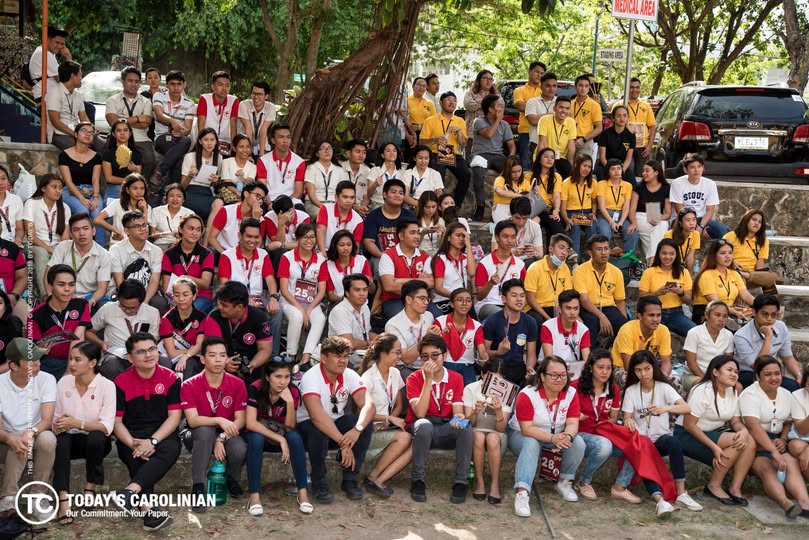
Photo by Angelo Nico Daroy
In today’s fast-paced world, reminiscing the past may seem rather tiresome and unappealing, yet it is in these dark, grained sheets where the motive and reason why some continue on the realization of the commitment can be found. With the recently concluded World Press Freedom Day, in honor of those who carry on to be of service to the masses — those who so assiduously shouldered the burdens of the freedom of the press and passionately bared out the gutters and depths of our society — it is only fitting that we take a look back on the pages our current campus press has set upon.
While the Philippines was on the move to gain independence from the United States of America, Colegio de San Carlos (CSC), what will soon be known as the premiere university of the south, established its first student paper called El Estudiante, translated as “The Student”, in 1932. With Pablo Tan as its first editor, El Estudiante was renamed to The Carolinian and became one of the few school papers that emerged in that certain period in the country. At the end of the decade, just a year after the outbreak of World War II in 1939, The Carolinian, as the official organ of the student body of San Carlos, joined the College Editors Guild of the Philippines (CEGP), an elite circle of respectable school publications in the country.
On the onset of the World War II, The Carolinian became a tool to promulgate nationalism among the students. In 1942, during the Japanese invasion, the Colegio’s ROTC cadets, having been trained for actual warfare, reported for duty and served in regular and guerilla units. Around this period, The Carolinian ceased publication, leaving Virgilio Kintanar as its last editor-in-chief. The war saw the closure and occupation of CSC by Japanese troops. In 1944, shortly before the liberation, bombs rained on the school, leaving its building in P. del Rosario in ruins.
The rehabilitation of CSC started in 1945, after having been occupied by the Japanese army during the war. Moreover, The Carolinian was re-established by Francis Militante. During its re-establishment and reconstruction, awareness of moral and civic responsibilities of students to the society became the focal point of their writing. This, among others, made The Carolinian as one of the well-respected entities in campus journalism throughout the country. Three years after, the publication recovered and returned to its pre-war stature, and CSC was granted a university status and was aptly renamed University of San Carlos (USC).
In October 1955, The Carolinian, now known as the “C”, featured one the most distinguished alumni of the university: Don Sergio Osmeña, the fourth president of the Philippines, who noted in an interview with the publication’s staff that his career foundation has started in USC. Furthermore, within the ‘50s and ‘60s, the publication’s pages have also been abundant of articles on the university’s rapid growth and intellectual upheaval, due to the sudden migration of priest-scholars from China. USC began pioneering researches in physics, ethnology, biology and engineering, which further incurred a tremendous impact on the Philippines’ postwar reconstruction.
Perhaps one of the most important and historical accounts stamped on the sheets of the publication was of the last moments of Ramon Magsaysay, the late Philippine president whose plane crashed on Mt. Manunggal. On March 16, 1957, The Carolinian featured the late president, five hours before the tragedy, when he attended the university’s commencement rites as one of the events important guest speakers.
In the 1960s, calls for the Filipinization of the administration of all Catholic schools in the country was heard, spurred by the growing nationalism and radicalism within the people, and ignited by the continuing leadership of foreign priest-academicians in USC during its rapid expansion. This fortitude was, however, not fully represented in the sheets of the publication because of the priests acting as its moderators.
Nonetheless, a demand for an autonomous publication wherein student staff was to run the paper without intervention from the university administration was then made in 1970 and was granted a year later. However, this autonomy was short-lived when Ferdinand Marcos passed a declaration of martial law throughout the country, ceasing the publication’s operations once more. The Carolinian community lost its voice because of this authoritarianism for almost a decade.
Out of the students’ resistance to massive repression on the Marcos regime, Today’s Carolinian, or TC as we have all known today, was born. In 1983, a little over the lifting of martial law, when it was a crime to express opinions to the general public and clamping down of “subversive publications” was a thing, TC became the renamed and revived school paper of USC, as an answer to the pressing need to establish a truly activist and autonomous paper. Jose Eleazer Bersales became the first editor-in-chief of the newly established school organ.
Throughout the next couple of years, TC has shown its true passion and potential, set to straighten things up without beating around any proverbial bush — there was no harrowing notion on reality sugar-coated. CEGP has, in several occasions, acknowledged this excellence of the publication when it was awarded with the Ernesto Rodriguez Award for Best Publication for a number of years.
Today’s Carolinian’s first newspaper issue, The Red and Black, was released in 1992. Since USC is a composition of different campuses, news bureaus were established as representations. The publication continued to serve as the voice of the collective Carolinian until their last issue in March 2004.
Sympathy for the Devil, the raw sentiments proclaimed in this magazine scandalized the administration of the conservative Catholic university. In its pages were the cries of opposition against unreasonable policies. It showed, as have been phrased, “no mercy for the demons who make our lives a living hell.” For the third time, USC’s student body has been silenced once more.
After five years of suppression, a referendum by TC on the students’ willingness to pay for a publication fee to be included within the student assessment was not honored by the Office of the Student Affairs (OSA). The university’s administration has, simultaneously, brought up the revival of The Carolinian under the supervision of OSA. This revival was realized and The Carolinian published its first issue in August 2011.
On the onset of The Carolinian’s revival, then elected SSC president, Frances Villarino, insisted on the re-establishment of Today’s Carolinian. The university’s administration showed no support on this idea, yet TC continued on its strife and formed its editorial staff.
Breaking its seven-year silence, continuously holding the passion for servitude, Today’s Carolinian resumed as an publication and in January 2012 by releasing their first issue. For some time, the “C” and TC operated as USC’s student publications, with the former being under administration’s mandate while the latter being autonomous.
Now, Today’s Carolinian is the only official student publication of the University of San Carlos. The history has been interlaced with a myriad of obstacles, never for the faint-hearted. The challenge to become the best of what they can be, progressive and non-partisan publication continues up to this day. Never has it been a once-upon-a-time or a happily-ever-after story — rather, a life-goes-on reality.
It is of no doubt that the commitment has faced an abundance of challenges, criticisms and setbacks. Our campus press has since come a long way, of which is smattered with adversities. As a student publication, we learn, we write and we continue on the heritage of true servitude toward the Carolinian body. Inasmuch as the has-beens paved way to a better student publication, if there is one thing that all of our history has taught us, it is that we do not forget — we never do.