Museo Parian: A Relic of China Town
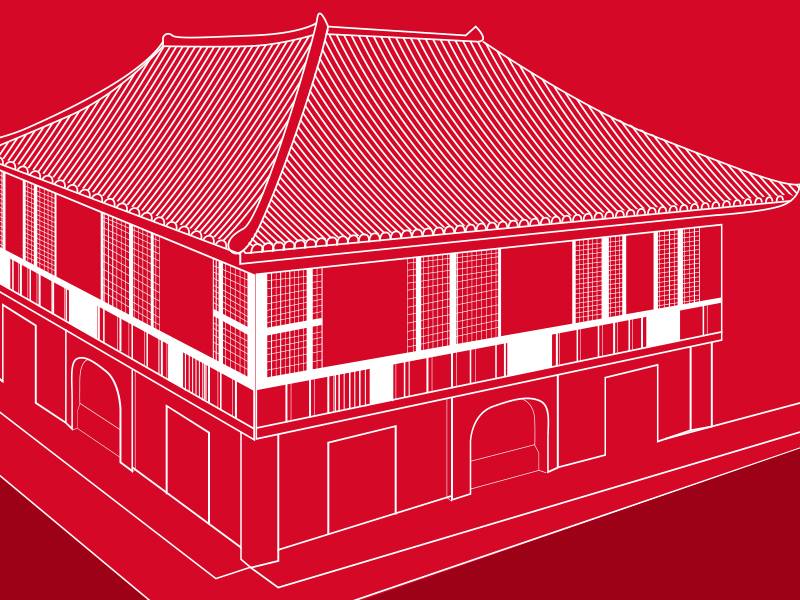
Right at the heart of Parian lies a heritage museum, the Museo De Parian. An 18th century Jesuit monastery with a structure oddly situated amidst piles of construction paraphernalia, however lovely, albeit its ancient and enigmatic past as a remnant of the Spanish colonization. Behind the walls of a construction warehouse, you will spot the grand and mysterious structure reminiscent of the past centuries of Cebu we know so little about.
The Museo De Parian is possibly one of the oldest houses in the country. It was built centuries ago, supposedly during the same century as the Yap-Sandiego Ancestral House, another a famous heritage structure constructed just a few blocks away. The museum used to be the residence of the Jesuits who did missionary work in the Diocese of Cebu. Considering the many artifacts in the Museo De Parian, it was assumed that the house was built in the year 1730s especially as an inscription above a doorway is seen labelling año 1730 (year 1730). However, historians seem to hold evidence that it was built even years before. Coins excavated from the place even point that Chinese merchants may have been the original household occupants of the museum.
In 2008, the Sy family, current owners of the museum, deduced that the house was in need of a major repair which required the construction of concrete pedestals. During excavation, workers accidentally uncovered some centuries old artifacts such as ceramic and pottery shards, different shell species, and animal bones and dental parts that are said to date back to the 1580s to 1640s. These artifacts are objects that give us a glimpse of a past before colonization. The house seemed to have undergone major renovations and evidence points out that more remains and relics underneath could lead to a rediscovery of our culture. However, discovery of the relics during restoration was mere coincidence; of utmost importance was the preservation of the structure. According to the owners, they are not stopping the restoration of the house and the creation of the museum. They are also currently constructing a replica of Colon Street, the oldest commercial street in the Philippines, inside the 2,000-square meter property. The gallery has also a mini museum that showcases some artifacts that are believed to be brought by Chinese traders during the Ming Dynasty.
The ground floor of the museum has now been transformed into a mini Museum called Sugbo Gallery which showcases maps and photos of Cebu in the past such as Calle Colon and the churches of Southern Cebu. History reveals that the Spaniards compartmentalized groups of people into divisions within the province. Parian was allocated for the Chinese, San Nicholas for the native Filipinos, and Central parts of Cebu for the Spanish aristocrats and mestizos. Thus, Parian, which means “marketplace” in Mexican, was Cebu’s own China Town. It and parts of Colon were where Chinese merchants in Cebu were given their share to continue mercantile trading; the marked character of Chinese as traders and businessmen well-recognized from past to present. It was later found out that the Chinese mestizos had made a position.
To imagine oneself as a Filipino elite of the 18th century within the museum is easy as most of the furniture and decorative amenities that have now been replicated were accommodated for the upper class society. It may have lost its former glory but there is still a faint haul of nostalgia awakened within as one realizes the great divide and contrast of cultures between two eras.
There are historical and heritage structures such as the Museo Parian, Casa Gorordo, and the Yap-Sandiego Ancestral Home that have been constantly overlooked and devalued. Exploration of these structures that contrast with our “now” offer us insights that gives a wider background on our heritage. Renewed advocacies on culture and heritage have greatly benefited the Cebuano community in terms of tourism, economy, and its pride of place and self. Apart from the economic benefit, Cebuanos are now exhibiting strong pride for the city of Cebu and all the corners that delve into true culture. They are now beginning to look inward. Appreciating heritage structures like that of Museo Parian and revisiting history could make the all the difference that can change our perceptions with our national identity. After all, a man of the name Marcus Garvey once pointed, “A people without the knowledge of their past history, origin and culture is like a tree without roots.”