Old Boy: A Movie Review
“At first glance, the line between classifying this film as being a cinematographically twisted masterpiece and a senseless, violent, snuff-like film is blurry. There is an endless (not exaggerating) amount of violence, gore, blood and, to pack it all up, taboo relationships presented in the film. It’s mind twisting, thought-provoking, fist-clenching, teeth-grinding material. There are scenes wherein you can’t help but want to rip your eyes off of the screen, but can’t. You’ll come out either hating this movie to its rotten core, or praise the artistic genius that is Park Chan-Wook.” Jenny Shim (USC student)

“Even though I’m no more than a monster – don’t I, too, have the right to live?”
Oldboy is a cult classic (classic in its loosest sense) South Korean film directed by Park Chan-Wook, one of the critically acclaimed directors in Seoul. The second franchise in his so-called “Vengeance Trilogy”, Oldboy’s storyline does not connect with either of the two other installments Sympathy for Mr. Vengeance and Sympathy for Lady Vengeance; though these three were certainly not meant to tie-in plot-wise. Nor were they meant to be a trilogy.
Based on a Japanese manga written by Nobuaki Minegishi and Garon Tsuchiya, Park Chan-Wook noticeably altered the original work particularly in terms of psychological elements and plot twist in translating the composition to film. And while the characters’ film renditions obviously had very different agendas from those in the original creation, the beginning of the plot of the manga and that of the film obviously only had minor differences. It is as every one of these stories go further into their narratives that these platforms radically digress from each other.
The movie was beautifully shot on Super 35 Arriflex cameras and lenses; the wide angle ones especially manipulated to place emphasis on the setting. Cinema standard quality was achieved through the ingenious use of a 35mm Kodak film negative format printed in 35mm Anamorphic, or 2:35:1 aspect ratio. Thanks to this format and the camera’s quality, the film was able to achieve beautiful 14 stops of dynamic range and detail even in the scenes with the darkest to no lighting at all. Being organically grainy and dark, a green color cast gave a grungy feel and overall textured look to the picture. And while this improvisation made the movie feel more “alive”, extraordinary panning scenes and smooth transitions gave the film the sense of self-control that is Park Chan-Wook’s signature in all of his works.
The “Corridor Scene” is the cleverly tracked photographic sequence that has made Oldboy unforgettable. Inspired by 8-bit 2D video games and which took the team seventeen days to perfect one continuous take, it is easily one of the must-see parts in the entire film.
*Spoiler Alert*

The use of ultra-wide angle lens for the scenes that showed the room where the protagonist was locked up in for 15 years reveal an intrinsic flaw – some angles were obviously soft and distorted in the edges. Despite this, the continuity of the story was never hampered and instead facilitated in the placement of emphasis on the anti-hero(as the protagonist is preferably called)’s sympathy.
The Dolby Digital sound mix gave the scoring the justice it deserved. Undoubtedly haunting, the musical theme effortlessly simplifies the achievement of drama and excitement. Some of the most notable musical scorings are Winter from Antonio Vivaldi’s Four Seasons, and Waltz and Masquerade by Aram Kchachaturyan.
Justice as to the CGI remains debatable (the anti-hero gets stabbed in the corridor scene; another scene shows ants coming out of the same character’s arm), though in whatever negative sense is certainly forgivable to this author considering the budget and given the year that the film was made – around 2003. These imports of course do no harm to the story.
*Contains Huge Spoiler*
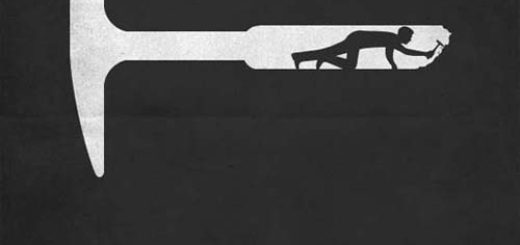
Long story short, Oldboy is about an average businessman who gets kidnapped by unknown people and locked up in a room for 15 years for no reason, or at least as it had appeared to him. After 15 years of “high class” special solitary confinement, he is released, equipped with money, a cellphone and expensive clothing. He then seeks for answers and resolves to commit brutal revenge to whoever had imprisoned him for no apparent reason. He uses all of his resources to find the shadow character. Even a toothbrush and hammer play a role towards the realization of his objective.
The fullness of the movie in terms of psychological warfare equates to the need for a serious understanding of every character’s behavior and emotional agenda. Even minor characters prove to be essential to the weaving and unweaving of the plotline. In the end, the viewer realizes how it would have been nearly impossible to dismiss any of the lesser characters as insignificant, for the constant emotional turmoil of the anti-hero is inevitably wrapped around the entirety of the story.
*Spoiler Alert 2*
The movie has some references to films such as “Count of Montecristo (2002)” – the part where Woo-Jin dialogues with Mi-do; “Ichi the Killer (2001)” – the cutting off of one’s own tongue as a punishment; and “Being John Malkovich” (1999) – the scene at “floor 7½”.
Some people find the film unreasonably violent and hate it. Many find it exaggerating and mediocre. Some say that the manga is really better than the movie version; while some are simply and genuinely in love with the film. In the end, as it is with any film in history, not everyone can be pleased (Oldboy in the first place, is obviously not the kind of film that enamors everybody) – we all have different point of views that stem from our personal experiences.
To this writer, the film makes one contemplate his existence – not in the sense of envisaging about 15 years of metaphorical reason for imprisonment, but more in the concept of rationality as a human being. This part is reflected in the film through the three-dimensionality of the characters, which is also the function that is loved by this author the most. That the characters are imperfect, feeling humans (versus Rambo-hybrid characters) and have reasonable flaws make them endearing to the viewer in their own way. The uniqueness of the plot and how it ends in the film is captivating – many questions are deliberately left unanswered – and the way how some of the important characters are left in mystery makes one realize how some things, in reality, are really just better left unsaid.
Oldboy will be having a Hollywood remake in 2013, to be directed by Spike Lee, who intends to follow the manga plot instead of making a version of the Korean film.