USC-SSC holds 1st leg of ED Caravan

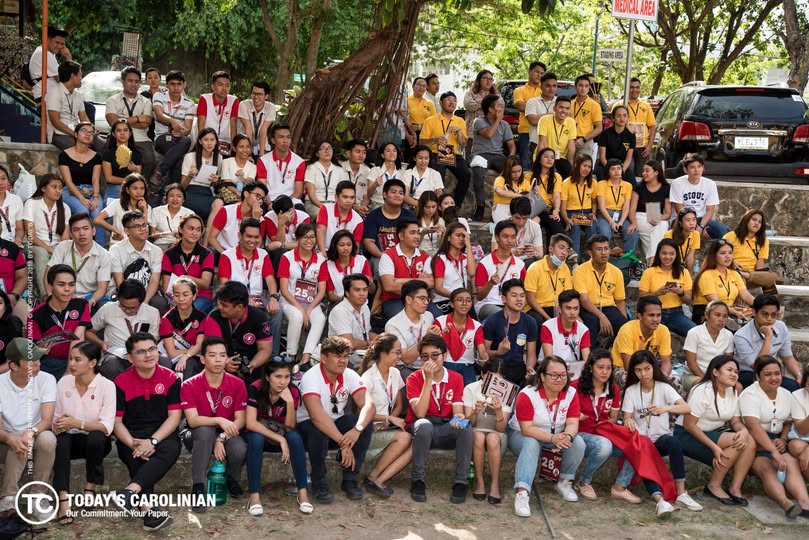
The University of San Carlos’ Supreme Student Council (USC- SSC) held the first leg of its ED Caravan project last Friday, December 9, 2016 at the Van Gansenwinkel Hall in the Ernest Hoerdemann building at USC Downtown Campus, from 8:00 a.m. to 12:30 p.m.
As a movement-driven social awareness project that started out in 2015
, ED Caravan aims to provide timely and relevant educational discussions regarding local and national social issues, specifically in the Health and Environment Sector in the Philippines, with the theme “#BeInformED, Engendering and Informed Youth.”
“The main objective of this project is to expose and to inform the student body on the realities and issues of today,” said Mr. Ejay Christian Co, an SSC councilor and the emcee of the event.
The event began with an opening prayer, followed by the Mental Health talk with guest speaker, Dr. Anna Kathrina Oaminal-Watin, a human resource consultant, educator, researcher, and practicing psychologist. She spoke more on the mental health status in the Philippines, the common issues on mental health, and their root causes and solutions.
“Mental illness is the third most common form of morbidity among Filipinos. According to the World Health Organization (WHO), there are 88 reported cases of mental illness per 100,000 Filipinos,” she said.
The talk on the Philippine Health Age followed thereafter with Mark Reizner Wenceslao, RN, MAN, Nurse II, as the speaker. He enlightened the audience with the new administration’s recent project: the Philippine Health Agenda, or the Duterte Health Agenda.
“This agenda aims to provide free healthcare in government institutions for all, along with better health outcomes, and to make Filipinos feel respected, valued, and empowered in their interaction with the health system,” he said.
After, Engr. Tristan L. Abando, the provincial S&T Director of the Department of Science and Technology (DOST) – Cebu and team leader of the Cebu Food Consultancy Group, explained the importance of food safety. He continued to say that food safety should be demanded, because it is both a right and privilege of every citizen.
The sanitation talk followed, with Altair R. Labagala, a registered medical technologist of the Department of Health (DOH) – Region 7 as the speaker. He introduced some of the DOH’s programs, such as the Environmental Occupational Health Program, which was made to improve environmental and occupational health conditions in the Philippines and to reduce morbidity and mortality from exposure to environmental and occupational health hazards.
The environmental talk by Hon. Nestor Archival ensued, and then came the introduction of two programs: the Mental Health Program by DOH registered nurse Emmalyn S. Fernandez, and their Substance Abuse and After Care Program by another DOH registered nurse, John Lorne Paber.