Ang Nawawala / What isn’t There: A Movie Review
Writing about this only means for me to resurface a feeling of an overwhelmingly great experience. This film visited the shores of Cebu in September 2012 and even then, I could still clearly recall the waves of sensation hitting me as the movie came to a close.
Ang Nawawala (What isn’t there) hits the youth of today more directly than any other with its local indie rock music and all its emotions running around family, moving on, and falling in love again making this as well, relatable to any audience. The movie circles around Gibson Bonifacio, who after spent years abroad returns to Manila to his home.
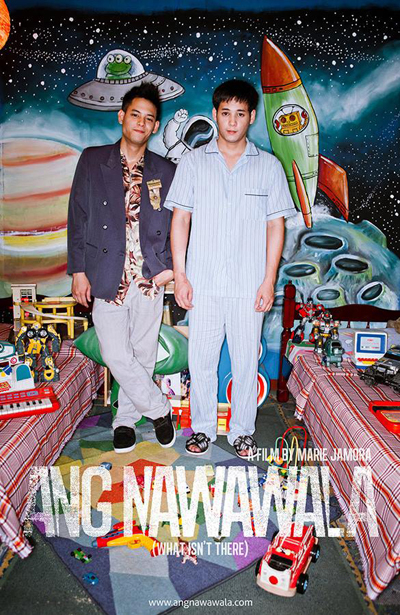 Gibson is in lack of words, or to simply put it, he does not utter a word in the film and it can’t help but draw you in to understand why. He arrives to a house and a family that barely changed. His mother, (Dawn Zulueta) remains to be that uptight figure in the house in addition to watching over (Sabrina Man) his younger sister. His father (Buboy Garovillo) is still holding on to something long gone. Corey (Jenny Jamora), his elder sister, is still very supportive and understanding of Gibson’s affairs. Also, she holds the most seemingly normal traits in the family. All this tells us of a family clearly trying too well to keep its head up through a storm. So in respite to all the familial tensions, Gibson has reconnected with his childhood friend who brought him around the indie local music scene allowing him to meet new faces and generate an interesting diversion. Here, everything starts to unfold.In an interview, Marie Jamora the director of the film explains how important it was to inject the local independent music of our country into the story. She says, “Our character stops speaking and so in turn, music becomes his voice.” It signifies the loss of true communications where people talk but nothing is truly understood or said for that matter. It becomes that of an apt cliché’ of the universality of music, breaking barriers of language and its ability to make way for things that actually matter and how it becomes the generations’ most addicting drug for disregarding such scars of the past. Working together with her long-time friends as music supervisors helped the team imagine and set the mood to the film. The director has also connections to the bands playing for the soundtrack as she has done tons of music videos previously. In addition, Ang Nawawala’s soundtrack was placed in vinyl and was sold online for everyone to enjoy. This stresses how the music is just as important as the script for director, Marie Jamora. The film featured old-time OPM songs and current independent acts like “Tarsius”, “Ang Bandang Shirley”, “Outerhope”, “Hannah+Gabi”, “The Strangeness”, “Ciudad”, “Jazz Nicolas”, Diego Mapa” and many more. So with this strong line-up of indie bands, where are all the self-claimed hipsters and all things indie lovers?
A friend of mine introduced to me the great world of our local independent films and music, its authenticity as well as its struggles and the beauty of it which supposedly should be enough to launch it at such a height with our mainstream films. But sadly though, we continue to limit our attentions to films harassed by infidelity and loads of the popular celebrities we know. It makes one to question; does this all really interest us? Why is adultery praised in today’s film industries? I’m dying to know why. When I caught Ang Nawawala in the SM cinema, I expected the hype of a normal local Filipino movie. However, I’d like to believe that the film had been caught at a bad time. The movie was about to start and it will surprise you as it did for us the amount of people who were in the entire cinema. Our headcount stopped at around thirteen people. THIRTEEN. The film definitely deserved more credit than just thirteen people watching that night. In Manila, theatres were being sold out and by this you could tell how well promoted the film was there. Though the hype in Cebu is relatively depressing, the film garnered awards in the many different film festivals both local and international. This is hard evidence of the films’ success and value to the people.
It is not your average coming-of-age film with raging hormones and short impulses of first love; Ang Nawawala is about this dysfunctional family trying to move out from the lost years spent making sense of a tragic incident. The movie has this certain silence and absence attached to it, setting it apart from most independent films normally centering on poverty, sex trafficking, danger and corruption. However, the movie has a unique quality of being able to pull off a heartfelt plot giving out more in subdued silence than most films do with heaps of dramatic dialogue. Moreover, the film revolves on a theme that is close its audience.
Although the film adheres to the upper class groups, it permeates a universal struggle of everything we may encounter once in a while in our very own homes, something we lack communication of and something we refuse to talk about. And the film tries to reach its audience in the final few moments wherein everything is finally revealed. This movie is beyond the romance and beyond the lifestyle depicted in the plot. Gibson Bonifacio did not need the drugs and the first kisses. All he needed was a good closure.