Silab
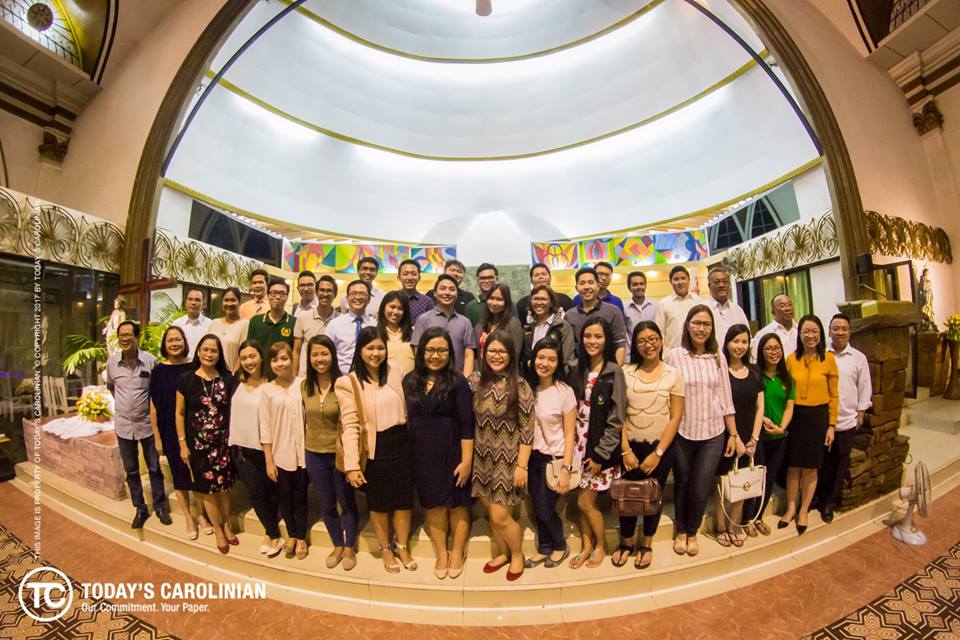
Photo by Jhessa Ugdamina
(n.) blaze of burning garbage; fire; conflagration; silaban (-an)
STOP.
On May 3, 2017, the Manileños called for DEFCON 1. When the Supreme Court released the 115th Bar exam results, their worlds screeched to a startling halt when not a single one of the top ten passers came from a Manila law school. They took up arms, calling the exam rigged, biased, completely incomprehensible.
Never mind the astounding record high 59.06 percentage of passers. Never mind that the passing rate implies an improvement in our education system’s performance. Never mind that this could mean good education is being spread out throughout the whole country, empowering not only those in the capital but also those in the provinces.
The bar examination, the licensure exam for Philippine lawyers, is arguably one of the most difficult in the world. It takes four Sundays to cover eight subjects: legal and judicial ethics, political law, labor law, civil law, taxation, mercantile law, criminal law and remedial law. The national passing rate normally ranges from 20 to 30 percent. There’s no way the provincial schools could have outperformed the Manila schools.
A disaster has struck. There’s been a revolution. The provinces have taken over the bar exam.
DROP.
Forget the northerners. The celebrations broke out in the Visayas as Karen Mae Calam, a 31-year-old Carolinian, razed the norm for the Bar and took first place. Three more of the 12 top-notchers were her fellow Carolinian graduates: Fiona Cristy Lao at third, Anne Margaret Momongan at seventh and Jefferson Gomez at eighth. With a 100 percent passing rate, all Carolinian first-time takers also passed the exam.
“Preparations start from the time you enter law school,” said Calam. She has proven that the top performing law school in the country is the University of San Carlos, a fitting gift for the university’s diamond year.
To celebrate, University President, Fr. Disonisio M. Miranda, SVD, led a mass at the USC – Downtown Campus’ chapel in the presence of graduates and their families, the College of Law faculty, and distinguished previous graduates like Atty. Regal Oliva.
In an interview, Atty. Joan S. Largo, Dean of the School of Law and Governance, remarked on the possible changes in the school that might have prompted its current success: “I haven’t really compared the previous years to the fairly recent years, but what I can say is that the teachers are just as dedicated and committed. Probably, it has just come at the right time.”
ROLL.
Dean Largo explained that she plans to take advantage of the school’s momentum to innovate the current educational formula. Part of this innovation is the lifetime “Gift of Education”. . Instead, the university will allow the four top-notchers to nominate a scholar to receive education from the university, and when that scholar graduates, the top-notcher may nominate another one.
While Dean Largo sees her students take over the fields of corporate law, she will also relay her hope that they will be open to legal aid, helping those who are really in need. “It’s the Carolinian brand of education: never forgetting the marginalized,” she explained.
To those who wish to follow in top-notcher Karen Mae Calam’s footsteps, she had this to say:
“Value quality over quantity in terms of reading assignments.” Despite her heavy load as a working student, she tried her best to read all the assigned readings, and when she couldn’t, she put a focus on wholly understanding what little she’s read over spreading out her attention to get to everything.
“Don’t let doubt take over. Over time, it will come, especially when you meet failure. Refocus on your goal, and remember why you want to become a lawyer.” In times of doubt, she also always sought for God’s guidance. During the month of the Bar exam, she went to church every day from Monday to Saturday.
“Direct your focus on subjects you’re not confident in.” This contrasts with the common advice that said to direct a certain percentage of time and attention to specific subjects. Calam ignored those recommendations to focus on the subjects she personally found difficult.
“Surround yourself with good people,” she says, as they will be the one to support you in the hardest times.
To the Bisaya hopefuls who have just passed the PhilSAT, turn a deaf ear to the elitists who believe the provinces can never shell out anything good, that diamonds are in the capital, and you are only second to them. Surround yourself here at home in the provinces, raise your heads and look at Manileños in the eye.