Death Penalty: Your Vote, Your Stand
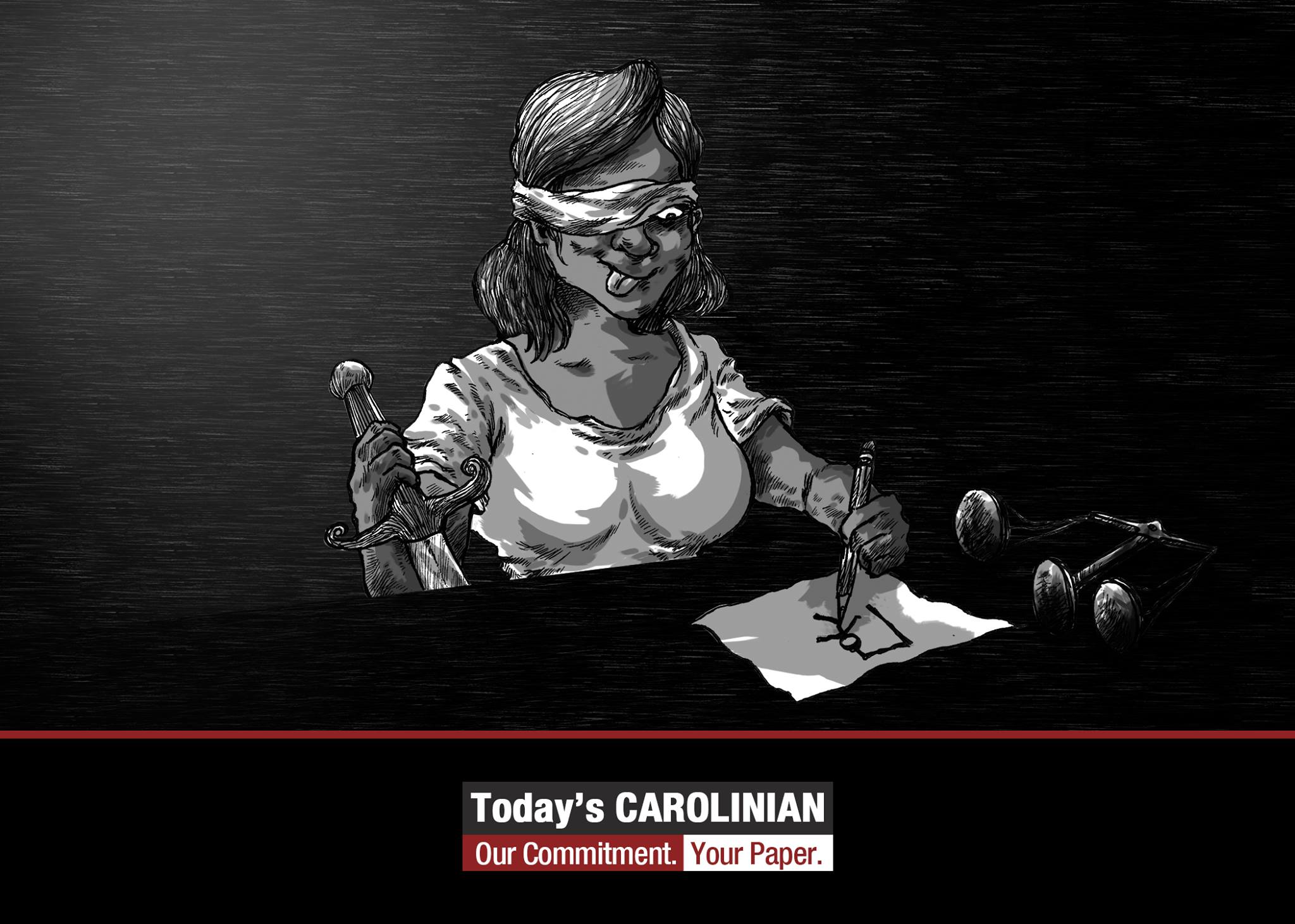
Illustration by Zach Borromeo
Death penalty has once again reached the popular opinion as people debate it over social media and casual conversations. It is alarming to human rights advocates but a thrill to the masses who perceive it as an instrument to feel safe and secure from all criminalities. Furthermore, it is so easy for people to relate death penalty to the “real change” that the Philippines has long been waiting for and that through the approaching elections, “real change” is bound to happen depending on whoever gets elected as president because of the possibility to implement death penalty again through the executive power.
In the second PiliPinas Debate that was held in University of the Philippines, Cebu, a yes or no segment was added by COMELEC that will determine the political stances of the candidates on various issues. When asked who were in favor of the restoration of death penalty, Mayor Rodrigo Duterte and Senator Grace Poe raised their hands. If Senator Miriam Santiago were present, she too would be raising her hand along with the other presidential candidates.
The tough-talking Mayor of Davao Rodrigo Duterte, known for his dictatorial style of governance did not shock the viewers as he raised his hand. It was already expected that once he sits on the highest position in the country, he will push Congress to return death penalty and public hanging of convicted criminals in three to six months.
Senator Grace Poe, on the other hand, was also in favour of death penalty on drugs and heinous crimes. So when interviewed after the debate, Poe said that her support for death penalty is limited to those convicted of drugs and multiple crimes involving people who can no longer be rehabilitated.
Meanwhile, Senator Miriam Santiago, despite her absence in the actual debate, expressed her stand on the issue through her official twitter account. She is open to death penalty for drug traffickers while maintaining the need to improve the justice system in the country because a good justice system paired with death penalty is good, but a flawed justice system paired with death penalty is murder.
Now that the presidential candidates have publicly expressed their stands on the issue, it is in our hands as Filipino electorates to vote for the candidate that will reflect our stand on death penalty. It is in that one ballot that will determine what kind of justice system we want in the upcoming years.
If we trace back on the history of death penalty it began during the pre-colonial period when Filipinos were oppressed and abused by colonizers. However, it could not be deemed countable since there was still no practice of full sovereignty over the Philippines. When we regained full sovereignty, the first case of capital punishment happened during 1950 when Julio Guillen attempted to assassinate President Manuel Roxas by throwing a grenade. Fortunately, President Roxas was saved, and two hours after the assassination attempt, the culprit was arrested and was executed the month after.
Justice was served we may say, but during the time of the dictatorial rule of Ferdinand Marcos, death penalty was abused to its full potential. Hundreds — even thousands — of Filipinos who opposed his rule were slaughtered, electrocuted and tortured. Nevertheless, when Cory Aquino took over, death penalty was abolished in accordance with the 1987 Philippine Constitution, but was reintroduced by President Fidel Ramos, and then suspended again in 2006 by President Gloria Arroyo.
Multiple factors affect the on-and-off implementation of death penalty. However, why were there still instances that it was fully pushed through? One factor would be deterrence. Once fear is already brought about by the consequences of one’s crimes and most importantly when one’s life is at stake, there are higher chances of preventing crimes to take place. Second, it is easier to eliminate the criminals in society by capital punishment. Illegal acts and schemes no longer have chances of spreading more and more. Also, on the more practical side, death penalty is cheaper than life imprisonment. That one instance of spending for the execution of the criminal cannot be compared to the lifelong expenditures that the government will have to provide for the prisoner.
Despite all these pros, why does the Philippines no longer practice capital punishment? First, the system death penalty followed during former President Joseph Estrada’s term was inconsistent: In the case of Eduardo Agbayani when at the point that the president got the last hour request for the pardon from a prominent bishop, he acted rapidly and called the prison. However by that time, Agbayani was already dead. As such, R.A. 9346, otherwise known as An Act Prohibiting Death Penalty in the Philippines, was signed by former President Gloria Macapagal-Arroyo in response to certain Catholic groups.
Shall we take these lessons from history for granted? Or shall we continue to perceive death penalty as an appropriate solution to the increasing crime rates in the country and feel the “real change”?
It all lies in our hands and critical judgment as voters.