Distress after the Rainbow
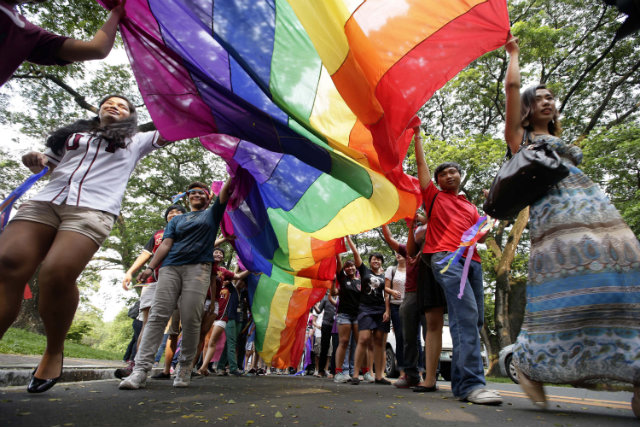
Image source: http://goo.gl/xXklQv
The lesbian, gay, bisexual and transgender (LGBT) community identifies itself with the rainbow. This spectrum of colors represents freedom from the chains of society’s judgment. After an arduous journey that includes crisis of one’s identity, thoughts on liberation from social stigma and oppression and a rite of passage that solidifies one’s views on his or her sexual orientation — a rainbow appropriately symbolizes the disclosure of one’s real self and the celebration of pride and social debut.
As the adage says, there will always be rainbow after the rain. The band of colors, each with a different meaning based on the literature of LGBT, generally upholds the esteem and diversity of the community. This symbolism has ultimately posited strength in colors that boundaries have to be pushed to uphold the rights of the LGBT.
It has been 19 years since the first parade of gay pride in the Philippines. During that time, coming out is still a rarity. Openly gay people still kept the sexual preference a secret. Even groups promoting the rights and protection of the LGBT in the country were only but few. Back then, LGBT members faced different social and legal challenges in the Philippines. They were depicted as queer, filthy, weak and not being in line with the doctrine of the religions here in the Philippines, consequently threatening them. However, the rainbow pride members showed their zeal to attain their goal to defeat the persisting stereotypes in the society.
Since 1994, LGBT activists, right advocates and supporters gather annually in Manila to join the Metro Manila Pride March to show their unity with each other as they aim to promote the rights of the LGBT. This march is the oldest gay pride parade not only in the Philippines, but also in Asia. This year, the said parade was participated by more than 50 LGBT organizations. This shows that LGBT members, unlike before, are now firm in their conviction. Movements like this parade have substantially given the community the solidarity it needs as against the oppressive manners that exist.
Recently, tolerance for the LGBT has been promoted. LGBT activism aims to educate Filipinos regarding sexual preference and gender roles. Not only this, the media plays an essential role in displaying confidence in one’s identity. ABS-CBN variety show It’s Showtime gives LGBT members the chance to showcase not only their sexual preference, but also their talents and personalities — as the show initiated pageant-like segments that aptly titled That’s My Tomboy for lesbians and Pogay for gays. There were instances when a contestant only came out of the closet in these segments. This proves that the media could be an essential instrument to break sexuality barriers.
That’s My Tomboy and Pogay give their contestants an opportunity to display acceptance, confidence and peace of mind regardless of the judgments of society. The members of the Philippine society have varied opinions about the LGBT. For the conservative, segments like That’s My Tomboy and Pogay are against the Christian doctrine and are not suitable for children. For the liberal, shows like these are acceptable, since people with varying gender preferences do exist in our society and all of us have the right to pursue what makes us happy.
Despite these opportunities for the LGBT, a rainbow does not always signify the end of the plight. In spite of the movements to protect the rights of the LGBT community, oppression still lingers in our society. Furthermore, despite the cultivation of self-esteem in the media, the said media themselves contradict this notion that they present.
Bakla, bayot, tomboy, bading, tibo, paminta, maya and silahis — these are some derogatory terms tagged to the members of the LGBT community in the Philippines. Clearly, most of the people now do perceive the LGBT community as a minority, and then label them offensive stereotypes. Furthermore, stereotyping is just tip of the iceberg when talking about how the community is alienated from our society. Here in the Philippines, according to a recent study funded by the United Nations Development Programme and the US Agency for International Development, despite the third-sex getting increasingly tolerated by heterosexuals — the vulnerability of the latter to discrimination and hate crimes still persists. Indeed, challenges and adversities, which seek to repress the LGBT community members who demand rights and protection that straight people enjoy, still remain. The odd thing here is that society has tolerated the existence of LGBT without accepting it completely
To address this worsening condition of discrimination against the members of the LGBT, several cities in the Philippines have passed ordinances. Albeit opposed by the Catholic Church, the Philippine congress has also exerted effort to pass a national law against LGBT discrimination. With these, the Philippines may truly become LGBT-friendly.
Sensitivity and acceptance are indeed better than tolerance. The LGBT community should be respected and be given the protection they need against harsh treatment. Let the rainbow be a symbol of the wholesomeness this community has. There is no need call its members queer because of our indifference. Let us remold and refigure the perspective we have about them.