Duterte’s Second SONA: Highlights
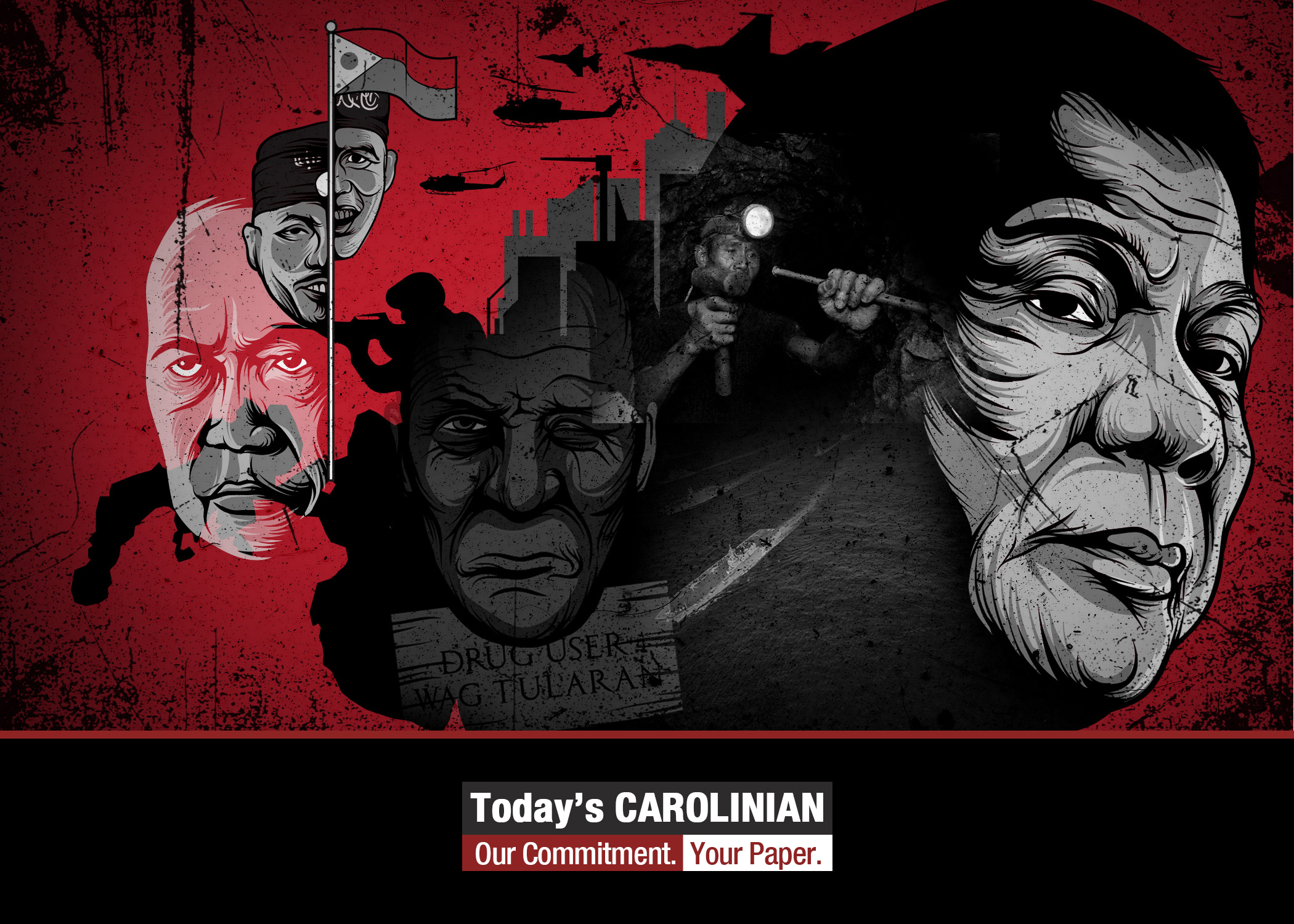
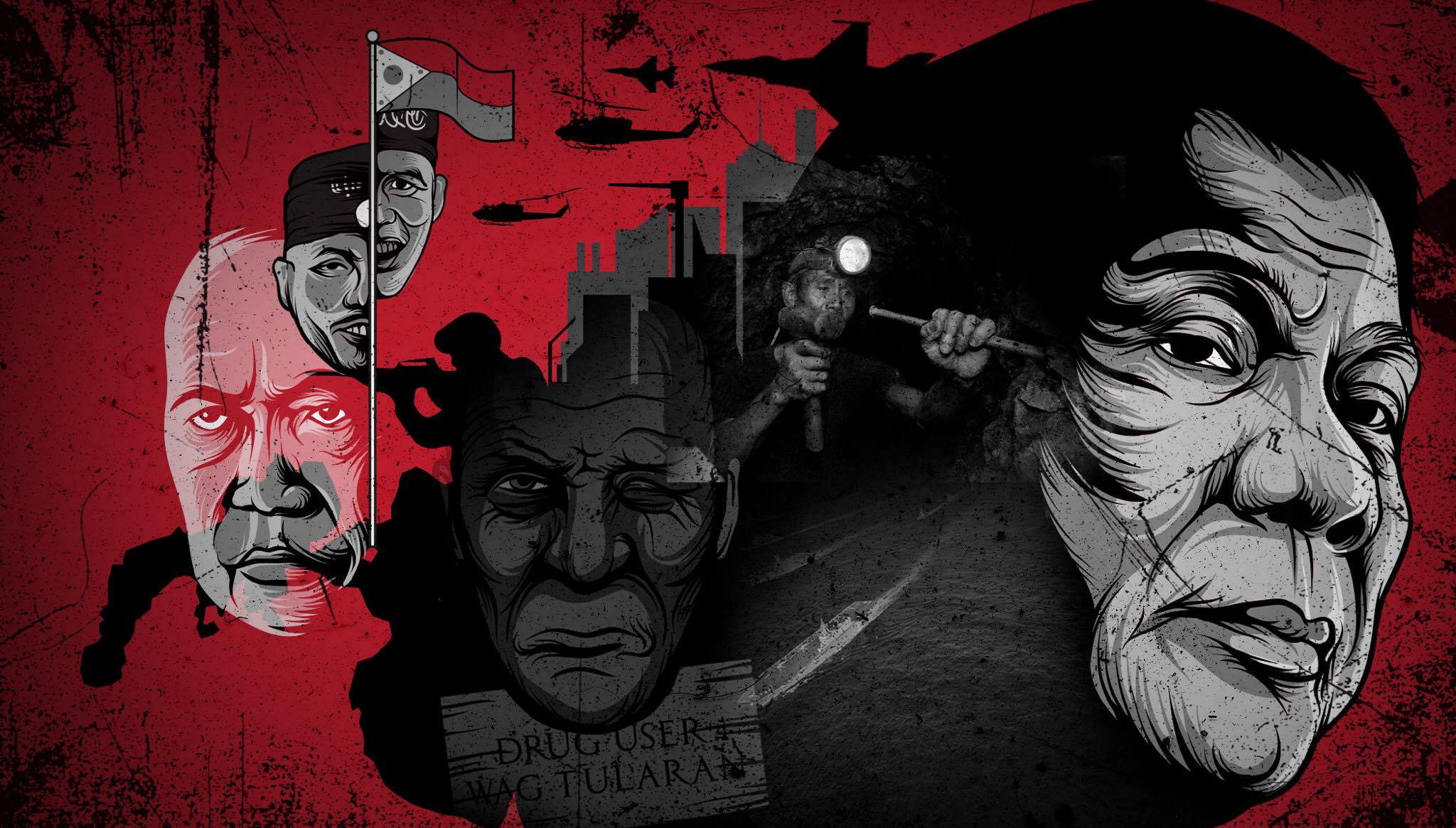
Illustration by Jon Ahmed Durano
President Rodrigo Duterte delivered his second State of the Nation Address (SONA) today, July 24, 2017. Duterte’s second SONA served as a report of the administration’s performance for the past year and a platform that promoted its social and economic prospects for the coming year. The Malacañang had previously stated that the president’s speech will be “frank, challenging, realistic, but hopeful,” with the theme being: “A comfortable life for all.”
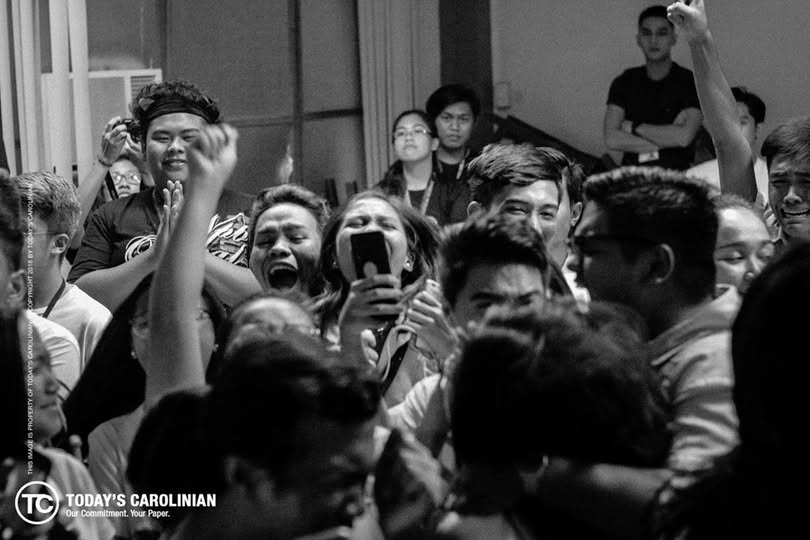
The University of San Carlos, through the efforts of the Carolinian Political Science Society (CPSS) and Leaders of Politics for Service (LPS), organized a pre-SONA discussion and SONA viewing at the Theodore Buttenbruch Hall, Downtown Campus, from 1:30 p.m. to 6:00 p.m. Guest speakers Titus Borromeo, Head Administrator of the Office of the Presidential Assistant of the Visayas, and Niño Olayvar, Representative of Kabataan Partylist, talked about the SONA from the perspective of the administration and of the civil society, respectively.
Among the topics of the previous SONA were the non-stop campaign against illegal drugs; the prioritization of the rehabilitation of drug users; the implementation of the reproductive health law; the cutting off of red tapes among government agencies; the extension of the validity of driver’s licenses and passports; and the provision of accessible and high-speed internet. The president also stressed out his plan to continue the economic policies of the previous administration and to address climate change.
Duterte’s 2017 speech highlighted the value of life amid the continuing, relentless war on drugs and the Marawi crisis; the roles that overseas Filipino workers (OFWs) play in the economy; the expedition of government services and projects; the planning of miscellaneous projects covering education, health and gender development; the construction of numerous infrastructures; the current tax reform projects; and the improvement of communications.
Duterte started off his second SONA with his initiatives of change by saying that meaningful change starts with those seated in the government. He immediately recalled his critics against the war on drugs, saying that “it would be better if you use your power to inform the people, instead of blaming authorities.”
The martial law in Mindanao, which has been extended to December, was not left undiscussed, with Duterte saying, “I declared martial law in Mindanao because it is the fastest way to quell rebellion with least damage to life and property.”
Furthermore, the president emphasized the need for the Congress to hasten the passage of legislative bills relating to death penalty, saying that “capital punishment is not about deterrence but also retribution.” Duterte has been a staunch supporter of the death penalty with the belief that because of the fear of death, people would stop committing crimes.
Furthermore, he discussed about the fulfillment of the government’s initiatives to be closer to its citizens through the establishment of hotline 911 (for emergencies) and 8888 (for concerns on government services). Duterte further elaborated the importance of 8888 in cleansing and rightsizing the government: complaining without the hassle about public officials and government agencies’ shortcomings can help address the issue right away.
Duterte also stressed the importance of local and international policies that will promote the development of the country. These include foreign independent policies that promote sovereign equality and non-interference. Local policies that the administration is working for are the comprehensive tax reform package; the two-year temporary restraining order of the reproductive health law; the policies that support the K-12 curriculum and out-of-school youth; the health insurance coverage expansion to indigents; the newly approved nationwide smoking ban; and gender development programs, such as the full implementation of the Magna Carta for Women.
Duterte also stated that he accepts the PHP 25-billion tax liability settlement of Mighty Corporation. The said corporation will cease to continue operations and the proceeds will be used to restore the damaged cities of Marawi and Ormoc.
The infrastructure projects of the administration, as Duterte calls “build, build, build,” will constitute a goal of increasing the infrastructure developments from five to seven percent of gross domestic product by the year 2022. Increased connectivity is foreseen in the following months. These include the establishment of new RORO vessels— ASEAN RORO shipping routes that connect Mindanao to Indonesia. The country’s strong relations with China has also contributed to the building of two bridges on the Pasig River, as well as the establishment of airports, also fully funded by China.
In the coming months, reliable and fast internet connection through WiFi will be provided on public places, together with the provision of better broadband plans. Salam TV, a state-owned Muslim TV network, is also on the works.
With the speech running for two hours, Duterte left to the plenary: “Let’s work together for a better Philippines.” After his speech, Duterte also submitted the 2018 budget proposal, amounting to about PHP 3 trillion.