K to 12: Toward Our Future
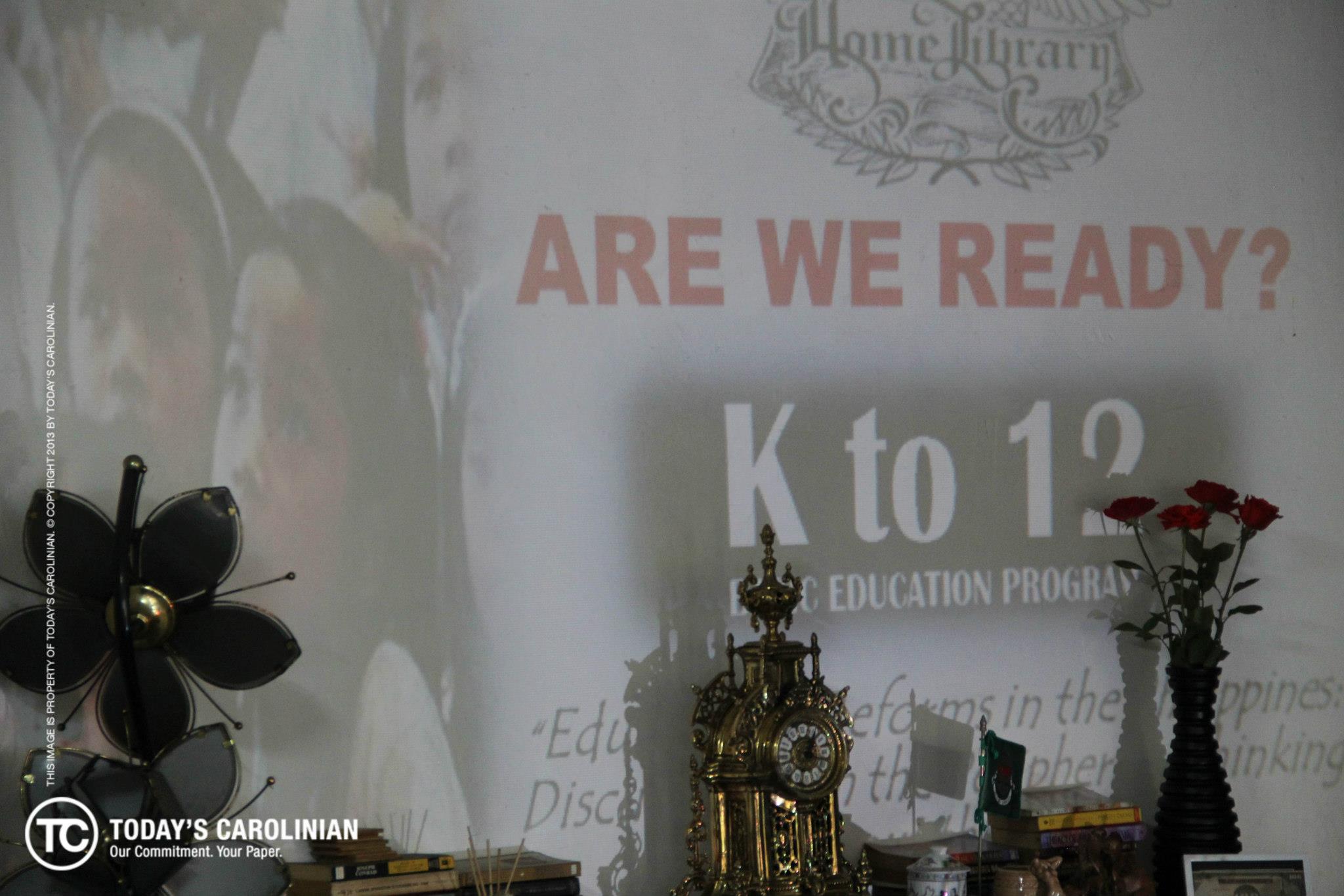
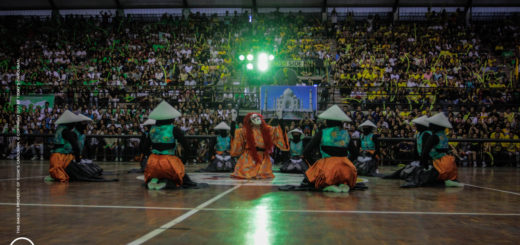
Photo by Anthony Bernaldo
A new generation is dawning. Decades-long of producing seemingly equipped individuals has not been put in a much brighter limelight than it is now. Whether we like it or not —or more importantly, whether we are ready for it or not — the attainment of a ten-year basic education will no longer qualify as capable, literate and competent enough in our society.
The Philippines is among the last remaining countries implementing a ten-year pre-university cycle, the others being Angola and Djibouti. Hence, as a predominantly westernized society, there is an added pressure to enhance our quality of education. This presupposed urgent and critical need led to the formation of a major educational reform that is deemed least disruptive and most aligned with international practice; that is the Enhanced K to 12 Basic Education Program or simply K to 12.
The Official Gazette of the Republic of the Philippines concisely defines K to 12 as a program that covers kindergarten and 12 years of basic education — with six years of primary education, four years of junior high school and two years of senior high school — to provide sufficient time for mastery of concepts and skills, develop lifelong learners, and prepare graduates for tertiary education, middle-level development, employment and entrepreneurship.
Essentially, with the implementation of this reform, all students following the graduating batch of school year 2014-2015 are obliged to adhere in an enhanced education curriculum set by the program. Incoming grade 12, formerly fourth year high school students, on the school year 2015-2016 will remain within the scope of basic education for two more years. They will have to enroll for senior high school, wherein they will have to choose from among three tracks in preparation for a career that they plan to pursue: academic, technical-vocational-livelihood, or sports and arts.
The K to 12 Basic Education Curriculum’s thrust ensures that students will be sufficiently prepared to walk into the work arena. Better opportunities for employment and entrepreneurship through various certifications — such as Certificates of Competency (COCs) and National Certifications (NCs) — are offered in accordance with the required Technical Education and Skills Development Authority (TESDA) training. Also, the K to 12 program is set to pave way for school-industry partnerships, allowing students to gain work experience whilst studying and giving them the opportunity to be absorbed by the partner industry upon graduation.
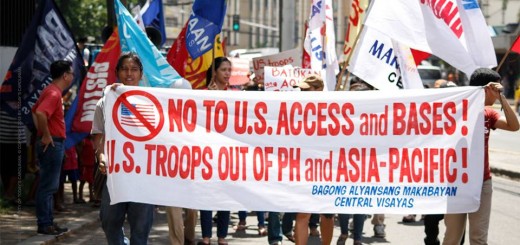
Inasmuch as the ideals set forth by the educational reform paint a striking picture of what our country might soon acquire, many remain skeptical, and critics continue to contest the program’s reality. The possibilities on the program’s transition period, the probable effects on labor, the readiness of our current educational setting, the actuality of it resolving the issues it raised and the current continuous exploitation of public funds are just among the concerns raised by many Filipinos.
A massive earthquake with years-lasting aftershocks is a euphemism of what we could be facing on the cusp of the program’s implementation. On school year 2016-2017, the number of new freshmen enrollees is forecasted to nosedive, resulting in major cutbacks, in form of staff layoffs and faculty displacements, in colleges and universities to ensure its continuous operation.
In an article published by Philstar last March 17, 2015, a petition for injunction asking the Supreme Court to stop the implementation of the K to 12 program was filed by a coalition of teachers, non-teaching staff, parents and labor groups. About 56,000 college teachers and 22,000 non-teaching staff are said to be in danger of losing their jobs during the transition period. However, the Department of Education (DepEd) secretary, Armin Luistro, assures that DepEd is doing its best to address these matters. He, in fact, remains resolute, despite the pending legal challenge against the full implementation of the program that it will be pushed through.
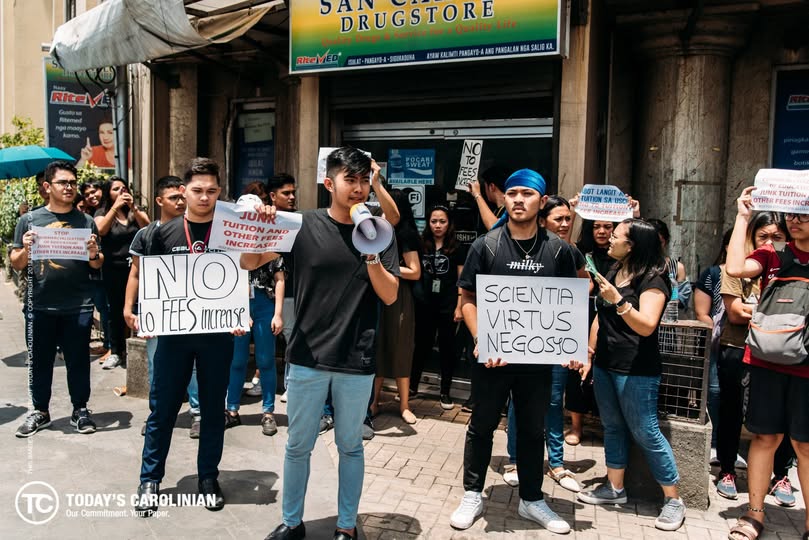
Even before the K to 12 program’s transition period, however, casualties have already been noted. On March 20, 2014, the General Service Employees Union (GSEU) of the University of San Carlos staged a strike outside its Talamban Campus as a result of the institution’s long-range cost-cutting measure to bring down its operational expenses in preparation for the drop of college enrollees. Although the matter has long been settled, it undeniably tainted that K to 12 image and transformed it into something bleak.
Change is chaotic. If we are not ready for chaos, how can we bear for change? It does not take a perfect vision to see the adverse destination that our current educational system has set upon. Behind positive reports on student development are hushed transactions and several anomalies. How much of a guarantee is it that if a reform will grow roots on these grounds, the tree would not bear the same rotten fruits?
In terms of quality education and career-preparation, can the K to 12 program really guarantee critical thinking, when the old system was struggling to? If high school graduates from a ten-year basic education system were unable to think critically, how much more of this will happen if the system officially becomes technically-localized? Will the entire student body become mere unthinking cogs in this machinery of economy?
The K to 12 program assures graduates that they will immediately be able to join the workforce even without venturing further into college. However, several critics argue that a longer term in schooling does not guarantee jobs. Longer time spent on basic education means a higher strain on those who cannot afford it. With the current political problems on corruption the country is facing, individually helping the marginalized is not definite. Top reasons for school dropouts in the rural areas are blamed on poverty and children being too busy with field work. Also, emotional stresses on already problematic youth will further complicate the amount of years spent on education. This is apparent in urban areas where dropout cases are highly attributed to laziness and an attitude of disinterest. For the ones who will actually follow through and graduated from the entire program, as much as they have acquired the necessary hands-on training and certifications, it still cannot guarantee that they will be able to compete or surpass university graduates. A K to 12 graduate is merely employable.
Since most of the students graduating under the reform program will opt to directly join the workforce, especially if they do not have the means to pursue a degree, and since Filipinos continue to see brighter future abroad, a flooding of overseas Filipino workers is expected. It cannot promise to stabilize the nation’s economy internally. Instead, it becomes a tool to export more of our human resource. This becomes a major setback since the educational system is not supposed to churn out graduates to become employed but to become future employers.
It is also feared that the K to 12 program will only be used as a tool for discrimination and economic separation of classes, to determine who would be employed first. Ours is already a segregated and discriminating society, and this will only exacerbate matters. In general, the masses are not intellectually inclined, but this is not the problem. Foreign economies would collapse if we were to pull out our OFWs from service. The intellectuals and the technical-vocational workers alike all contribute to the same economy. This social segregation is a play of power, hardly a matter of education.
Unlike so many other changes that have befallen the nation in the past, none have been quite as major as this change in the educational system. No distinct entity can act alone to assure its success. It is said that it takes a community to raise a child. However, to raise them with proper knowledge and skills to assure our future’s prosperity, the entire nation will have to take part.
Even so, ideality does not translate to reality. The former merely represents a perfection existing only within the realms of the imagination. This implies that K to 12 is not a mere vision-mission-goal reform transforming reality from everything written within paper, following every nook and cranny of its sheets. In a few months, this educational reform will dreadfully mark some more casualties. However bleak it may seem and as much as our skepticism dilutes our positivity, it cannot hurt to give this change the benefit of the doubt.
Notes:
Philstar Article: www.philstar.com/headlines/2015/03/17/1434511/deped-firm-k-12-despite-legal-challenge
Official Gazette on K to 12: http://www.gov.ph/k-12/#RA10533