Love and Beyond
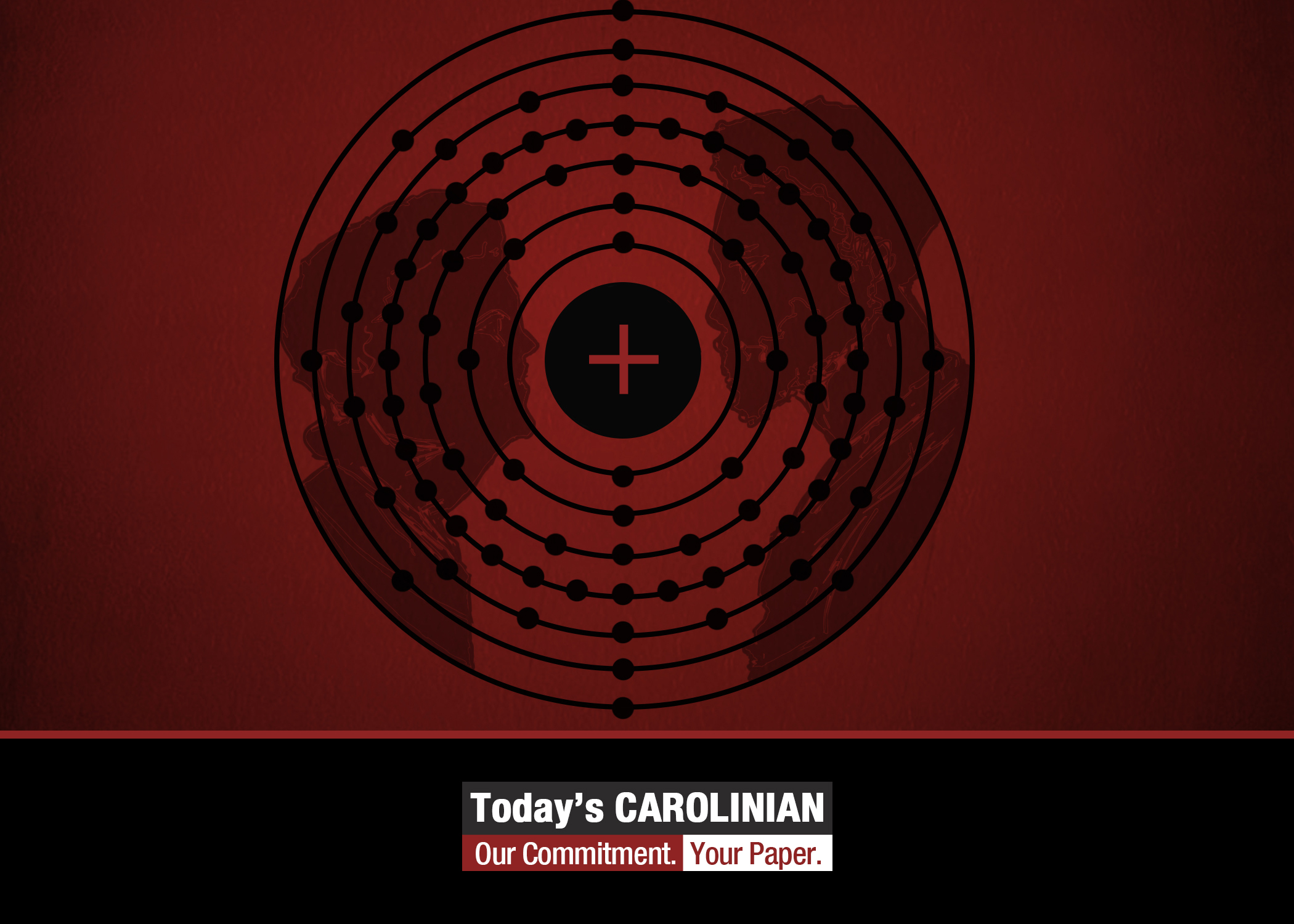
Illustration by Eduard Jude Jamolin
“Normal is as normal does.” This is a personal rendition derived from one of the most memorable quotes from an equally memorable movie. Normal, or the thought of being normal, is actually a major cohesive force in society. According to Aristotle, it is a conceptualized standard in society. He called it: “The Golden Mean.” It is a state where people need not want more nor less. It is the notions of conformity and acceptance, and that is just unexciting. From this, one can deduce that “normal” is also a coercive force. If everyone were to be “normal,” everyone would be reduced to bland and boring beings.
Therefore, where there is normal there are those that are not. Simply put, those that do not belong in “The Golden Mean” are those of an extraordinary nature. One such example is the extraordinary love of two scientific pioneers. Their love has transcended across generations and Their love revealed only one simple truth: Love is about going beyond.
Marya Sklodowski was born to two school teachers. She was raised in a tumultuous time when Poland was breaking free from Russian tyrants. As a young girl, she was raised to be a patriot. She was taught poetry because it contained her heritage and culture. Her parents revealed to her that poets were seen as leaders, people who represented the feelings of the Polish in their works.
“Evenings for us were a great pleasure and a source of renewed patriotic feelings.”
At a young age, Marya’s parents had already introduced her to the wonders of science. It was more than a discipline, but rather an object of curiosity and learning for those who love adventure. For Marya, science was beautiful, much like a fairy tale. Unfortunately, her parents were one day afflicted with sickness and passed away.
“For the rest of my life, I will remember the sorrow of their deaths.”
Marya had to remain strong to take care of her siblings and fulfil her aspirations. She studied hard in school while serving as a private tutor for an esteemed and wealthy family. It was overwhelming at times to find an effective balance between studying and working, but Marya persevered and managed to pull through. In the end, she graduated with distinguished honors and with much respect from both her peers and her instructors.
“There is no shame in hard manual labor.”
Marya soon found herself in Paris to pursue advanced studies. In Paris, she was free to speak, think and read anything she wanted. This freedom gave Marya a new strength and determination to succeed. She was in Paris, she was young, and she was free! Marya was filled with the heady taste of academic and political freedom for the first time in her life. It was also in Paris that she became known as Marie Skodowski.
“I am like a prisoner who had been unexpectedly set free.”
Marie soon met Pierre Curie.
“I was struck by the expression of his clear gaze and by a slight appearance of carelessness in his lofty stature. His rather slow, reflective words, his simplicity, and his smile, at once grave and young, inspired confidence.”
Marie was in love and out of control. Pierre felt the same way too. They then decided to get married. They would often spend countless summers riding bikes and exploring the country side.
“It would be a fine thing… to pass our lives near each other, hypnotized by our dreams: your patriotic dream, our humanitarian dream, and our scientific dream.”
After much research, Marie discovered a new kind of “ray”, which she would eventually call “radioactivity”, After isolating the rays in pitch blends, the Curies discovered a new element — radium. Soon enough, the world took notice of the Curies and their brilliant discoveries.
“We had special joy in observing that our products containing concentrated radium were all spontaneously luminous. My husband had to argue that this rather unhoped for characteristic gave him even greater satisfaction.”
On Dec. 11, 1903, the New York Times wrote a small article on Marie and Pierre. That same year, the Curies won the Nobel Prize for Physics. They are the first and only husband-wife duo to win the prestigious award. Marie became the first woman to receive a Nobel Prize.
Pierre’s speech echoes throughout history when he said, “One may also imagine that in criminal hands radium might become very dangerous, and here we may ask ourselves if humanity has anything to gain by leaving the secrets of nature. I am among those who think that humanity will obtain more good than evil from the new discoveries.”
The future looked bright for the Curies — until an accident took Pierre’s life in 1906.
Marie was in shock. She lost not only her loving husband, but also her most important scientific partner and collaborator. Once again, the feelings of helplessness and sorrow from her early childhood returned.
“I lost my beloved Pierre, and with him all hope and support for the rest of my life. I put my head against the coffin and spoke to you. I told you that I loved you and that I had always loved you with all my heart. Suddenly, something came to me, something like a calm and an intuition that I would find the courage to live.”
Eventually, Marie realized that her daughters, Irene and Eve, and her devotion to science pulled her back from the brink of the grave. Continuing on with life and their research helped provide her with an illusion that she was holding on to a piece of Pierre. She vowed to persevere as Pierre would have wanted her to.
“Working is the comfort and distraction to my grief.”
Aside from Marie’s continued studies, there was a friendship that immensely helped her through her difficult times. Albert Einstein constantly encouraged her and motivated her to fulfil her scientific dream. He told her that he considered himself fortunate to have met her and that he would always be grateful that there were people like her in the world.
Einstein wrote, “Marie Curie is of all celebrated beings, the one whom fame has not corrupted.”
Marie continued her work and even contributed to the war effort. She created radiology cars to tend to the injuries and wounds of soldiers. They were affectionately called “Petite Curies”. She also continued teaching and expanded her laboratory. But by then, Marie’s health had slowly started to decline as she was plagued by numerous sicknesses. On the morning of July 4, 1934, Marie Curie’s. She returned to Pierre’s side as they buried her beside him in Sceaux, Paris, the countryside they loved so much.
In a ceremony, President Francois Mitterand of France said, “By transferring the ashes of Pierre and Marie Curie into the sanctuary of our collective memory, France not only performs an act of recognition, it also affirms a faith in science, in research, and its respect for those who dedicate themselves to science, just as Pierre and Marie Curie dedicated their energies and lives to science.”
Marie and Pierre formed a spirited union that went beyond man and wife or scientific contemporaries. They became partners in every sense of the word. They enlightened one another. They educated each other. Marie and Pierre helped to unravel each other’s goals and philosophies. Their love went beyond. Their love was about going beyond.