When Saddles Meet Shanks
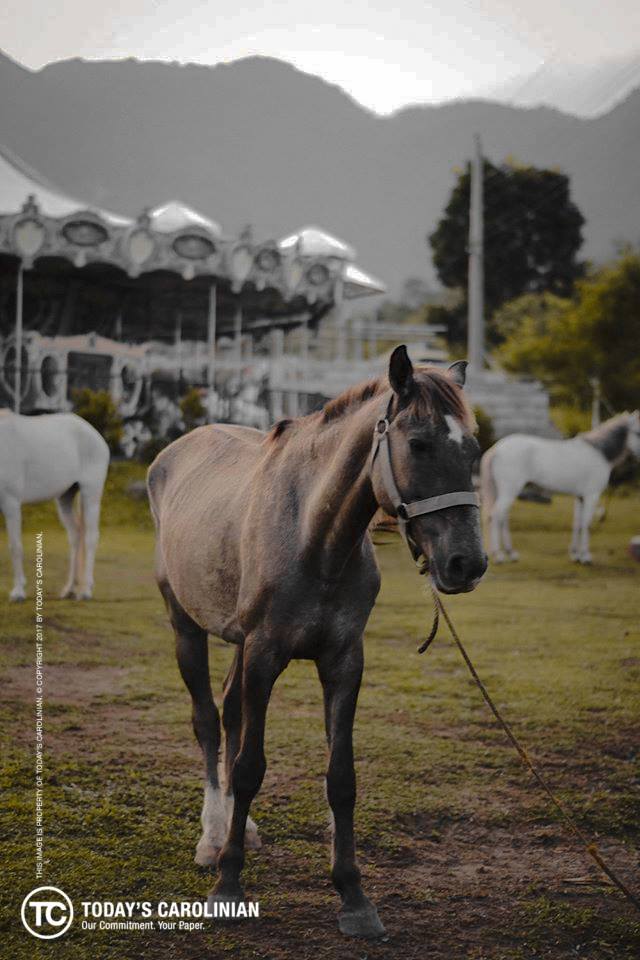
Photo by Garel Sison
Can a two-legged competitor match the athleticism of a four-legged animal in a test of physical endurance?
Sports is always used to test one’s skills and use it at high stakes. It takes different forms, some even quite absurd — for example, a sport that requires a human being to race against an animal whose speed is significantly faster.
That sport is called the Man vs. Horse Marathon. Its distance is shorter than an ordinary marathon. It may sound ridiculous and impossible to win, but runners actually compete against riders on horseback in the Welsh town of Llanwrtyd Wells every June.
To give you a historical background of how this sport came to be, the marathon started in the year 1980 when landlord Gordon Green overheard a conversation about the relative merits of men and horses running over a mountainous terrain. Upon hearing that, Green decided to put that idea to the test and organized the first event.
A horse may be a larger, stronger and faster threat as opposed to a human being, but it doesn’t mean that humans are inferior to horses. The human brain is proportionally bigger than that of a horse, and the ability to sweat gives humans a certain advantage over horses. That said, in the 37 years of the sport’s history, humans have only gained the upper hand over the horse twice (in 2004 and 2007).
The marathon takes place in the town center. Like all marathons, it starts with a long, slow climb. Horses start 15 minutes behind the runners, and normally overtake the humans after the first relay change. Fortunately, the riders of those horses are universally considerate — and usually seemed to control the horse’s speed limit. The course then loops through hilly farm tracks, worn footpaths, free flowing brooks, emerald isles and open moorland. It also goes up and down a 2000-feet hill with conditions as the marathon progresses.
Halfway through the race, the horse must go through a vet check to ensure its well-being. This also gives the human runner a small but much-needed advantage to catch up. By the time both the runners and the horses reach the last two miles and hit the waist-high river crossing portion, many of the racers participating in the marathon fall down, stumbling on the rocks with their already-weakened legs. The finish line is split into two parts and segregated by species. A few hundred spectators and fellow runners cheer for the participants from a nearby field. Surprisingly, the race has not led to many injuries. Even with boulders or steep inclines along the way, there have not been injuries more extensive than a twisted ankle.
The novelty of the race itself is certainly what attracts most of the runners, but that novelty does not devalue the professional quality of a very demanding course. Because the course of the marathon is not like the traditional, there are more benefits and challenges from the race. Unlike the usual marathons people have seen through the years, Man vs. Horse requires strength of will. The marathon drains a person physically and mentally as they motivate themselves to push outside of their comfort zones.