Amnesty International Hosts Discussion Against Torture
Photos by Shekinah Danong
Amnesty International is a non-government organisation mainly focused on human rights. Since its founding, it has garnered over 7 million members worldwide. Its objective, as stated in its pledge is “o conduct research and generate action to prevent and end grave abuses of human rights, and to demand justice for those whose rights have been violated.”
Founded in 1961 in London, the organisation was born from the article “The Forgotten Prisoners”in a local newspaper entitled “The Observer”. Amnesty International brings forth human rights abuse cases and campaigns for the compliance of international laws and standards. Its goal is to give knowledge to the public and to raise awareness regarding human torture and government abuse. In 1977, the organisation was awarded the Nobel Peace Prize for the campaign against torture.
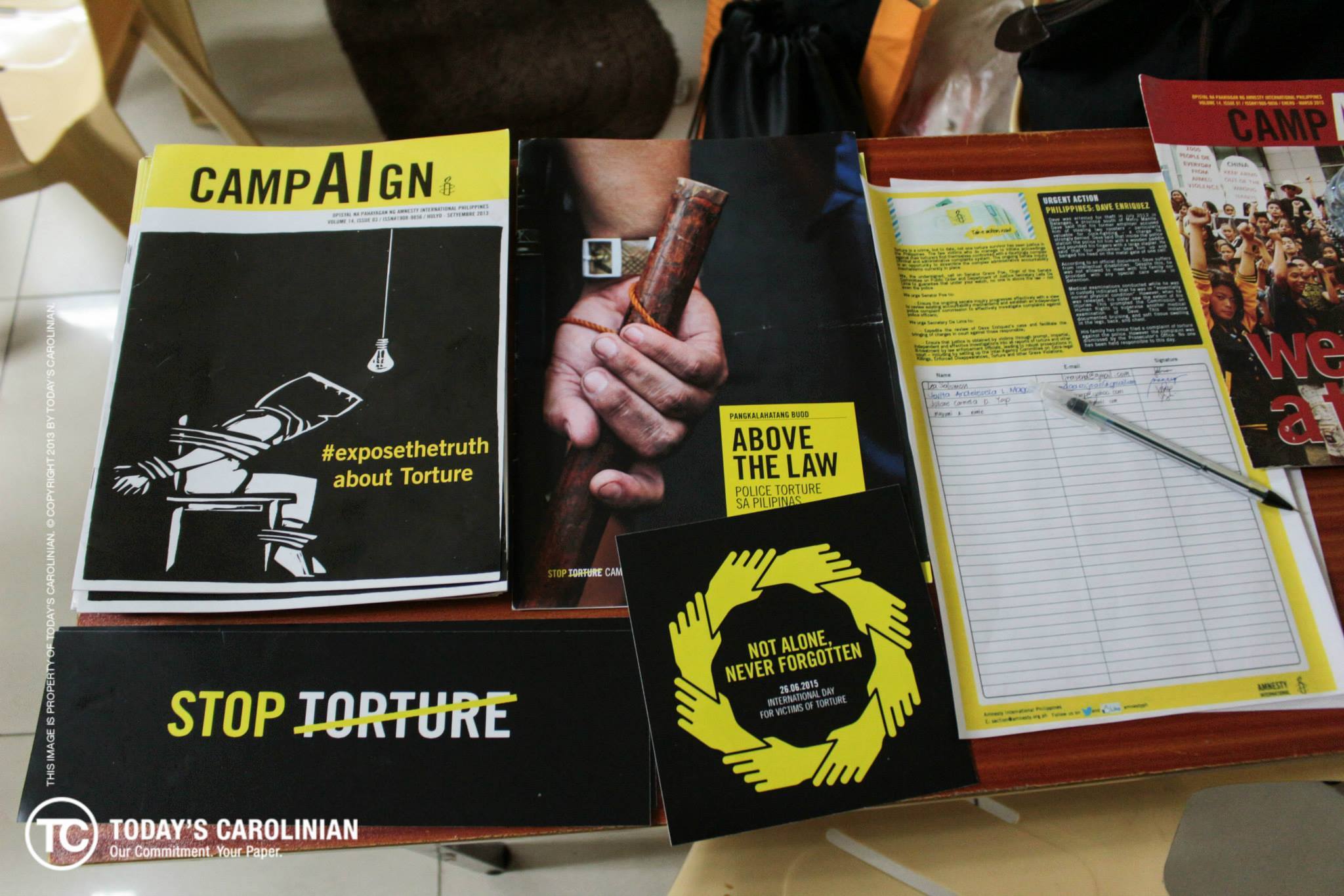
Christine Perez, the Cebu Chapter Executive held an event last Sunday, June 28, regarding the revival of the Cebu chapter. The program began with a brief history of AI and was followed by a number of videos where former torture victims were interviewed about government abuse and torture. The main event was the discussion of the case of Alfreda Disbaro, a former police informant who was accused of selling drugs, brought to police headquarters, beaten, forced to eat a dirty mop, and not allowed to contact any of her family.Since 2013, Disbarro is still in prison and a signature campaign has been launched to demand the investigation of her case.
Another case shown was that of Jerryme Corre, a jeepney driver accused of selling drugs. He was approached by men on motorcycles and was forced to lie face-down on the ground. When he asked if they were police and if they had a search warrant, none of them answered. A cloth was then draped over Corre’sface with water being poured down, a term known as waterboarding, which was followed by them giving him electric shocks all over his body.
One goal of the event was for the Cebu chapter to be known and gain members. Discussions were held regarding the different human rights and anti-torture laws in the Philippines and the fact that many of the local government officials still practice it such as the “Laguna Wheel of Torture”or the cases of AlfredaDisbarroand JerrymeCorre.