Good Friday
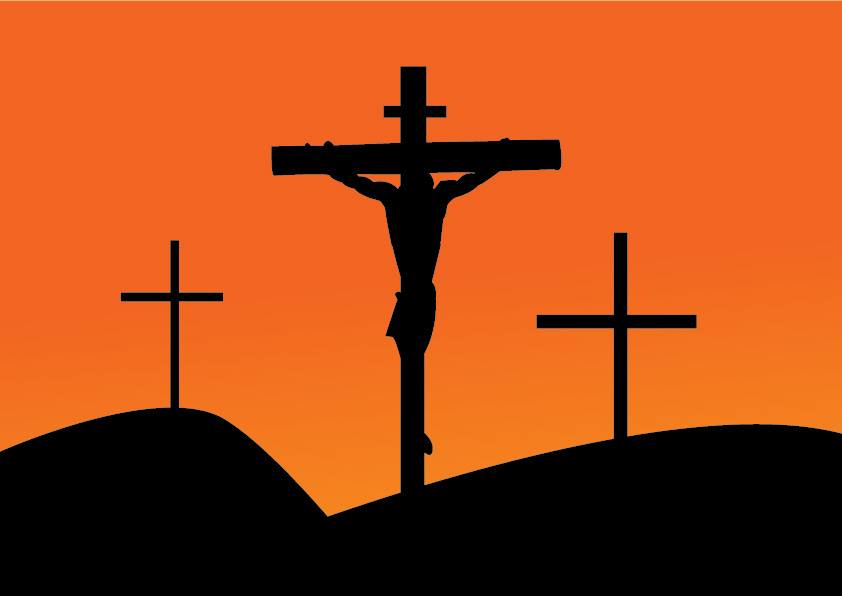
Good Friday is a religious occasion celebrated by the Roman Catholics and is a national public holiday observed in the Philippines during Holy Week. It is a day allotted for the commemoration of the death of Jesus Christ when He was crucified on Mount Calvary. Catholics engage in activities that commemorate Jesus Christ’s suffering such as the Way of the Cross, abstinence, processions, penitence, 3:00PM local masses, the recitation ofPasyon and the performance of the play Senakulo. Catholics usually watch films that revolve around the Passion of Christ on this holiday in order to commemorate Jesus Christ’s path to crucifixion.
During this holiday, all malls, schools, work places and other public establishments are closed in order for Catholics to engage intimately with Jesus in this special holiday. This is the time of the year where Catholics shun from worldly activities and vices, but would instead practice fasting, abstinence and praying. This refusal of worldly activities avoids distractions for us Catholics so we may commemorate what Jesus Christ’s sacrifice in order to pay for our sins. Aside from that, another common activity done on Good Friday is abstaining from eating meat. Abstinence, as mentioned earlier, is one of the major rituals observed during Good Friday.
Other than putting off our pursuits of the physical world, Filipinos go to mass and take part in the Station of the Cross or Way of the Cross, where Catholics depict the last hours of Jesus’ suffering, trials and death. This activity is annually done during Holy Week, but mostly done during Good Friday as it depicts the day Jesus Christ trudged toward the path to His crucifixion. Each of the fourteen stations depicts the beginning of Jesus Christ’s trials and sufferings until the end of His crucifixion and his last breath.
Filipinos attend Good Friday masses before 3:00PM since it holds the significance of the hour of the death of Jesus Christ. Masses for this day are no ordinary mass akin to the daily masses that we, Catholics, usually attend. Instead, on this Good Friday, Catholics ascertain the Seven Last Words ( Siete Palabras) of Jesus Christ being recited as silence looms over to make room for solemn reflection and interpersonal connection.
There are other rituals that commemorate the Passion of Christ in a creative, expressive and theatrical manner. An example being the Senakulo which is a traditional Filipino play that tells the story of Jesus Christ’s course to crucifixion – His trials and suffering. The play is presented in various venues: the streets, the stage, the chapels, or any other public place. Portrayals of the play are observed in different provinces in different ways. Some towns use ropes to tie the actor portraying Jesus on the cross, while other towns use real nails. A lot of foreigners and tourists praise the unique style and presentation of the play.
Another traditional activity done during the holiday are the processions. Common activities done during processions are Catholics carrying religious figures of the Passion of Christ around in a carriage or in their arms. This is also another ritual to commemorate the suffering and death of Jesus Christ. One of the famous processions done on Good Friday is the Santo Entierro procession, where the statue of Jesus Christ’s wooden corpse is placed on a funeral carriage, and is taken around town in order for the Catholics to commemorate on the death of Jesus Christ. Statues of saints connected to the story of the Passion of Christ are also included in the procession.
Another ritual done on Good Friday is the chanting of the poem Pasyon. Pasyon is a poem about the life and suffering of Jesus Christ. It is usually recited in a barangay chapel, a church, or even at home so long as the poem is recited in front of an altar. Pasyon can be chanted with the accompaniment of a guitar or a rondalla in order to make the poem sound livelier. The earliest version of the poem was published by Gaspar Aquino de Belen in 1704.
Penitence – a bloody, traditional ritual highly observed and done by the Filipinos where they choose to recreate the crucifixion of Jesus Christ as they crucify themselves on the cross is another ritual done on Good Friday; a sign of mortification where Catholics decided to inflict pain on themselves in order to repent on their sins. A procession where the devotee carries the cross is held. Once the final destination is reached, the devotee is then crucified on the cross by men dressed up as ancient Roman soldiers, and is finally displayed on the cross for the whole audience to see. This ritual is done by the devotee as a way of saying thanks to God for sacrificing Himself on the cross. It may also be done so the devotee may feel closer to God. This ritual attracts a lot of the tourists annually. One of the common acts done under penitence is self-flagellation, where the devotee walks around as he whips his back with a makeshift whip. Like the crucifixion ritual, this is done because the devotee wants to undergo through the same hardship that Jesus Christ went through as a way of paying for the sins of man. However, this practice is not condoned as a religious activity by Church because Catholics are encouraged to be more prayerful instead.
Hopefully this isn’t the day where the act of abstinence and repentance is only observed. After all the rituals and commemoration done on Good Friday, may the Catholics continue to learn the importance of little sacrifices done in our everyday lives and not just sacrifices done every once in a while. May the Catholics continue to remember all the courage Jesus Christ went through in order to save for our sins.