Inside the Lion’s Den

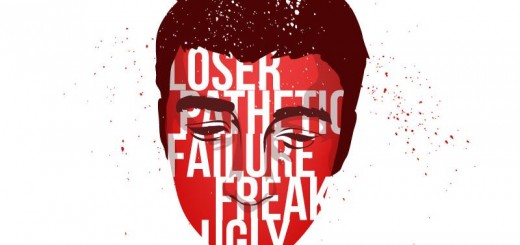
Illustration made by Zachary Borromeo
Our world is at war. However, we have long passed the times of horrid concentration camps and endless bloodshed. No, our battle is a silent chaos. It is something crumpling behind the blinds of virtual opulence. It lies on a massive virtual playing field many of us refuse to get away from: the Internet.
Filipinos are prominent figures in different social settings of the World Wide Web. Like starving predators waiting for a prey to land on its trap, we are on a constant attack stance. Whenever a new fad emerges, our claws never fail to grab its lushness, letting our teeth rip through its breadth, but when the craze dies down, it is always easy for us to simply walk away from the dismembered bones we have feasted upon, without even giving a second glance. We continue to live vicariously spending our sunrise and sunsets staring at screens and tapping our days away.
Simply, we thrive on a consumption-driven ecosystem. SocialBakers, an online provider of analytic tools, statistics and metrics for different social networking sites, showed in 2012 that almost one out of four Filipinos are on the leading global social platform Facebook. This sum up to more than 27 million Filipino Facebook users —accounting to about 28% of our nation’s population and 93% of the world’s online population, and the numbers never stopped growing. The Philippines has since maintained being in the top ten countries with the most number of Facebook users. Moreover, it does not end there. Facebook is not the only online platform we seem to flock upon. Try asking a colleague where that photo of his packed lunch is going and we are sure that it will be within the lines of Instagram. Try asking a friend how he would know that his crush had an almost-encounter with Taylor Swift, and we are sure that it is because of that retweet two nights ago. However, we know that these questions are not really necessary. We are part of this entire social webbing in the first place.
Consumerism is rightfully essential. Social networking sites provide us an avenue for leisure, expression, and communication among others. However, stepping out of its comfort is necessary. Bach Johann Sebastian, a chief strategy officer and SVP of JG Summit Holdings Inc., during a panel discussion at the Philippine Investment Forum in Makati City posited that as much as companies have benefitted from our vast consumerism, the trajectory of Philippine growth cannot be sustained by it alone.
On one hand, the lack of talent or skill is not our problem. We just have the knack of sticking IDs on those lit by the spotlight. Our talents are a smattering of Filipino-Beyoncés, Filipino-Oprahs or Filipino-foreign whose skills and abilities are nothing but a mirror of those whom they are crowned to mime. Why do we force ourselves to thrive in a reality where the finish line lies behind the masks of those already holding on the gold trophies? How much of our success is truly ours?
It is the Filipinos that have kept millions more Filipinos from realizing their great potentials. In the internet, the anonymity gives people the power to say things that they feel like saying without tact or prior thinking. Many of us become a ghost of our own frustrations, attacking victims who are vying for the goal we failed at. However, when the favor is returned, we cry injustice and blasphemy.
It is ignorant to assume that only Filipinos show this behavior online; however, it is herd mentality to continue doing it just because everybody does it anyway. Painfully, ignorance is bliss. Perhaps it is the same irony in ignorance that makes most of us clinging on social media’s web of satires. We do not bother to check for legitimacy to a point that we become unmindful that we already created chaos in our wake.
Ours is also a matter of a peculiar pride. It resides on people who bear the shades of our skin — only as long as they are in a foreign land, have already been recognized by foreign people or at least have foreign blood running through their veins. We have continued to carry on the heritage of being excessively subservient and unduly impressed by all things foreign. See, Juan de la Cruz has colonial mentality: If it isn’t his, it must be better and if it is his and they think it better, then it must be best.
The Filipino pride is also a collective. If a quart-Filipino suddenly finds fame after having been applauded in an international stage, the celebration is everybody’s. Everybody becomes a proud Filipino. If we try flipping through the pages of Youtube, it might be that those having an ounce of Filipino will have comments full of pride. However, not only does this take away what is rightfully another man’s success, but it also reverberate the lack of our own. It is fine to be delighted by others’ triumphs on the basis of common ancestry but sometimes staying behind their shadows prevents us from having our own light.
We live in a time where everything happens everywhere in front of us. The world has never been smaller even as our eyes see vast spaces. This is not a time for selfishness to overrule our humanity. The internet provides us a great opportunity to become inventors and marketers of a future that is surely our own. We need to take this chance and make a leap. Our shortcomings can become lessons so that when change comes by and knock at our doorsteps, we would be ready to answer it.
Our world is at war. We are at war — in a battle to win our identity against ourselves. The internet is just our powerful playing field. Perhaps it is high time for Filipinos to try rediscovering its ticks and improve upon it. We cannot always stay as antelopes in a field full of lions. Sometimes we have to be the lion for us to aim and fight for our country’s genuine prosperity. We should know because this world is our den.