The Dying Art Form of Batok from Cordillera
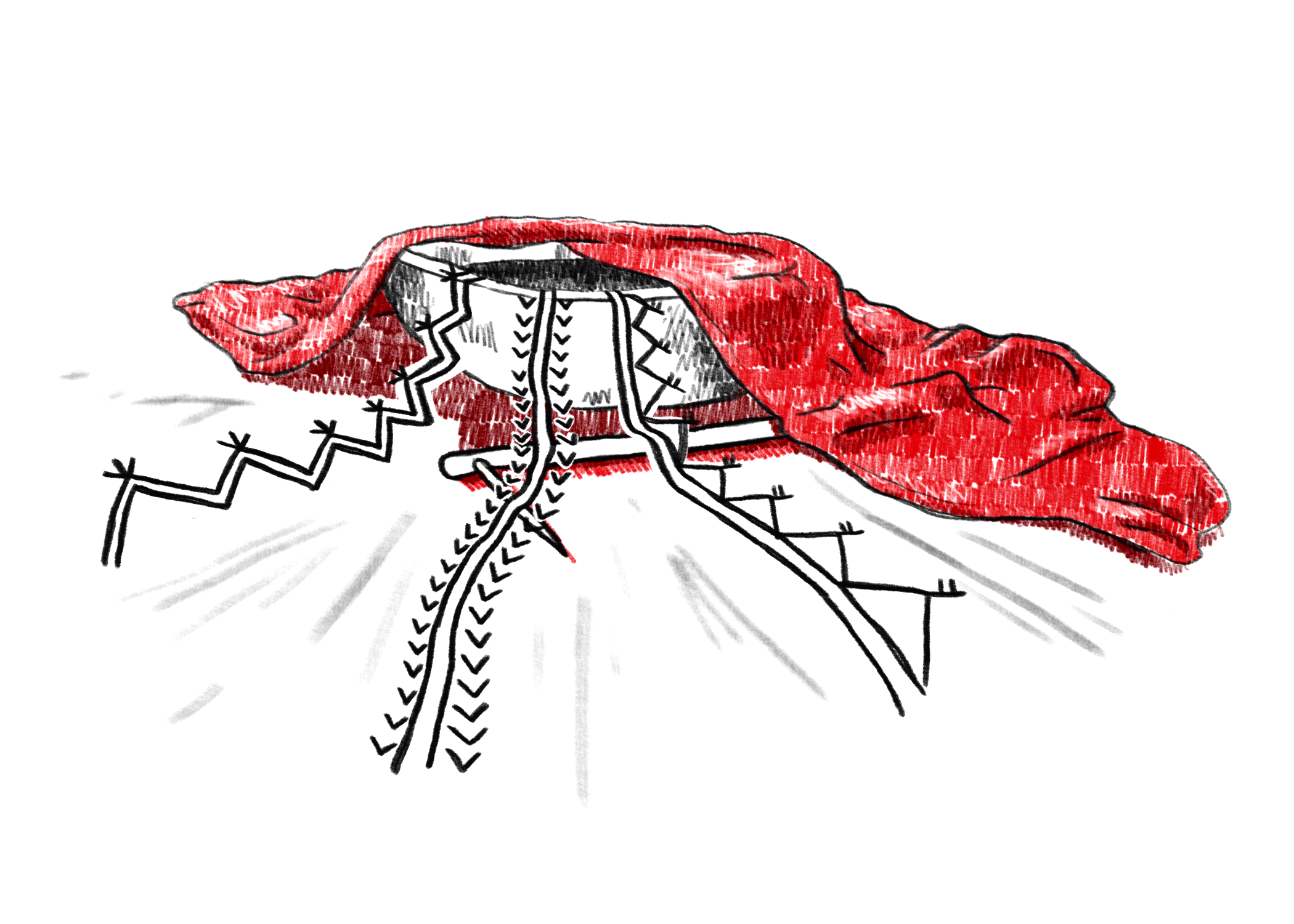 Illustration by Shari Llamis
Culture is one of the strongest heritage Filipinos are known for. Every region of the Philippine archipelago has its own unique story to tell — from how each city came to flourish to the different cultural traditions its citizens continue practice. The festivities in many of the country’s provinces keep on luring excited tourists. However, Filipino culture is not only about these festivals, in fact, there are some obscure cultural traits that thrive in the contemporary time. All the way up to the mountains of Cordillera, in the small village of Busculan, stays the last tattoo artist of the Kalinga tribe — Whang Od, who continues the practice of Kalinga tattoo art called batok.
Whang Od’s first love died of a logging accident, but instead of looking for someone else to fall in love with, she dedicated her love and passion the art of batok, a form of tattooingthat she learned from her father. Unlike the modern day tattooing using an electronic needle and colorful inks, Od uses pastry ink made from soot and a pomelo thorn attached to the end of a bamboo as her needle. It is said that this art form of traditional tattooing dates back to almost a thousand years — a huge Kalinga tribe heritage.
Body tattooing has already been a practice among the Kalinga tribe members in the 16th century. The tattoos symbolized bravery among male tribe members who were trained to become warriors and headhunting men. When a male warrior has his first kill, he is rewarded with Kalinga striped tattoo patterns called pinupungol, which appears like a tie. The warrior’s second kill is rewarded with Kalinga tattoo patterns on their heads. The more kills the male warriors earn, the more he is rewarded with tattoos on his chest, back, legs, arms, cheeks and at the side of their stomach. The number of tattoos on his body signifies his strength as a warrior of the Kalinga tribe. Women, on the other hand, wear Kalinga tattoos as a symbol of aesthetic beauty. The different designs of body tattoos on women symbolize their relationship with their environment.
Today, Kalinga’s age-old heritage is slowly fading away. Lars Krutak, a tattoo anthropologist from Discovery Channel and National Geographic, stated in his discovery and paper on Kalinga tattoo art that the practice of batok was discontinued in the 1940s. Lakay Miguel, a Kalinga tribe warrior in his early nineties, is one of the last warriors who still wear the Kalinga tattoos of his ancestors. His tattoos symbolize what he experienced during World War II. Miguel has an anthropomorphic tattoo that symbolizes his Japanese victims and his rank as a warrior being the highest. He also has tattoos of a cruciform between his eye, on his Adam’s apple and behind his ears that symbolize his number of enemy engagements.
Nevertheless, tourists and travelers still find time to make their way to the small village of Busculan just to meet and get tattooed by Whang Od. Traveling to the village requires much patience and footwork. In order to get there, one has to take a 9 to 13 hour bus trip from Manila to Tabuk, Kalinga. From there, the second trip requires another bus ride from St. William’s Cathedral to Barangay Bugnay, Tinglayan. Then, a two-hour hike to the village of Busculan begins.
According to travelers, Od is very hospitable towards her customers. She usually greets them by asking, “Who’s getting a tattoo today?” in her native tongue. Before she starts tattooing her customers, she prepares her small wooden bowl, which contains her equipment for tattooing. She also sets up another larger piece of bamboo a piece of cloth and a bottle of oil which she uses as skin treatment. Before officially applying the tattoo, Od stencils the design on the part of the body the customer desires. She starts tattooing by first taking the bamboo with the pomelo needle and applying the black ink on its needle. Then she lets the needle point touch the body, takes the larger bamboo stick and taps the bamboo with the needle on the body. Small designs can take only a few minutes to finish. However, the bigger and more complicated the design, the more time it will take to finish.
Whang Od is an example that every province tells everyone a different story through its heritage and cultural activities, and Cordillera has told its magnificent story of the Kalinga tribe and their art of body tattoos that has lasted for almost five centuries. Cordillera is blessed to have Whang Od, who continues to grip on Kalinga’s dying ancient batok practice.