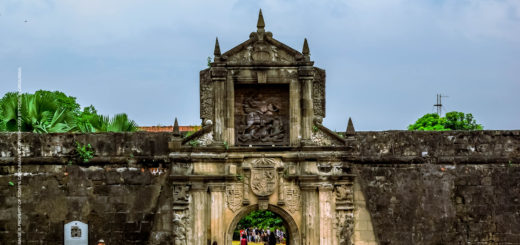
The Lure of Siquijor

Image Source: http://goo.gl/1UvvAd
“Don’t believe in it. Just try to avoid it.”
-Visayan saying on sorcery
Siquijor, Philippines is not a place one would normally write on a bucket list. With its reputation of being an island of black magic, voodoo and witchcraft, only a few people would dare set foot in that island. This fear instilled in us by folklore and stories from different people hinders us from travelling to this island.
Siquijor, also known as Isla del Fuego (Island of Fire), is situated southeast of Cebu and Negros, southwest of Bohol, and north of Mindanao. From Cebu, one can ride a plane to Dumaguete and then ride a ferry to Siquijor, or take a bus from South Bus Terminal to Bato, Oslob and then catch another ferry to Siquijor. With it being near to the city, why don’t people frequent it? This is because of rumours of dark sorcery in the island. Despite fearing it, the subject of sorcery and black magic interest most of us. Each of us have heard of stories from a friend of a friend of a friend who suffered from barang, an “unexplained” pain of the stomach, or aches all over the body that ultimately lead to death because he or she digressed someone who went to a mambabarang to seek revenge for the bad that he or she did. Manghihilots are often called to our houses when someone is having a cold or experiencing headaches, pain and sores all over the body. Stories of aswangs, kapres and duwendes fill the black-out nights with fright and terror. Thus, it is not a surprise why Siquijor brings out a spark of intrigue and curiosity in us.
Stepping off a boat from the port of Siquijor, Siquijor warrants a nervous and giddy feeling, the same emotions felt when one takes off from a zipline. There was no eerie fog like those in the horror movies, just the scorching heat of the sun present on any Philippine island. The water in the port is so clear and perfectly blue that one would even be fooled into thinking that it is just shallow, hiding that it is actually several feet deep. Then the sand could easily rival the white sands of Boracay and Bantayan Island. Moreover, this is not the sand in the five-star
resorts on the island; this is the sand on the beach located next to the port where the boats are docked. One does not even need to spend hundreds to enjoy this. One only has to pay P10 to take a dip. All this erases the fear of visiting the island in the first place.
A tricycle ride away from the port is the Lazi Church. Like any other old church, it is eerily silent and has that aged, musty smell. However, it is actually a marvel with its faded pink exteriors. Founded by the Augustinian Friars in 1857, the church was finished by the Filipino artisans in 1884. Across the church is the Lazi Convent, which claims to be the largest convent in Asia. Its construction started in 1887 and was finished four years after. On the second floor of the convent, a museum can be found where one can check out antique religious articles from the 19th century. Both the church and the convent are registered as National Historical Shrines since the 1970s.
After visiting the church, one can tour the rest of the island. It can be navigated through tricycles who would offer exorbitant prices to naïve tourists, but haggling with them is actually possible. It is advisable to be friendly with the locals. Asking the tricycle driver to give a package price does not hurt either, so money can be saved to buy pasalubong for the relatives back home. Though a mall is absent on the island, the town market is able to supply a traveller’s basic necessities. There are a few mini-marts where one can buy Siquijor’s famous tortas. From there, one can also ask directions to Mt. Bandilaan National Park.
Mt. Bandilaan is at the center of Siquijor Island. Locals compare it to Mount Mayon because of its almost perfect conical shape. If one has to take a break from the captivating shorelines of Siquijor, he or she can try climbing this mountain. To get there, one can ask your driver to take you to the mountain. Unlike before when riding a habal-habal to get there is necessary because of the undeveloped roads, one can now ask the tricycle driver to stop at the First Station of the Cross, and then climb up the pathway to the 13th station. For a short rest, one can stop and sit on the benches, look around, and admire the vibrant greenery. A few meters from the 13th station lays the Metal Observatory Deck. Though it does not look much, it is actually sturdy. On the top of the deck, the view is magnificent, offering a 360-degrees view of the island. This sight is absolutely breathtaking and worth the trek.
The island was so charming and that one would fail to notice that anything was off. However, it is still early to conclude that Siquijor is not a “magic” island after all.
When asked if there are real mambabarangs and mangkukulams still living in Siquijor, most locals would deny. However, if one is lucky, one would be directed to a house where the so-called sorcerers and healers reside. Every Good Friday and Black Saturday, sorcerers and witches from different parts of the country supposedly flock to Mt. Bandilaan where they prepare the materials for their healing potions, charms, oils and amulets. The reason why the preparations for their brews are to be done on these days is that they believe that because Jesus is dead during these times, the spirits from the underworld will be free to roam and lend them their powers.
Another thing in Siquijor that adds flames to our fiery curiosity is the statue of St. Rita in the Church of Divine Providence in Maria, Siquijor. Tourists have renamed her the “Black Magic Mary”. The statue appears frightening with its eyes staring back as if in shock while holding a skull and an inverted cross. She is one of the few saints who seem to be in pain. One would have goose bumps upon seeing her up close.
There is also a place where locals say spirits and deities reside in: Cantabon Cave. It is not a breezy walk getting inside and going to the end of the cave. One would have to get down from one sharp rock to another. One would also have to wade in knee-deep water, so wearing denims is not advised. Here, the guide even warns to speak in hushed voices to avoid disturbing the other creatures living in the cave. However, seeing the natural formations of stalagmites, stalactites and pools makes this otherwise exhausting place a splendid plunge. On the way home, it is advised not to forget to bring healing potions and amulets as a reminder of the interesting journey. If one needs luck finding a partner, love potions are also sold.
Siquijor is a special island where special things indeed happen. We may not comprehend or believe in these things, but it is better to be safe than sorry. The existence of mambabarangs, mangkukulams and other kinds of sorcerers in the island may be debatable, but one thing’s for sure, the natural beauty and charming mystery of Siquijor can make us fall in love with it, with a love potion or not. Siquijor is a magical island.