Wise Words from Wild
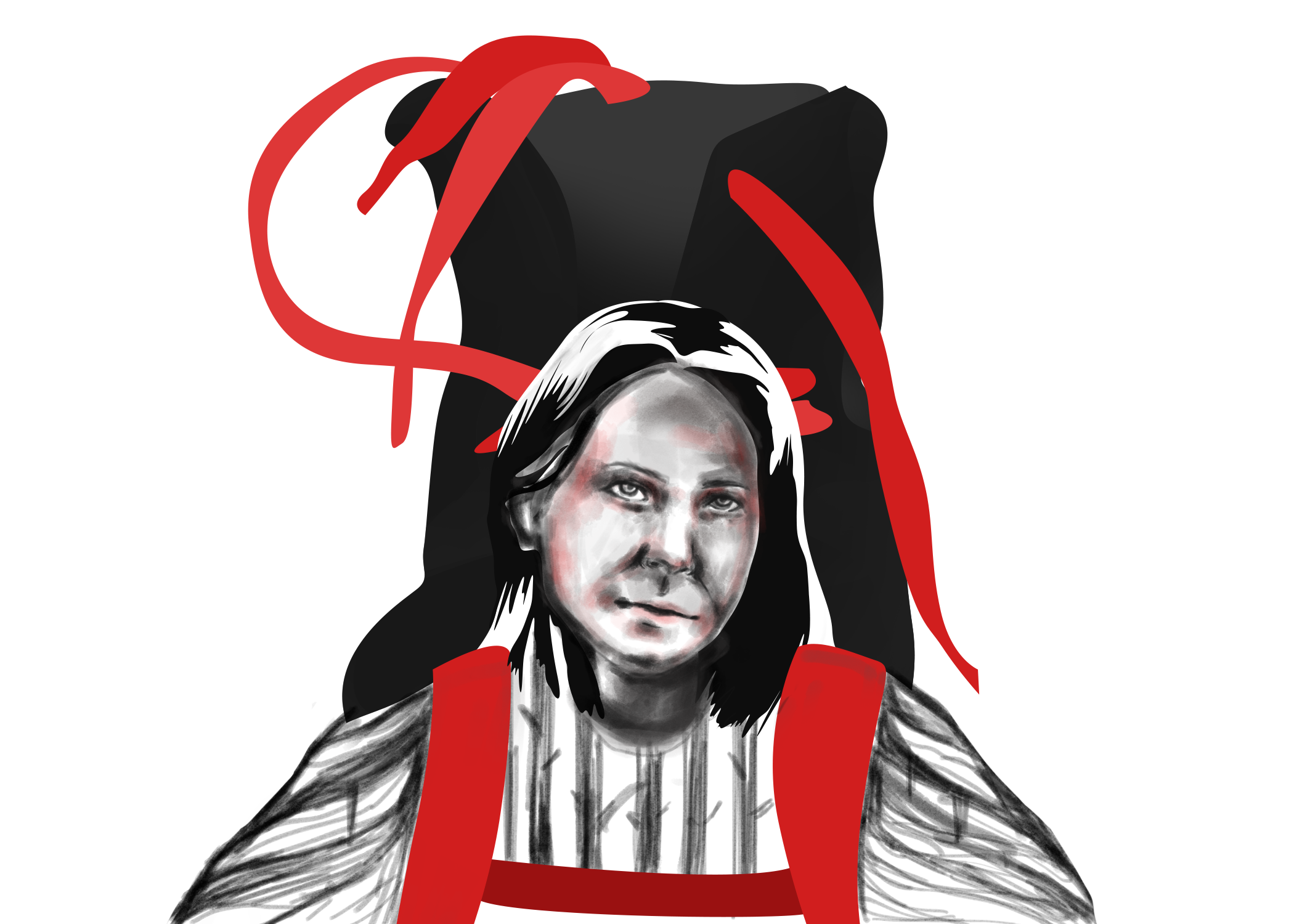
Illustration by Karl Adrian Aguro
Wild, a memoir by columnist and author Cheryl Strayed, is, on the surface, a story of the Pacific Crest Trail (PCT): a 2,663-mile hiking trail spanning from Mexico across the entire West Coast of the United States up to Canada. At its core, however, Wild is about losing things, finding some of them and gaining new ones, as well as a powerful reminder that, sometimes, the only way to climb is to fall first.
Triggered by her mother’s death, fueled by her use of heroin and culminated in divorce, Cheryl Strayed’s life has been a downward spiral, and she makes no secret of hiding her part in that from the reader. One of the first things Wild does is throw away the notion that its author is pure and innocent. It is Cheryl Strayed who cheats on her husband, who runs away and who gets involved with drugs and a series of meaningless sexual encounters. It is Cheryl Strayed who, by her own admission, eventually loses track of her life and identity, to the point that her last name was adopted after her divorce, spun from her own loss of direction.
It should be noted that although Strayed’s journey takes her — and the reader by extension — through some of the most beautiful locales in western North America, the prose does not dwell much on that, spending more time instead chronicling what goes on inside the author’s mind. The Pacific Crest Trail passes through acre upon acre of unspoiled wilderness. Mountains, lakes, deserts and forests are all encompassed by its enormous serpentine path, but a disappointing amount of prose is given to the trail itself. On their own, Strayed’s descriptions of the scenery are lackluster and many would argue that they fail to do justice to what she attempts to picture. The images improve vastly when her own memories begin to meld with her experiences on the trail, but standing alone, Strayed fails to capture the raw awe-inspiring views that the PCT doubtlessly offered her.
Wild is not a casual invitation to backpacking. Strayed’s vivid and palpable descriptions of her back, hips and feet, rubbed raw and sore by her boots and backpack, convey very clearly that hiking the PCT is far more physically taxing than previously expected, nor is it a practical guide to the sport. Before Strayed even sets foot on the trail, she must first wrestle her backpack — an enormous, imposing thing half her weight — off of her motel room floor and onto her back, only to find out later that a significant portion of her supplies are unnecessary and only weighing her down. It is an easy mistake to make — it’s always a good instinct to err on the side of caution and all that — but it soon becomes painfully clear that the PCT cares little for rookies, especially those with zero backpacking experience.
Strayed’s unfolding of her journey up the PCT reads very much like the trail itself; her story crescendos and dips, sometimes frustratingly. There is a lot of excitement and a few triumphant moments that make one wonder if she really survived, but there are also several low points. Much like the deadweight pages she tears out of her guidebook once they have outlived their usefulness, not all of Wild is as engaging as one might hope. Several sections, such as trail bypasses and pit stops, come off as repetitive and/or uninteresting, doomed not by the author’s prose, but the fact that she included them in the book in the first place.
However, if one can look past all that, it becomes obvious that, although Wild is not a book about the Pacific Crest Trail, it is not really trying to be. It is a book about Cheryl Strayed. The PCT serves as many things, but it is hardly the central focus of the narrative. It is always a backdrop, looming in the distance even when Strayed bypasses sections of it due to bad weather or unsafe paths. Oftentimes, it acts as an obstacle, sending bears, bulls and blisters to test the author’s mettle. Less often, the trail intertwines with Strayed’s own revisiting and acceptance of her past. Although they do not come along particularly often, these occasions are where Wild truly lives up to its name.
Early on, it becomes obvious that Strayed is walking two paths: the PCT, of course; and another path more stumbling and convoluted than the rockiest, snowiest roads of the former. Her journey doesn’t begin when she picks up a guidebook detailing the PCT, nor does it begin with her first shaky steps onto the trail proper. It begins with her mother’s diagnosis with, and subsequent death by, cancer, winding itself forward in years instead of miles. The juxtaposition of the author’s past and present is handled surprisingly well, sometimes deviating from the main narrative, sometimes uniting with it to change the way the reader views the world Strayed finds herself in, framing a field of crocuses or howls of coyotes with wistful childhood memories.
Cheryl Strayed herself is a refreshing, empowering protagonist — although she does get a bit predictable, seeing the majority of people she meets bending over backwards for her sake. Her mind becomes an open book, casting her darkest, sometimes disturbing thoughts onto the page with such transparency that it makes our secrets seem trivial in comparison. She accepts the responsibility for her mistakes — several of them completely greenhorn and avoidable — but raises herself higher without losing that precious, all-too-rare humility. Soon enough, Strayed’s change becomes tangible, felt in the way she handles herself not only on the trail, but on the page.
If you are looking to make your heart race with grandiose descriptions of the Pacific Crest Trail or desperately searching for a new lease on life, perhaps Wild is not what you are looking for. However, that does not mean it is not worth picking up. Wild is insightful, moving and poignant in its prose. It begs the question, both in the middle of the book and after it’s closed, of both the author and the reader: What’s next?